
Culture
The folklore, the traditions, the language, the church, the music. A living identity shaped by the sea, preserved by isolation, and carried forward through centuries of change.
Folklore & the Supernatural
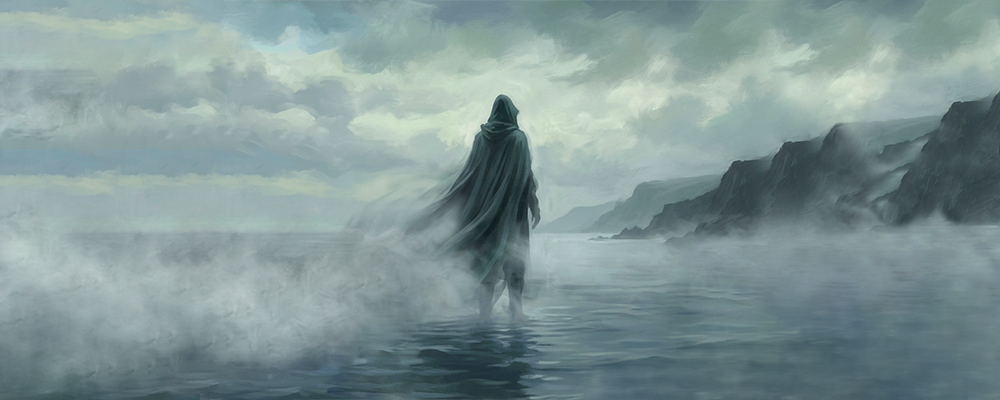
The Isle of Man had its own population of supernatural beings, as real to the people who lived alongside them as the neighbours in the next cottage. Manannan mac Lir wrapped the island in mist to hide it from invaders. The Phynnodderee, a fallen fairy cast out for loving a mortal woman, helped with the harvest but fled if you thanked him with clothes. The Moddey Dhoo haunted the guard room at Peel Castle — a black dog no soldier dared confront alone.
These were not children’s stories. They were a way of understanding a world that could be dangerous and unpredictable. The Buggane of St Trinian’s tore the roof off the chapel every time someone rebuilt it. The Fairy Bridges on the road south of Douglas still prompt a “hello fairies” from passers-by. Moore, the Victorian antiquarian, classified twenty-seven distinct species of supernatural being. The island had a taxonomy of the invisible.
Explore FolkloreTraditions & Customs
The Manx year followed its own calendar, older than Christianity, adapted but never replaced. Hop-tu-Naa on the last night of October was the Manx new year — the night the dead walked abroad, bonfires burned on the headlands, and children carried carved turnips door to door. Not pumpkins. Turnips. Laa Boaldyn on May Day brought mountain ash to every doorpost for protection against the unseen world.
The Tynwald Day Ceremony each July was parliament, pageant, and parish gathering rolled into one — laws proclaimed from the hill in Manx and English, rushes strewn from churchyard to mound. The Hunt the Wren on St Stephen’s Day, the Rushes to Manannan carried to South Barrule, the Hollantide Fair where the agricultural year turned over — each custom was part of a continuous thread of observance stretching back further than anyone could date.
Explore TraditionsManx Gaelic
In 1765, almost every person on the Isle of Man spoke Manx Gaelic. By 1874, census returns showed barely thirty per cent. By the mid-twentieth century, the language was down to its last handful of native speakers. The decline tracked the social upheaval that followed the Revestment — emigration took entire parishes, English administration replaced Manx in the courts and the schools, and a language that had been the medium of law, worship, and daily life became something your grandparents spoke.
Yet the language left its mark on every place name, every farm name, every field. Cronk-y-Keeillown — the hill of the church of John — is the Manx name for Tynwald Hill. Gyn Chengey, Gyn Cheer — without language, without country — became the motto of the revival movement. Bishop Wilson published the first book in Manx in 1707. The revival came, but only after the last native speaker had gone.
Explore the LanguageThe Church on Mann
The Manx church was unlike any other in the British Isles. Its genius was the Accommodation — each arriving culture adapted to what was already there rather than tearing it down. The Norse kept the Celtic keeills. The English kept the Norse bishopric. The result was a church that felt local in a way the established churches of England and Scotland never quite managed.
Bishop Wilson served for fifty-seven years, from 1698 to 1755. He built schools, established libraries in every parish, published in Manx, and ran ecclesiastical courts that had genuine jurisdiction over daily life. Hildesley, his successor, finished what Wilson began — completing the Manx Bible. Then in 1776, eleven years after the Revestment, the clergy were expelled from Tynwald. No Act of Parliament. Just removed.
Explore the ChurchMusic & Art
The island preserved its history in song before it preserved it in writing. The Traditionary Ballad is an oral history in verse, recording events from the Norse period through centuries of change. The carvals — Manx Christmas carols — were sung in Gaelic in every parish church, original compositions performed at the Oie’ll Voirrey, Mary’s Eve vigil on Christmas Eve.
The Wren Song accompanied the Hunt the Wren on St Stephen’s Day. The Hop-tu-Naa Song went door to door on the Manx new year’s eve. And from the monastery at Rushen came the Chronicon Manniae, the chronicle of the kings — the written record that underpins everything we know about the island’s medieval history. The Norse crosses are art too — among the finest examples of Norse carving in the British Isles.
Explore Music & Art