Week 1 · Lessons 1–2
The Kingdom and the Hill
How has the Isle of Man been governed — and by whom — across a thousand years?
Lesson 1: The Battle on Sky Hill
Godred Crovan and the founding of the Kingdom of Mann and the Isles
The Kingdom of Mann and the Isles
In 1079, a Norse-Gaelic warrior called Godred Crovan sailed to the Isle of Man with a fleet of ships and an army drawn from the Hebrides. He had fought at Stamford Bridge in 1066 alongside Harald Hardrada and survived. Now he wanted a kingdom of his own.
He attacked twice and the Manx people beat him back. The third time, he came by night to Ramsey harbour, hiding three hundred men in the woods on Sky Hill. At dawn the Manx warriors formed up and charged. When the fighting was fiercest, the three hundred rose from hiding and attacked from behind. The Manx line broke.
But Godred spared the survivors. He divided the Island: the south to his followers, the north to the Manx people. He founded a kingdom that would stretch from Dublin to Lewis, lasting two centuries.
Source A
The Chronicles of the Kings of Mann and the Isles (c. 1261)
Godred gathered a great force and came by night to the harbour at Ramsey, hiding three hundred men in the woods on Sky Hill. At dawn the Manx people formed up for battle and charged. When the fighting was fiercest, the three hundred rose from hiding and fell on the Manx warriors from behind. The line broke. Those who survived found their retreat cut off by the tide, which had filled the riverbed at Ramsey, and they begged Godred to spare them.
He gave them their lives. And then he divided the Island: the south to his Hebridean followers, the north to the surviving Manx people, on condition that none of them should ever presume to claim any of the land by hereditary right.
Adapted from the Chronica Regum Manniae et Insularum, written by monks at Rushen Abbey. The original was in Latin. This version is simplified for readability, but the details are from the original chronicle.
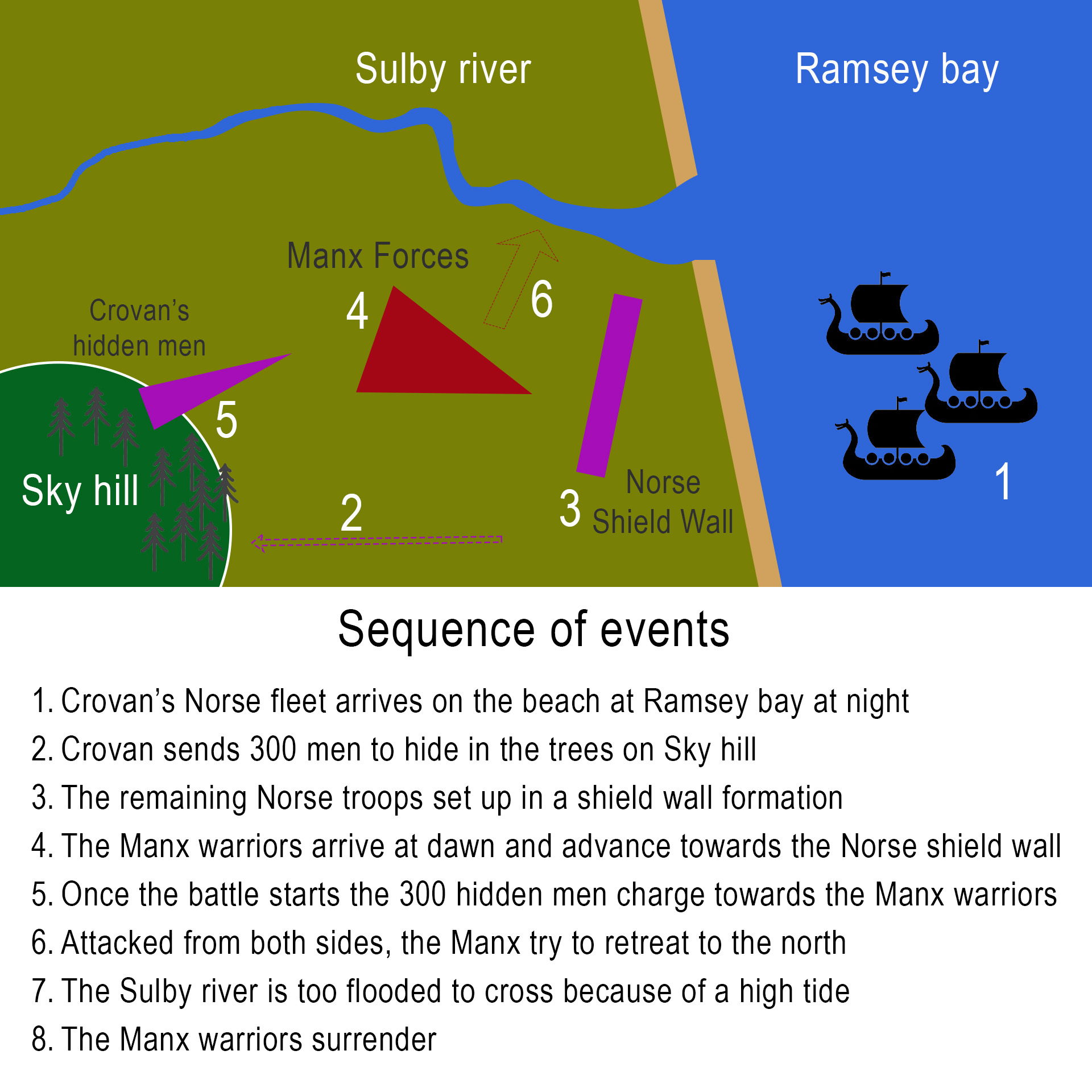
The Battle of Sky Hill, 1079. Godred Crovan's forces defeated the Manx warriors at Ramsey.
The sea kingdom
The kingdom Godred founded was not just the Isle of Man. It included the Hebridean islands — Lewis, Skye, Mull, Islay — and at times Dublin and other territories around the Irish Sea. The map below shows the kingdom at its greatest extent, around 1091.
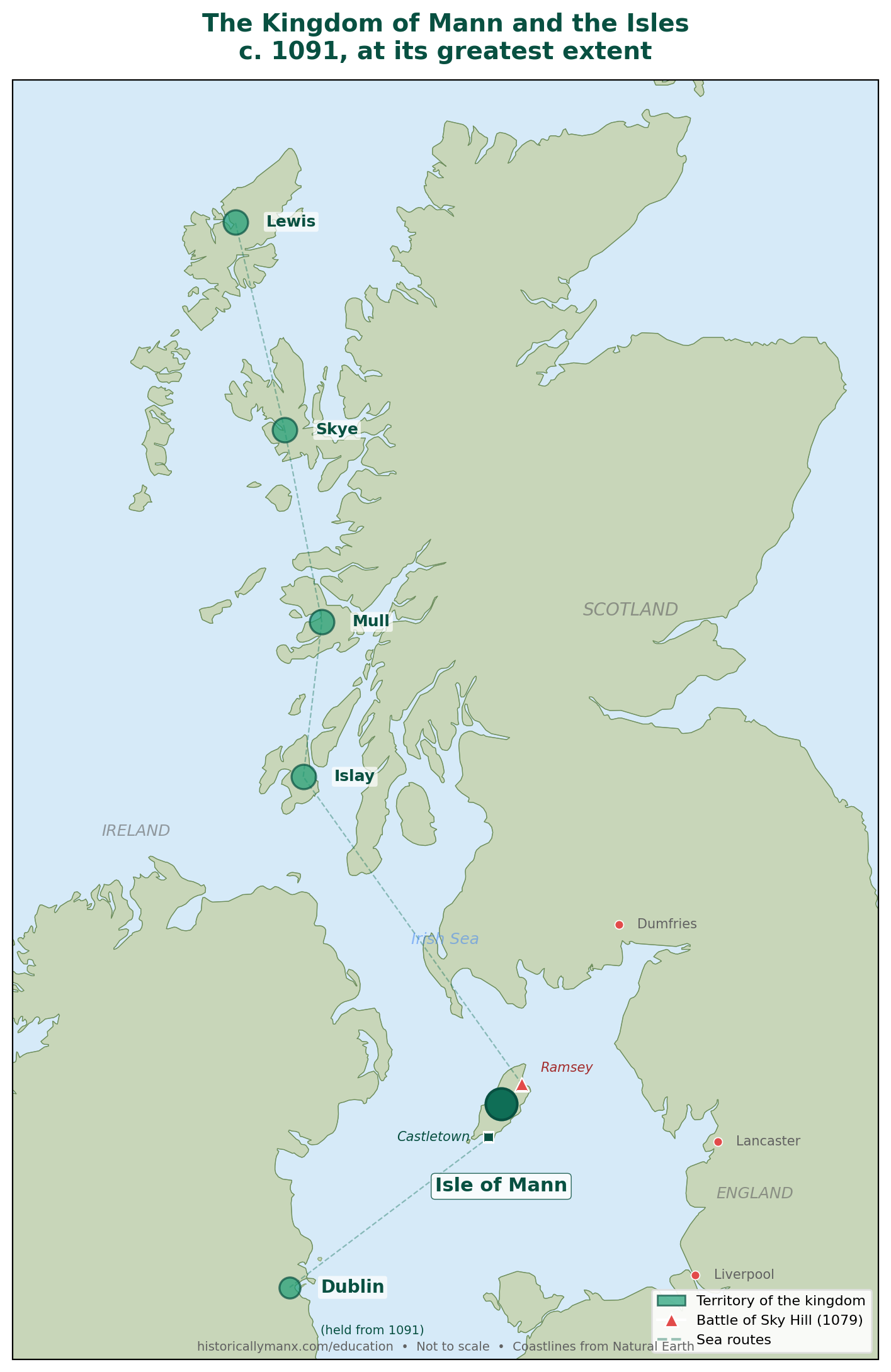
The Kingdom of Mann and the Isles at its greatest extent, c. 1091. The green markers show territories held by the kingdom.
Did you know?
For centuries the Manx people have talked of King Orry — Ree Gorree in the Manx language — the ancient founder of the kingdom. They named the Milky Way after him: Raad Mooar Ree Gorree, the Great Road of King Orry, the path his ships followed across the night sky. Most historians believe King Orry and Godred Crovan are the same person.
Blank map — Activity 2
Use this blank map for the mapping activity in your workbook. Mark on it the Isle of Man, the four Hebridean island groups (Lewis, Skye, Mull, Islay), Dublin, and Ramsey.
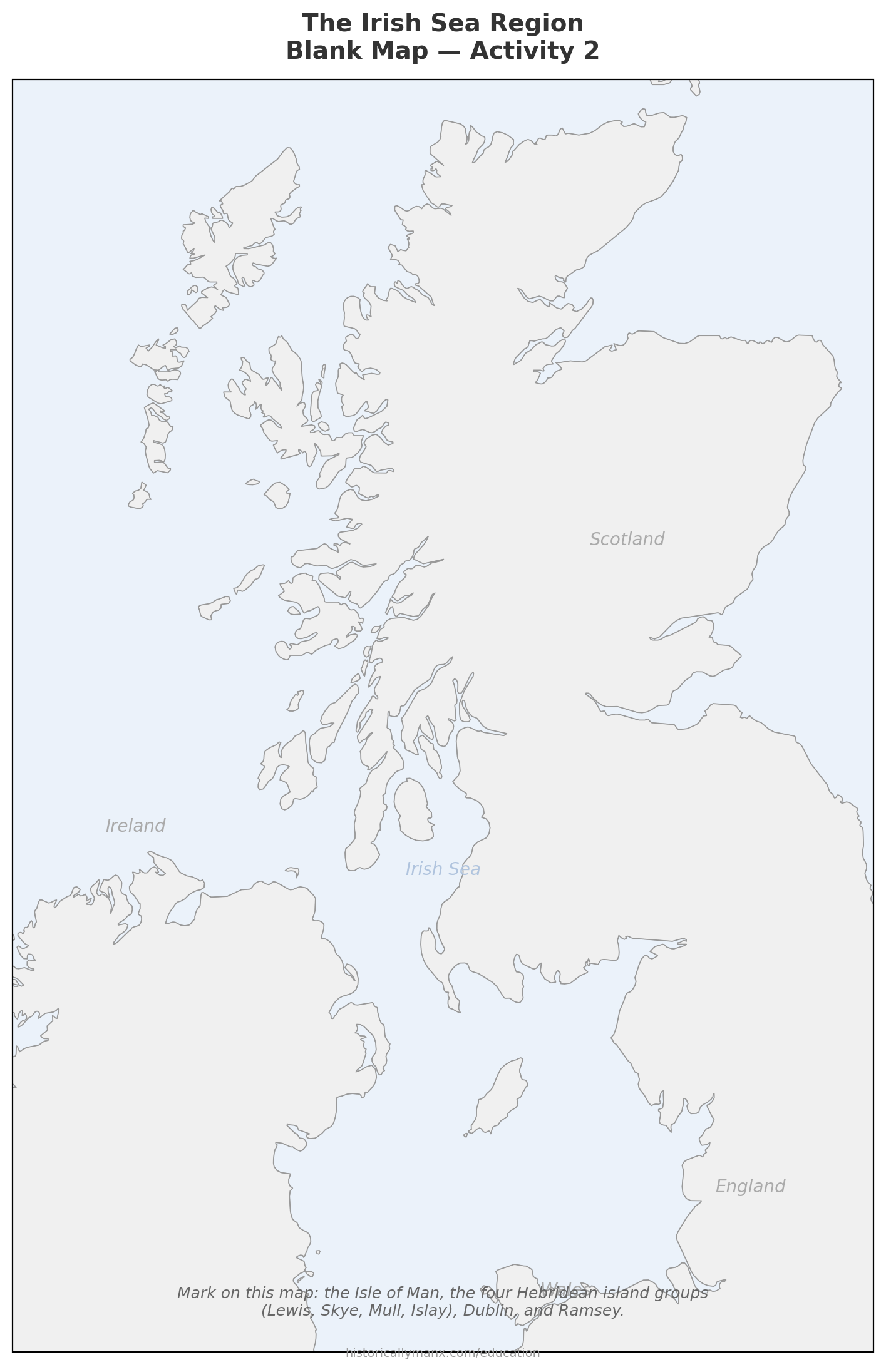
Blank map of the Irish Sea region. Print this or use it on screen for Activity 2.
Lesson 2: The Hill and the Oath
Tynwald — a thousand-year-old parliament
Tynwald Hill
Every year on 5 July, the people of the Isle of Man gather at St John's for Tynwald Day. It is the oldest continuous parliament in the world, and it still meets in the open air on a four-tiered grass mound, just as it has for over a thousand years.
The hill has a strict seating order. The Governor and Lord of Mann sit at the top. Below them, the Members of the House of Keys. Then clergy and public officials. On the lowest tier, the Deemsters — the Island's judges — read the new laws aloud in English and Manx. At the foot of the hill, the Clerk of Tynwald receives petitions from the public.
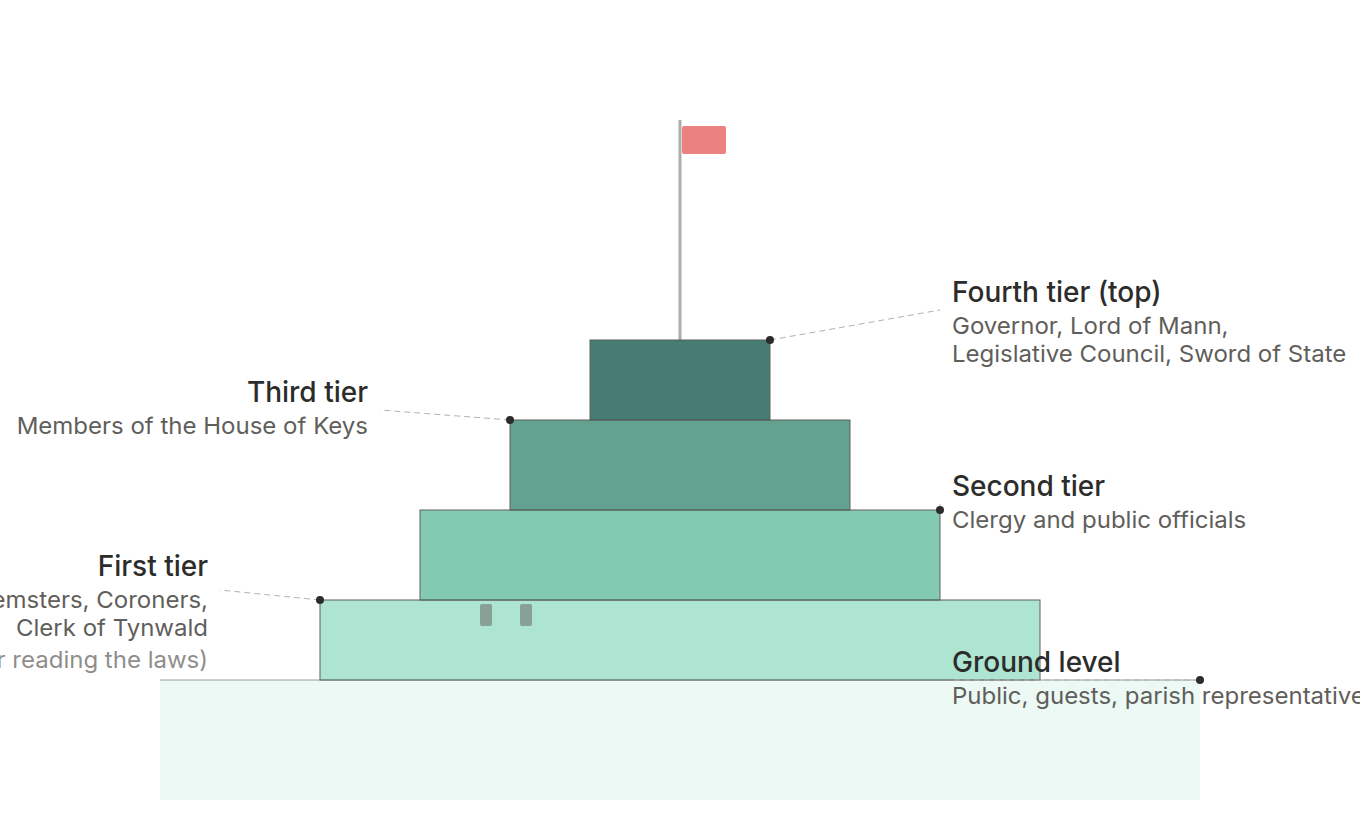
Tynwald Hill: a cross-section showing the four tiers and who stands at each level during the open-air ceremony.
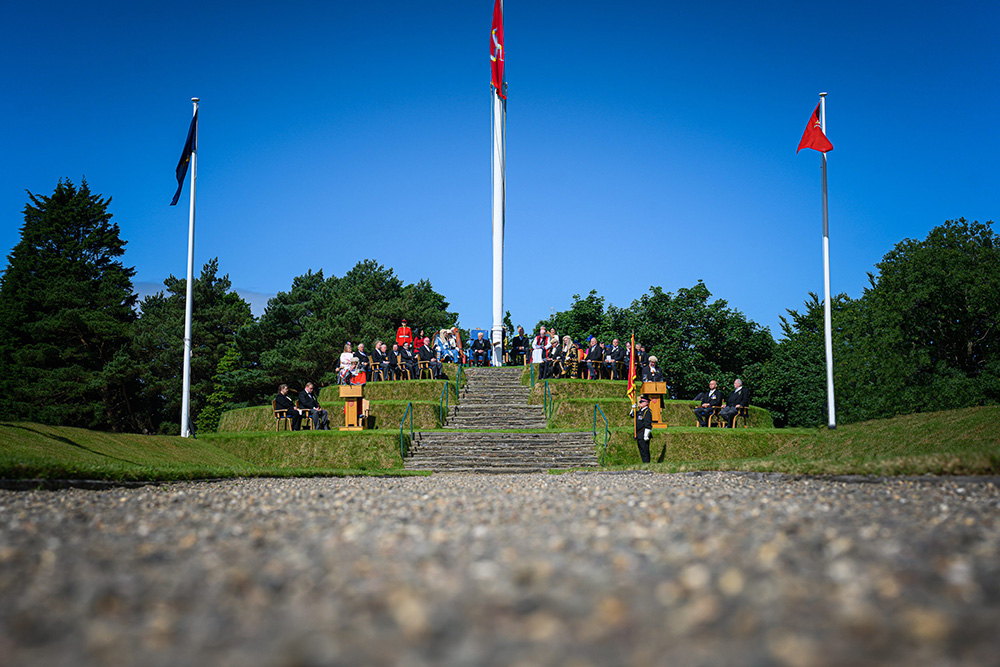
Tynwald Day at St John's. The assembly faces east, as it has for centuries.
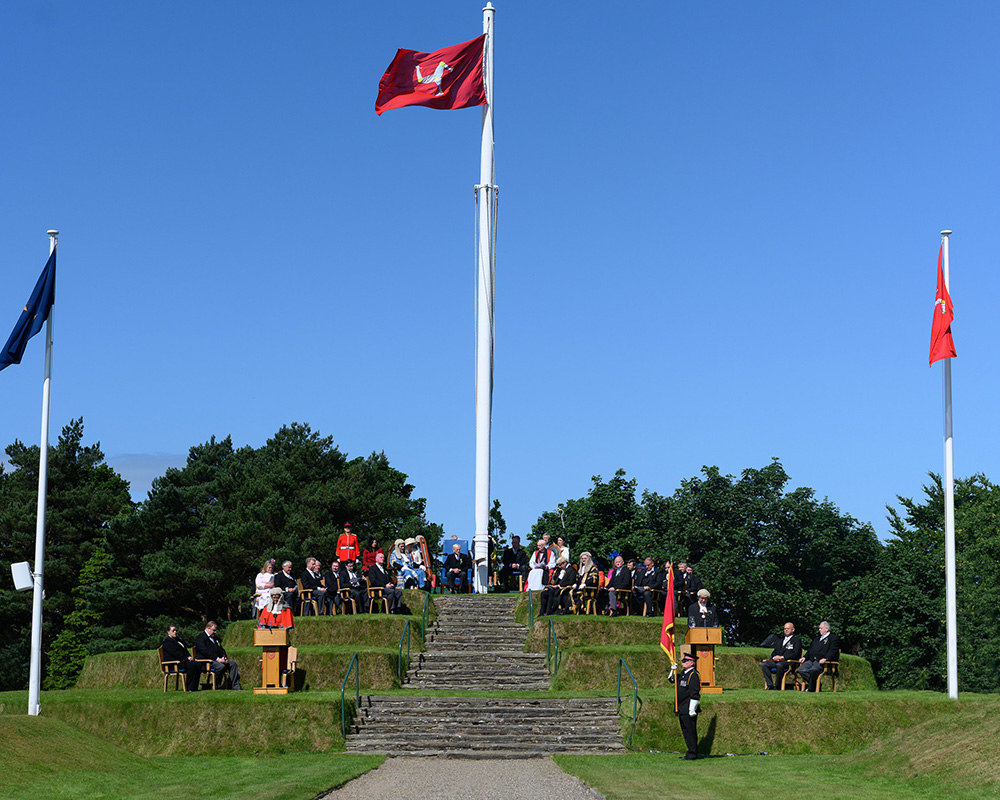
Members of Tynwald on the hill. The tiered seating reflects the ancient order of precedence.
The Deemster's Oath
Before a Deemster could serve, he had to swear an oath. This is one of the most remarkable legal oaths in the world, because it promises justice not just to the powerful, but to everyone — including people who in most medieval societies had no rights at all.
Source B
The Deemster's Oath
By this oath I do swear that I will execute the laws of this Isle justly betwixt our Sovereign Lord the King and his subjects within this Isle, and betwixt party and party, as indifferently as the herring's backbone doth lie in the midst of the fish.
The Deemster's Oath, sworn by every Deemster before taking office. The oath dates to at least the fifteenth century and is still in use today.
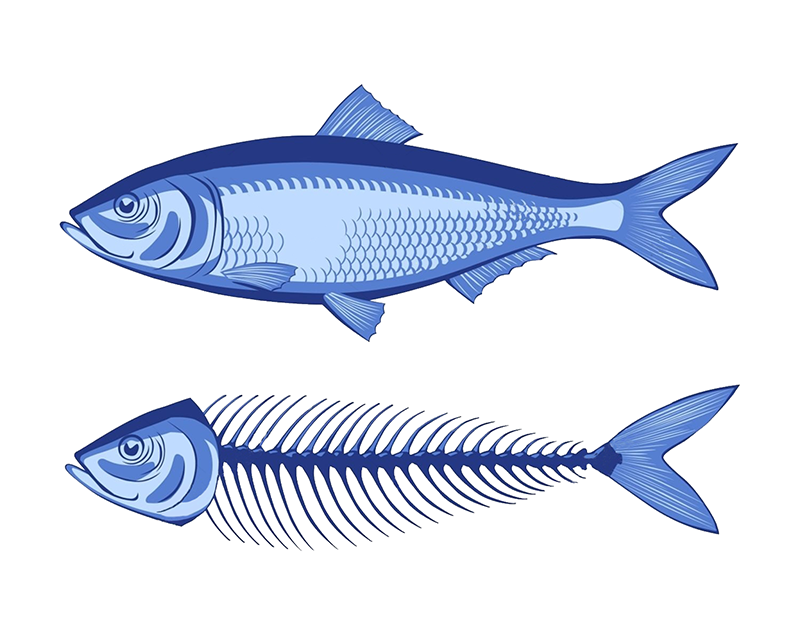
"As indifferently as the herring's backbone doth lie in the midst of the fish." The backbone sits exactly in the centre — justice must be exactly equal.
Did you know?
The herring was the most important fish in the Manx economy. Everyone on the Island would have understood the image. The oath is still in use today.
The Breast Laws
Before the laws of the Isle of Man were written down, they were memorised. The Deemsters carried the law in their memory — "in their breast," as the saying went — and delivered judgements based on what they knew. These were called the Breast Laws.
Source C
From the Customary Laws of the Isle of Man
That the Lord should have his prerogatives and royalties, and the people their right and tenures, and the Keys to know the certain laws and customs of the Island, to decide and determine all matters in difference and controversies; but the Keys were to have nothing but what the Deemsters gave them in charge to enquire upon.
From the traditional Customary Laws, which described how the Manx system of government was supposed to work.
Justice for everyone
One of the most striking features of the Manx legal system is how it defined who deserved protection. Most medieval courts served the interests of the powerful. The Manx system was different.
Source D
From the traditional laws of the Isle of Man
That no man should sue nor be sued until the court day and that no man should be punished but by the laws of the land. That the weak be defended and the rich not suffer to oppress the poor. That the deaf, the blind, the lame and the simple should have a right to a hearing as well as the strong and the able.
From the traditional Customary Laws of the Isle of Man, describing the rights of all people under Manx law.
Thorwald's Cross
The Isle of Man has some of the finest Norse cross slabs in the world. Thorwald's Cross, from Kirk Andreas in the north of the Island, shows the meeting of two worlds: one side shows a scene from Norse mythology (Odin being consumed by the wolf Fenrir at Ragnarök), the other shows a Christian figure with a cross and a book. The two belief systems existed side by side on the Island.
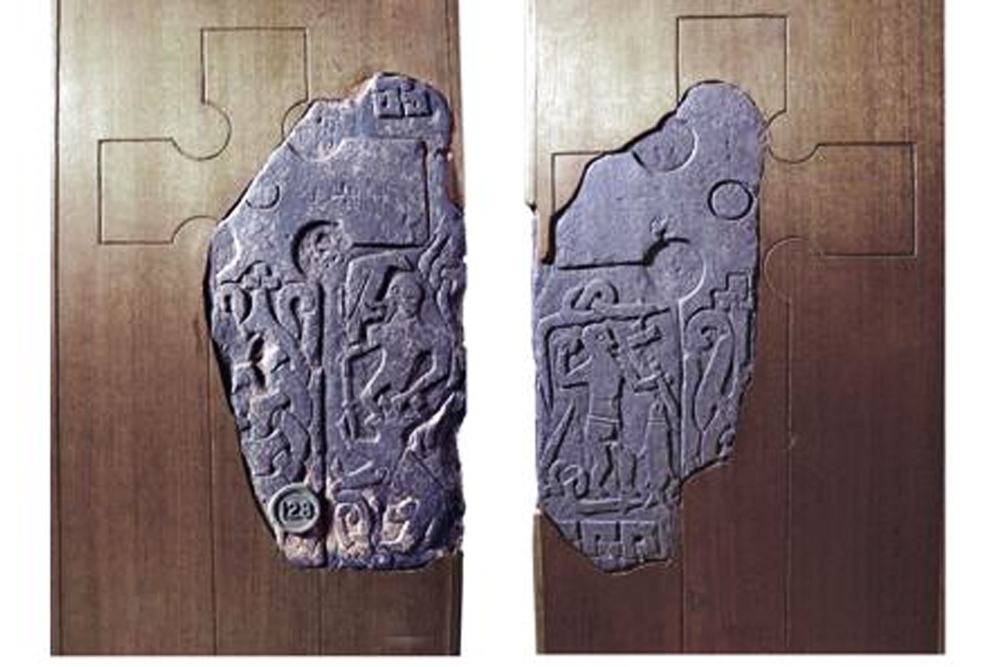
Thorwald's Cross, Kirk Andreas. Left: a scene from Norse mythology. Right: a Christian figure. Both sides of the same stone.
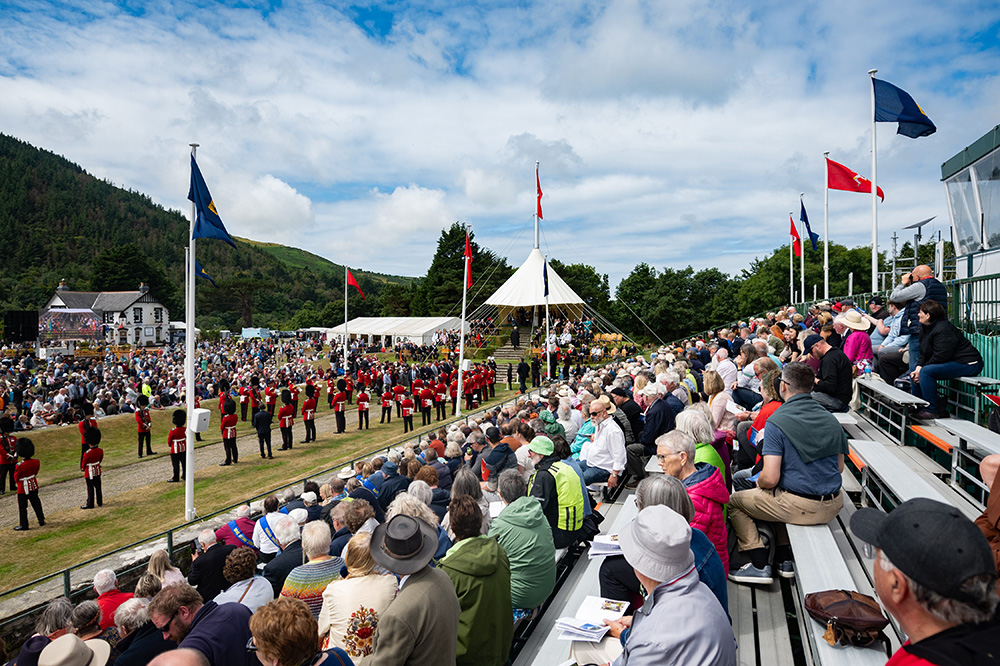
Tynwald Day. The ceremony continues to this day, held on 5 July each year at St John's.
Further reading
- Historically Manx — explore the full archive of over 2,900 items on Manx history
- Tynwald — history and heritage
- The Chronicles of the Kings of Mann and the Isles (Manx Society, Vol. XXII, 1874)