A series of three official letters from King George III (via Secretary Weymouth), the Archbishop of York (W. Ebor), and the Bishop of Sodor and Man (R. Sodor & Man), concerning a nationwide charitable collection to support the Society for the Propagation of the Gospel in Foreign Parts. The collection aims to relieve Anglican clergy in North America during and after the American Revolution, including those who refused to abandon their allegiance. The Bishop notes the limited capacity of Isle of Man parishes to contribute but encourages participation. The document reveals the Church's institutional response to colonial upheaval and provides context for religious and social conditions in the Isle of Man.
Sample chapters (1, 18, 22) from a forthcoming monograph examining the 1765 Isle of Man Revestment as a constitutional precedent for American independence. Chapter 1 establishes the island's smuggling economy, constitutional separateness, and indigenous institutions (Tynwald, Keys, Deemsters). Chapter 18 analyzes the Tea Act as a catalyst for colonial resistance. Chapter 22 reconstructs the 'Bacon-Coke framework' of coordinate dominion, arguing it remained valid law until 1991 and was violated by the 1765 Purchase Act.
A scholarly essay (Retiring President's Address) by David Craine examining the life and business activities of George Moore (1709–1787), a prominent Peel merchant, smuggler, and Speaker of the Keys. Drawing on Moore's Letter Books held in the Manx Museum, the essay covers his trading ventures, contraband operations, relationship with Bishop Wilson, family life, and public service during the critical period surrounding the 1765 Revestment. Essential primary source material on Manx merchant enterprise, smuggling networks, and constitutional politics.
A scholarly essay by David Craine (Retiring President's Address) on George Moore (1709–1787), a major Peel merchant and Keys Speaker during the 1765 Revestment period. Based on Moore's letter books (1750–1780) held in the Manx Museum, it details his trading ventures, smuggling operations, family life, and political role—particularly his involvement in the Keys during the post-Revestment crisis and his relationship with Bishop Wilson over the contraband trade.
A comprehensive historical account of smuggling on the Isle of Man from the Mischief Act of 1765 to 1853, detailing the immediate post-Revestment chaos, subsequent legislative efforts (1767 Act, 1798 reforms), patterns of illicit trade in spirits, tea, tobacco, salt, and grain, and the eventual suppression of smuggling activity. Draws heavily on eyewitness accounts and the 1791 Commissioners' Report.
Scholarly historical monograph covering revenue, expenditure, taxation, and economic policy of the Isle of Man from the 1765 Revestment through 1866. Extensively documents the negotiations over customs revenue, the establishment of the Post Office, harbour development, and the Manx people's struggle to control surplus revenue. Directly addresses the constitutional and fiscal aftermath of the Revestment.
A scholarly history of the Isle of Man covering the post-Revestment period (1765–1866), with detailed focus on smuggling activities before and after the Mischief Act of 1765 and subsequent reform legislation. Includes eyewitness accounts of post-1765 chaos, the role of surveyor Lutwidge, the 1791 Commissioners' Report, and anti-smuggling reforms up to 1853.
Comprehensive secondary historical account covering social and economic conditions on the Isle of Man in the century following the 1765 Revestment. Details wages, prices, housing, town development (Douglas, Ramsey, Castletown, Peel), poor relief systems, police inadequacy, public health, and the impact of smuggling suppression, agricultural depression, emigration, and tourism on Manx society.
A comprehensive secondary historical work covering the revenue, expenditure, taxation, and customs reforms in the Isle of Man between 1765 and 1866, with particular emphasis on the Revestment Act of 1767 and subsequent governance of insular finances. Moore examines the negotiation of surplus revenues, smuggling, harbour development, and the relationship between the Manx Legislature and Westminster Parliament, providing detailed financial tables and legislative history.
A comprehensive scholarly history of Manx social and economic conditions following the 1765 Revestment, covering trade restrictions, the licence system, industrial development, shipbuilding, and commercial evolution. This chapter examines how the change in sovereignty affected Manx commerce, the oppressive regulatory framework imposed by Westminster, and the gradual modernization of the island's economy through factories, steam communication, and financial institutions.
Chapter II of Moore's comprehensive history focuses on trade, industry, and economic development on the Isle of Man following the 1765 Revestment. It details the restrictive commercial policies imposed by Westminster, the licence system and its effects on smuggling, the establishment of factories and mills, shipbuilding, and the gradual liberalisation of trade through the mid-19th century. The chapter provides detailed analysis of exports, imports, and the island's industrial ventures.
Detailed historical chapter on Manx social and economic conditions in the century following the 1765 Revestment, covering wages, labour conditions, prices, housing, urban development, poor relief, and public services. Provides extensive primary source evidence (wages tables, price data, contemporary descriptions) and discusses the impact of trade liberalisation, emigration, visiting populations, and legislative reforms on island society.
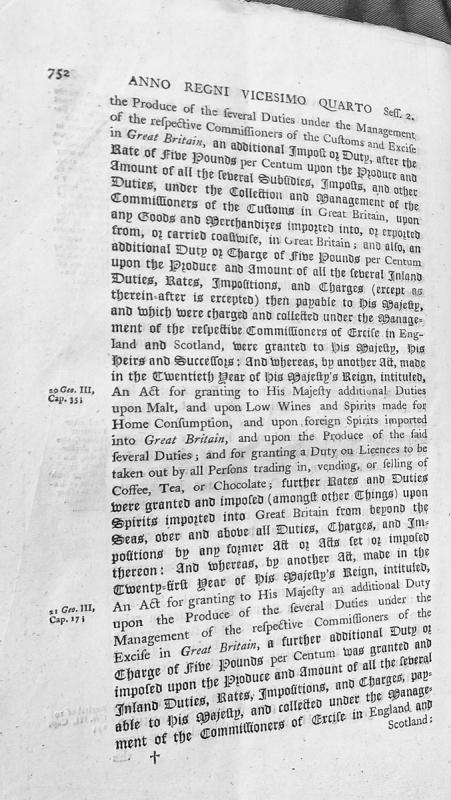
This document is an excerpt from legislative records detailing various acts of Parliament granting additional duties and imposts. It references acts from the 24th, 20th, and 21st years of the reigning monarch's reign, imposing duties on customs, excise, malt, spirits, and other goods, as well as licences for trading in coffee, tea, and chocolate.
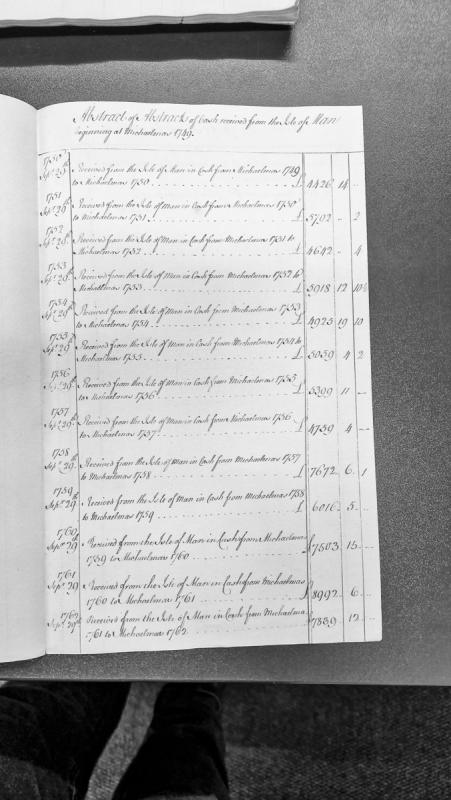
A revenue abstract recording annual cash receipts from the Isle of Man from Michaelmas 1749 to Michaelmas 1762. The document lists thirteen annual entries, each dated September 29th, showing amounts received in pounds, shillings, and pence for the fiscal year ending at Michaelmas.
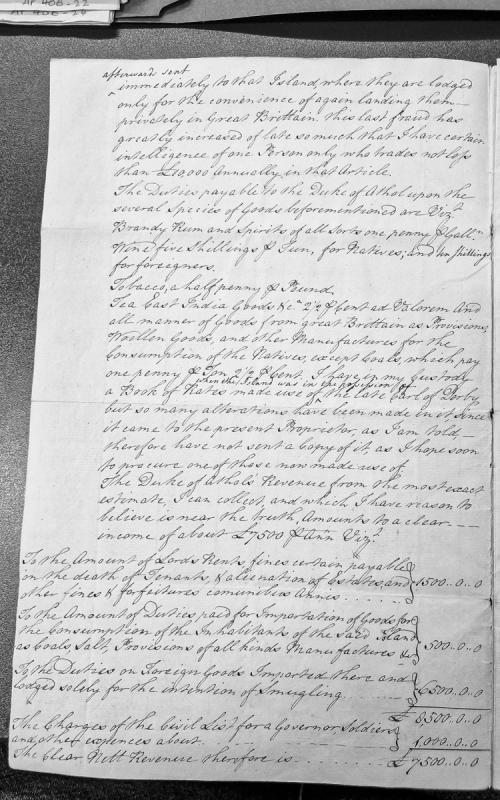
A detailed administrative document detailing the duties payable to the Duke of Athol on various imported goods (spirits, wine, tobacco, tea, manufactures), the scale of smuggling fraud, and a financial breakdown estimating the Duke's annual net revenue at approximately £7,500. The document includes specific duty rates and revenue sources.
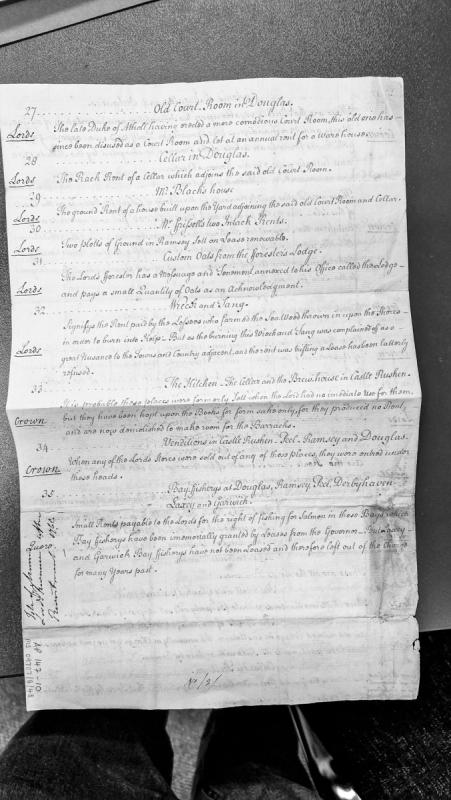
Part of a revenue abstract detailing various rents and revenue sources belonging to the Lord of Mann, including properties in Douglas, Ramsey, Peel, and Castle Rushen. The document explains the nature of each rent (ground rents, rack rents, fishing rights, etc.) and provides historical context for items no longer generating income.
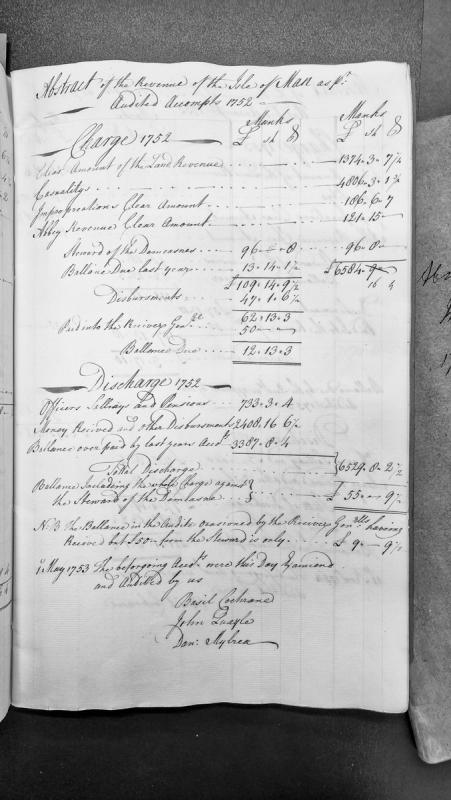
Official revenue abstract for the Isle of Man for the year 1752, detailing charges from various sources including land revenue, casualties, impropriations, and abbey revenue, with corresponding discharge entries for officers' salaries, pensions, and disbursements. The document concludes with audit certification dated 1st May 1753.
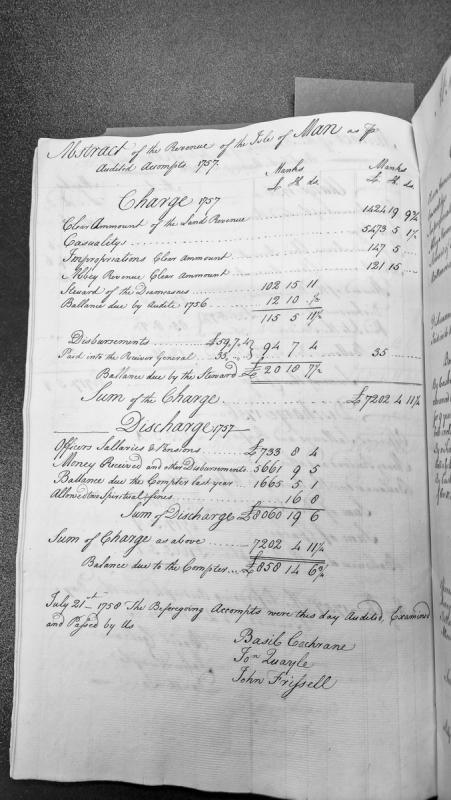
An official revenue abstract for the Isle of Man covering the year 1757, detailing charges and disbursements including land revenue, casualties, impropriations, and abbey revenue. The document shows a balance due to the Comptroller of £858 14s 6¾d and was audited and passed on 21 July 1758 by three auditors.
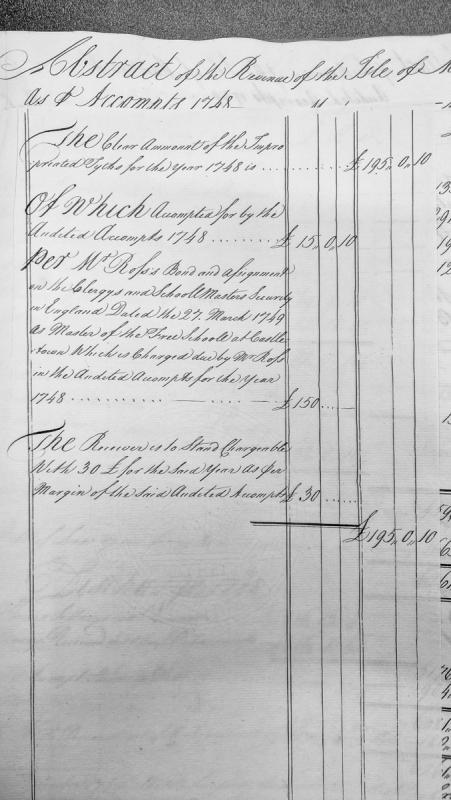
A revenue abstract detailing the clear amount of impropiated tythes for the Isle of Man in 1748, totalling £195.0.10. The document accounts for funds through audited accounts and a bond assigned on clergy and schoolmaster security in England dated 27 March 1749, with Mr Ross serving as Master of the Free School at Castletown.
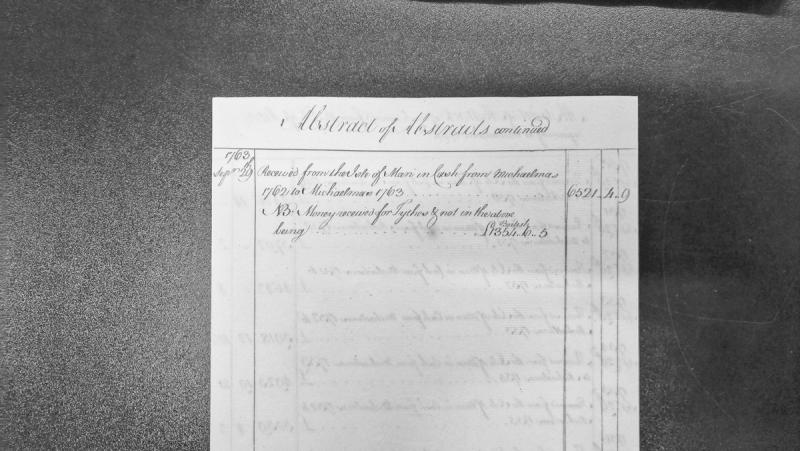
Financial abstract documenting cash receipts from the Isle of Man for the period from Michaelmas 1762 to Michaelmas 1763, totalling £6521.4.9. Additional note records money received for tithes amounting to £1354.6.5 British.
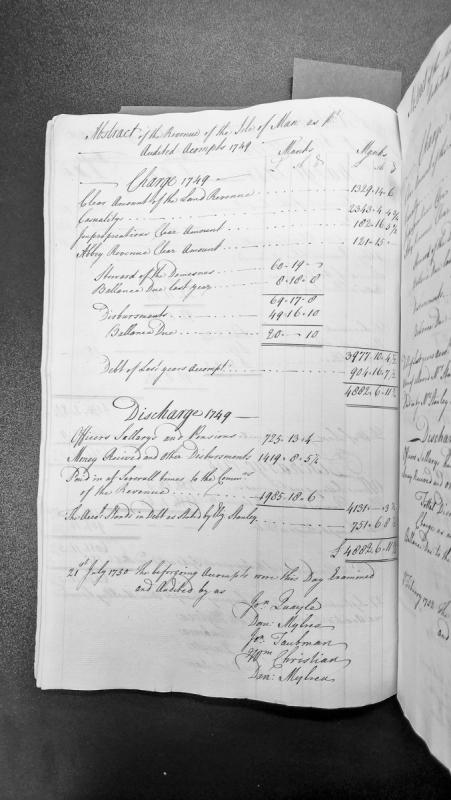
Financial abstract detailing the revenue and expenditure of the Isle of Man for 1749, including land revenue, casualties, impropriations, and abbey revenue. The document shows charges, disbursements, and discharge accounts, with a final accounting debt of £751 6s 8½d. Examined and audited on 21st July 1750.
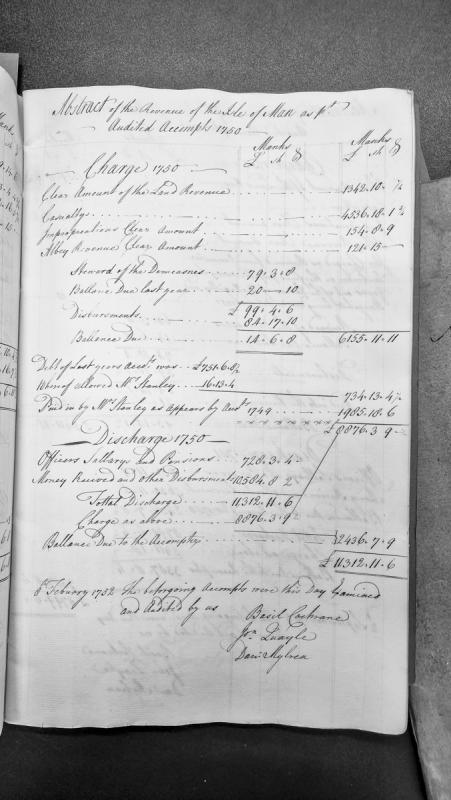
An audited financial account of the Isle of Man's revenue for 1750, detailing charges (land revenue, casualties, impropriations, abbey revenue, demesnes steward, and balance due), disbursements (officers' salaries, pensions, and other payments), and the resulting balance due to the accompter. Certified by three auditors on 6 February 1752.
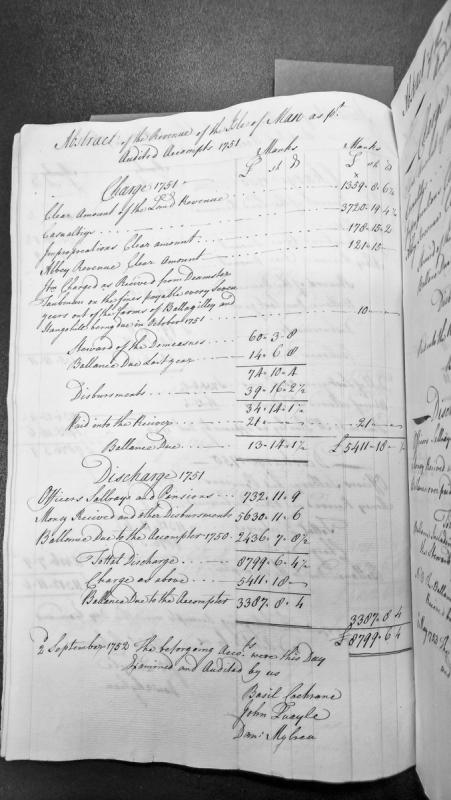
An audited revenue abstract for the Isle of Man covering the year 1751, detailing charges including land revenue, casualty payments, impropriations, and abbey revenue, along with disbursements and discharge accounts. The document provides a comprehensive financial statement with officer salaries, pensions, and various payments, concluding with a balance due to the accompter.
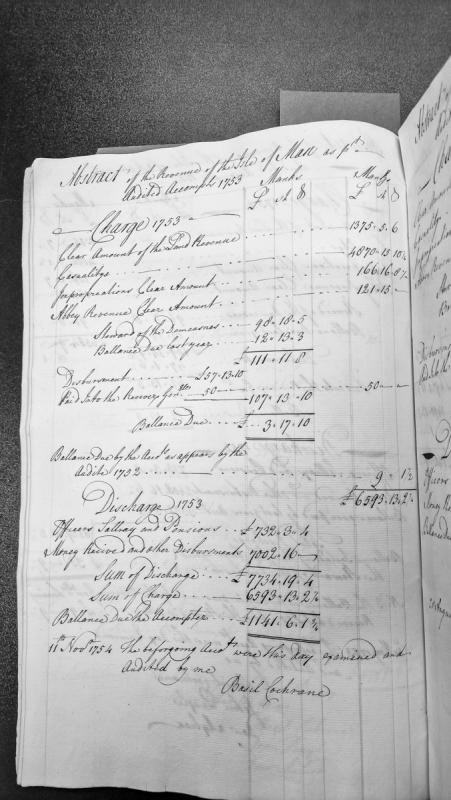
An audited financial abstract of the Isle of Man's revenue for 1753, detailing charges including land revenue, casualties, impropreations, and abbey revenue, with corresponding disbursements and officers' salaries. The document shows a balance due to the accompter of £1141.6.1¾. Audited on 11 November 1754.
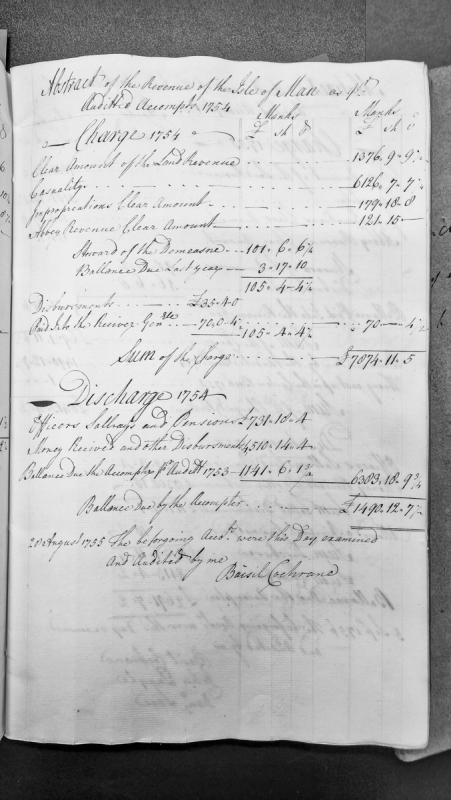
An audited financial abstract for the Isle of Man covering the year 1754, detailing charge and discharge accounts including land revenue, casualties, impropriations, abbey revenue, officer salaries, and disbursements. Audited by Basil Cochrane on 20 August 1755.