A comprehensive bibliography of works relating to the Isle of Man, compiled by William Harrison and published by the Manx Society in 1876 as a revised and enlarged edition (first published 1861). It catalogues historical works from Ranulph Higden (1482) through 1870, covering chronicles, constitutional documents, ecclesiastical histories, and island descriptions. Highly relevant to research on the 1765 Revestment as it indexes contemporary and earlier sources on Manx governance, trade, and constitutional status.
A comprehensive bibliography of works relating to the Isle of Man, compiled by William Harrison and published by the Manx Society in 1876 (revised and enlarged from the 1861 first edition). The work catalogues historical, religious, geographical, legal, and administrative sources from the 15th century onwards, including primary documents, chronicles, maps, parliamentary records, and scholarly works. It serves as an essential research guide for all aspects of Manx history, including governance, ecclesiastical matters, trade, and social history relevant to the 1765 Revestment study.
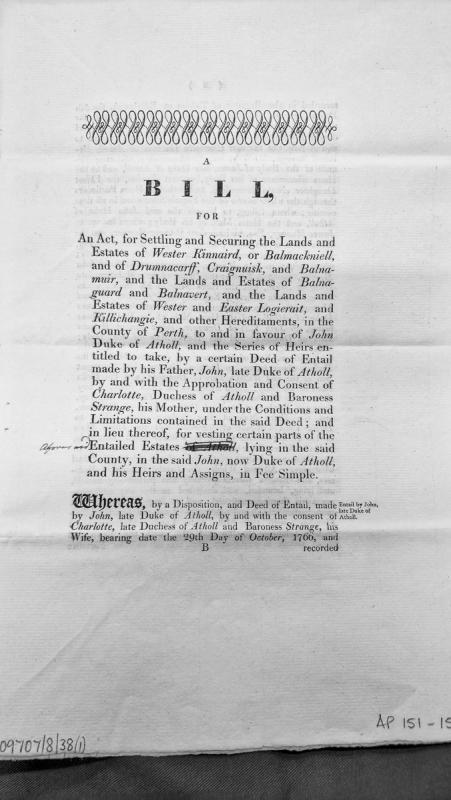
A legislative bill proposing an Act to settle and secure various entailed estates in Perth County, Scotland in favour of John, Duke of Atholl, and his heirs. The bill references a Deed of Entail made by his father (also John, late Duke of Atholl) with the consent of Charlotte, Duchess of Atholl and Baroness Strange, dated 29 October 1766. The bill proposes vesting certain parts of these entailed estates in fee simple.
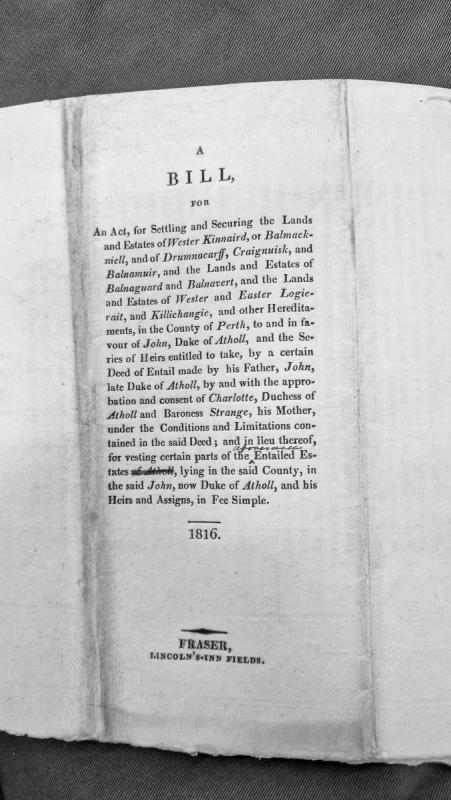
A printed legislative bill from 1816 concerning the settlement and security of multiple entailed estates in Perth County, Scotland, in favour of John, Duke of Atholl, and his heirs. The bill seeks to vest portions of these estates in fee simple under conditions specified in an earlier deed of entail made by the previous Duke.
A letter from Bishop Levinze (likely Bishop of Sodor and Man) to Thomas Choldmondsley, dated 28 June 1688, discussing his imminent return to the Isle of Man. The letter requests that salaries for a schoolmaster at Ramsey and a preacher/schoolmaster at Douglas be prepared for his passage, and expresses urgent concern about a 'Seminary of Romish Priests and Jesuits' being sent to the island. The letter is dated on the eve of the trial of the Seven Bishops (29 June 1688), a crucial moment in English religious and constitutional history.
Correspondence from Bishop Murray of Sodor and Mann to Home Secretary Robert Peel defending the management of two ecclesiastical charities (Academic and Impropriate Funds) against complaints from the Keys (Manx parliament). Includes detailed financial breakdown and historical documentation of the 1666 foundation deeds establishing these funds for clergy education and support.
Official correspondence from Bishop Murray of Sodor and Mann to Home Secretary Robert Peel defending the management of two charitable funds (Academic and Impropriate Funds) established for clergy education and support. Includes detailed financial accounting and historical documentation of the charity's origins, responding to complaints from the Keys (Manx parliament) about mismanagement. The letter demonstrates ecclesiastical governance, educational provision, and the constitutional relationship between the Island's church and Westminster.
A formal letter patent from Bishop Nicholas of Sodor acknowledging receipt of ecclesiastical vestments, liturgical objects, and books bequeathed by his predecessor Bishop Michael, delivered by the Abbot of Furness Abbey. The document provides insight into the material wealth and ecclesiastical organisation of the medieval Isle of Man bishopric and its connections to English monasteries.
A Latin charter and English translation documenting Bishop Nicholas of Sodor's receipt and acknowledgement of ecclesiastical vestments, liturgical items, and books bequeathed by his predecessor Bishop Michael, transmitted through Furness Abbey. The document exemplifies medieval episcopal administration and the religious links between the Isle of Man and English monastic foundations.
Letter from Bishop Richmond of Sodor and Man to the Duke of Atholl dated 12 August 1776, discussing the recent establishment of a clear legislative process for the Isle of Man following the 1765 Revestment. The Bishop reports on Major Dawson's direction to the 24 Keys to propose necessary laws, which were approved and received Royal Assent, establishing a secured mode of legislation for the Island. Also includes personal remarks on the public reception of these measures.
Letter from Bishop Richmond (of Sodor & Man) to the Duke of Atholl dated August 1776, discussing the resolution of legislative uncertainty following the 1765 Revestment. The Bishop reports that Major Dawson (Lieutenant Governor) has directed the 24 Keys to propose necessary laws, which have been approved and returned with Royal Assent, then proclaimed on Tynwald Hill. The letter reflects on public reaction and Manx constitutional settlement in the decade following the British Parliament's purchase of sovereignty.
Letter from Bishop Ward of Sodor and Mann to Home Secretary Henry Goulburn requesting restoration of impropriate tithes to support impoverished parish vicars. Details the financial hardship of clergy in major parishes (Rushen, Malew, Lezayre) and proposes that Crown-held tithes be returned to the Church. Relevant to post-Revestment ecclesiastical administration and the Crown's role in Island governance.
Bishop William Ward of Sodor and Mann writes to Home Secretary Henry Goulburn requesting Crown restoration of impropriate tithes to parish vicars in the Isle of Man. The letter documents the poverty of the Manx clergy despite possessing one of the most extensive dioceses, caused by the Lords of Man having sold most tithes to the Crown. The letter discusses specific parishes (Rushen, Malew, Lezayre) and mentions King William's College endowments.
This appears to be a blank or heavily degraded page from a historical manuscript. No readable text, date, signatures, or substantive content could be extracted from the transcription provided.
This appears to be a blank page or heavily degraded document fragment with minimal readable content. Only a closing brace/bracket symbol is visible, suggesting this may be a partial or damaged page from a larger manuscript.
This appears to be a digitised document consisting entirely of whitespace or unreadable OCR output. No substantive text content is recoverable from the file. The filename suggests a Cornell University Library digitisation (cu31924088004423), but the actual document contents cannot be analysed.
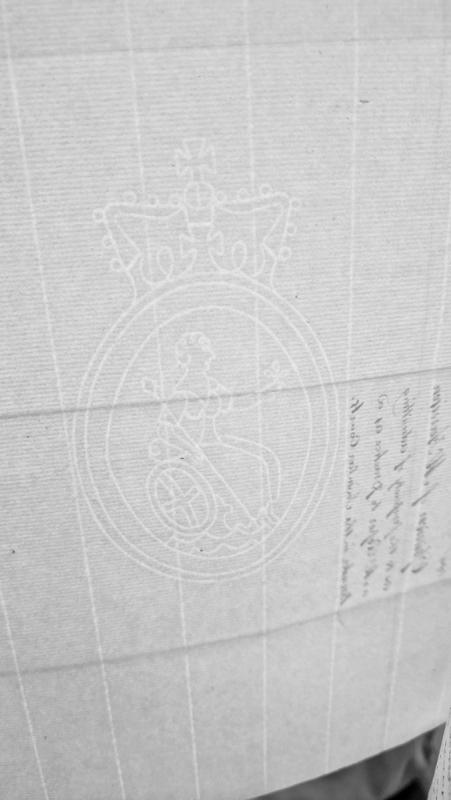
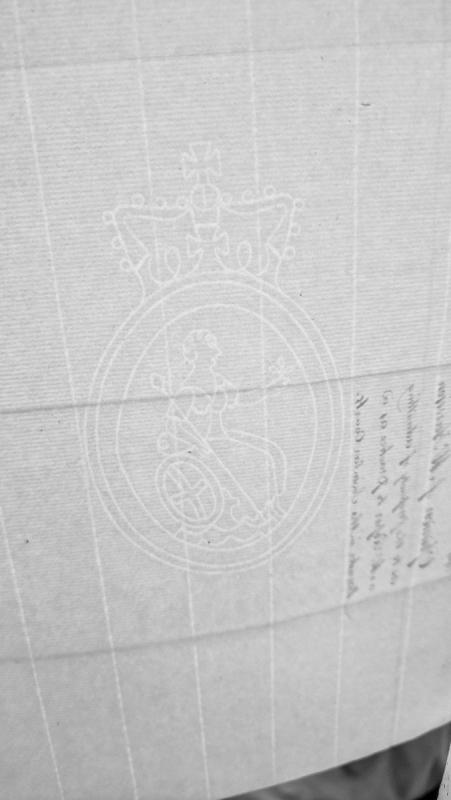
A largely blank page from a historical document, featuring a crowned Britannia watermark embossed in the paper. Faint handwritten text is visible at the bottom right edge but appears to be show-through from the reverse side and is not legible enough for reliable transcription.
A largely blank page featuring a crowned royal cipher or coat of arms watermark. Handwritten text appears at the bottom right edge, oriented sideways (90° clockwise rotation), but is too faint and cropped to read reliably.
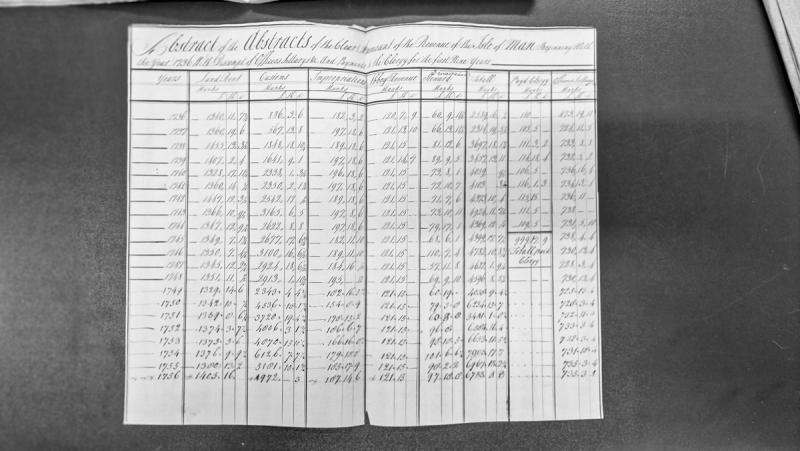
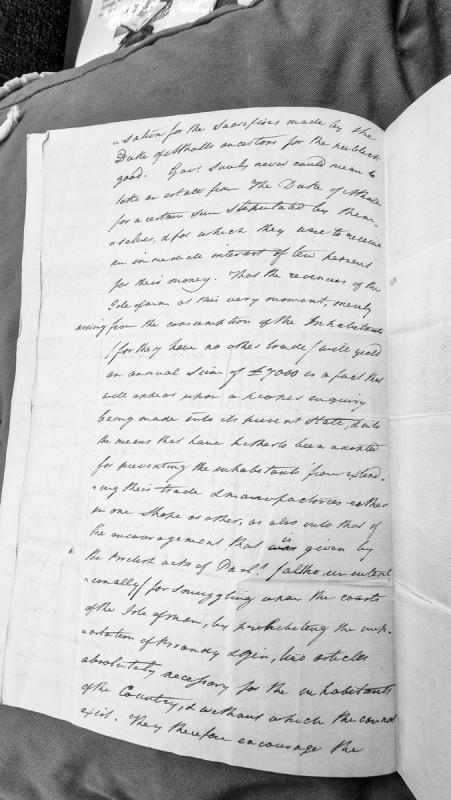
This transcription contains multiple unrelated documents: a fragmented historical manuscript about Isle of Man revenues and trade policy (likely 18th century), followed by numerous blog posts about a contemporary (2015) comics education project called 'Every Story Needs a Hero' for UK libraries. The historical content appears corrupted or improperly OCR'd with modern blog content interspersed.
Official Board of Trade report to the Privy Council's Committee for Plantation Affairs, dated 24 June 1760, reviewing 19 acts passed by the Pennsylvania Assembly in 1758-1759. The report examines objections raised by the Penn Proprietors to 11 of these acts, including debates over proprietary rights, crown prerogative, judicial tenure, taxation, and legislative authority. Includes extensive legal argumentation on the limits of provincial law-making and the Crown's supervisory power. Contextually relevant to Isle of Man Revestment as a parallel case of colonial constitutional negotiation and proprietary-vs-parliamentary authority disputes.
This is a transcription of a classical geographic passage from Boethius describing the islands of the Irish Sea and Scottish coast, with the Isle of Man positioned as the first and principal island. The text provides historical context on Man's ancient significance as a seat of the Druids and its geographic relationship to Scotland, England, and other British Isles. It is relevant as background source material for understanding Man's place in medieval and classical geography.
A historical geographical description of Scottish and Irish Sea islands extracted from Boethius's work, focusing on the Isle of Man (Mona) as the principal isle opposite Galloway and England. The text provides classical and medieval context for Man's geography, religious significance, and position within the island chain stretching to the Hebrides and Shetland.
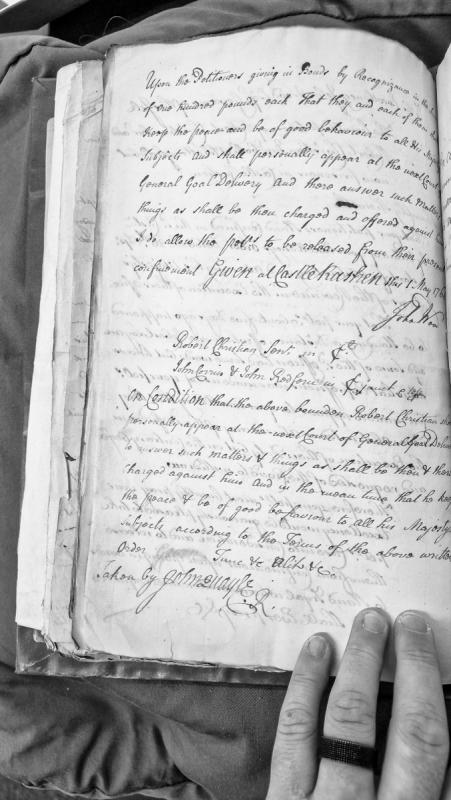
A recognisance document ordering the release of petitioners from Castle Rushen Goal on condition they provide bonds of £100 each to keep the peace and appear at the next Court of General Goal Delivery. Robert Christian is bound by sureties John Corrin and John Rodfone to answer charges.
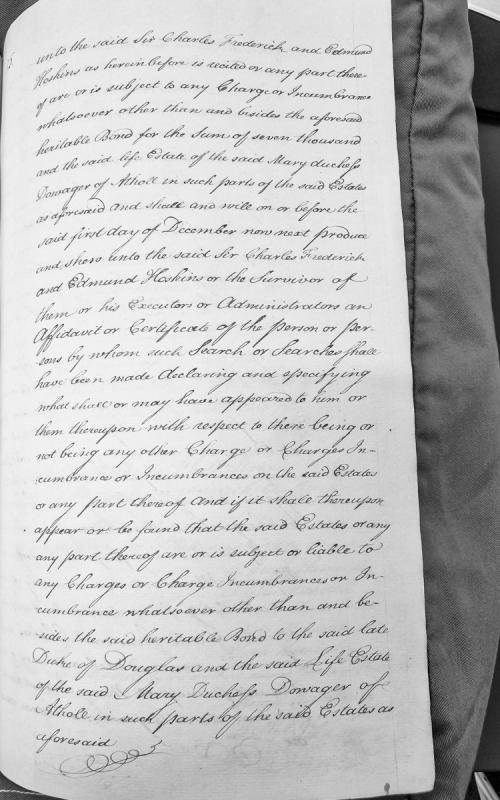
This document is an excerpt from a legal bond or contract concerning the estates of Sir Charles Frederick and Edmund Hoskins. It details conditions requiring searches for charges or encumbrances on the estates, with stipulations about disclosure and affidavits to be produced by December 1st, referencing a heritable bond of seven thousand and life estate interests of Mary, Duchess Dowager of Atholl.
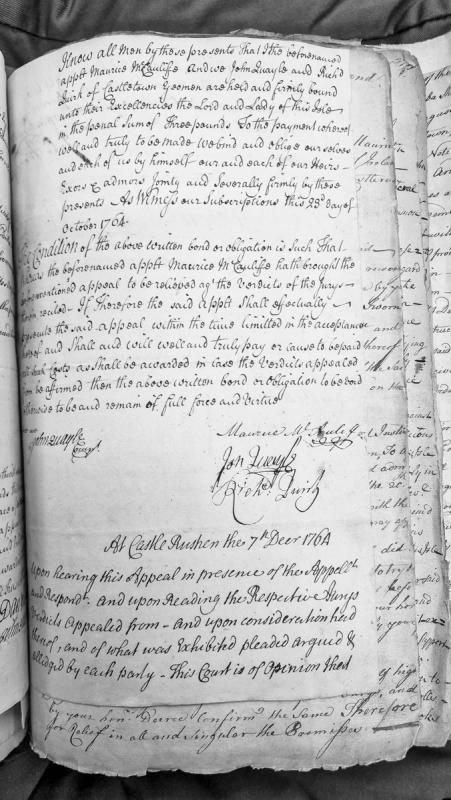
A recognisance bond dated 23 October 1764 in which Maurice McAuliffe (appellant) is bound with sureties John Quayle and Richard Quirk of Castletown for three pounds. The bond conditions require McAuliffe to prosecute an appeal against jury verdicts and pay awarded costs if the verdicts are affirmed. A subsequent court decree from Castle Rushen dated 7 December 1764 confirms the jury verdicts.