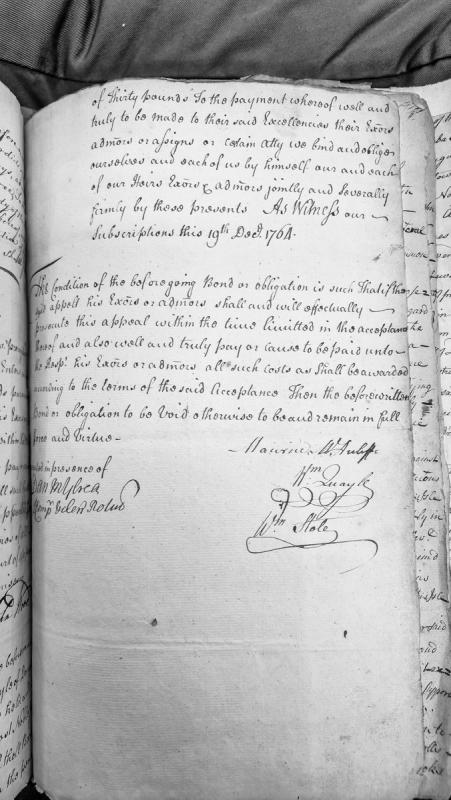
A recognisance bond dated 19 December 1761 binding the appellant Maurice McAuliffe to prosecute an appeal within specified time limits and pay costs as awarded. The bond stipulates a thirty-pound penalty payable to the Crown's representatives if conditions are not met.
A recognisance bond dated January 17, 1763, in which Luke Christian of Kirk Braddan and John Cannell of Peel Town bind themselves in the sum of three pounds to ensure that Thomas [obscured]ain lays his appeal before the Staff of Government within twenty days and provides authentic copies of proceedings. The bond conditions compliance with the judgment of the Spiritual Court if affirmed.
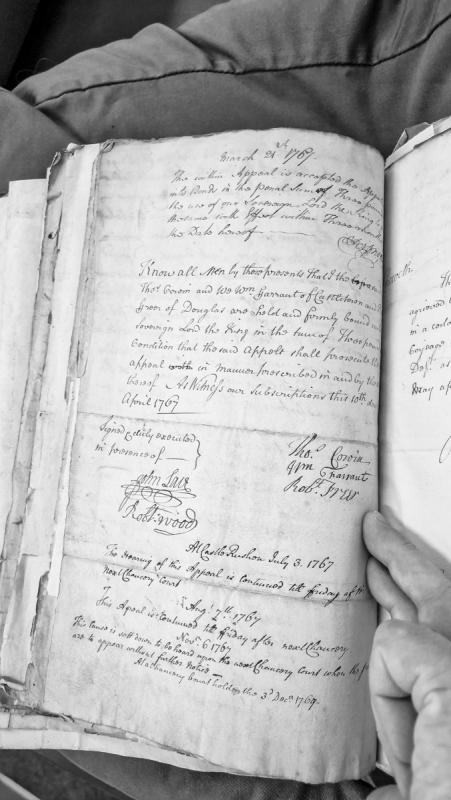
A recognisance bond dated April 16th 1767 binding Thomas Corrin, William Garraut of Castletown and Robert Freer of Douglas in a sum of three pounds to prosecute an appeal according to prescribed manner. The document includes subsequent hearing continuances recorded from July 1767 through December 1769 at Castle Rushen Chancery Court.
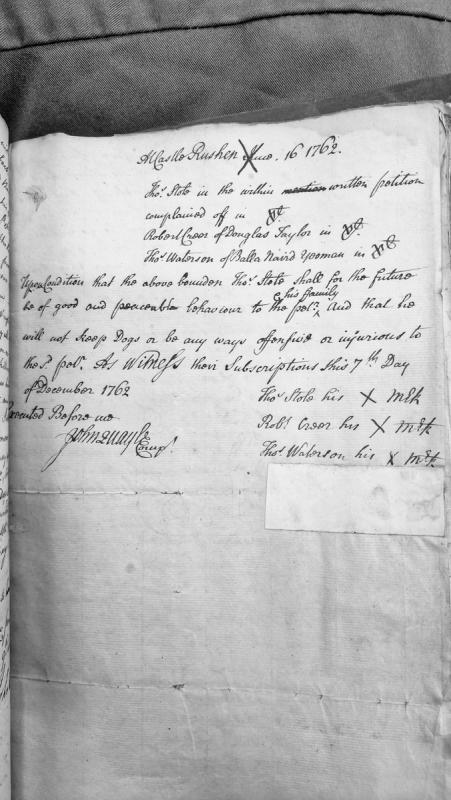
A recognisance bond executed at Castle Rushen in which Thomas Stole agrees to maintain peaceable behaviour toward the petitioner and his family, and to refrain from keeping dogs or causing any nuisance. Robert Croor (Taylor of Douglas) and Thomas Waterson (Yeoman of Balla Naird) stand as sureties.
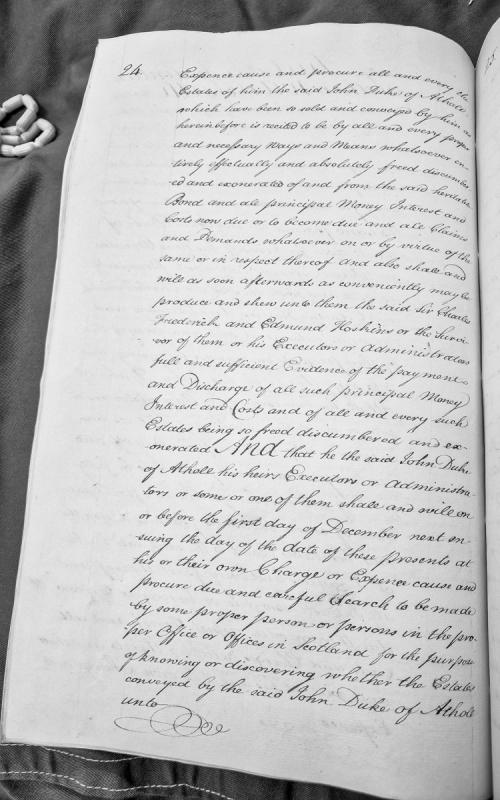
A legal document detailing the obligations of John Duke of Athole regarding the discharge of a heritable bond on estates he has sold and conveyed. The document specifies requirements for freeing the estates from encumbrance and providing evidence of payment to Sir Charles Frederick and Edmund Hoskins.
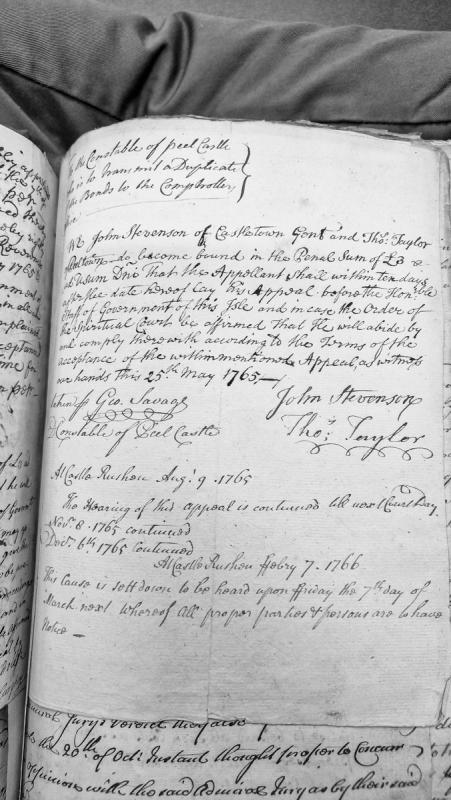
A recognisance bond executed by John Stevenson and Thomas Taylor, binding themselves in the penal sum of £3 to ensure the appellant submits an appeal to the Government of the Isle of Man within ten days and complies with any affirmation of the Spiritual Court's order. The document includes subsequent court continuations and scheduling notes dated through February 1766.
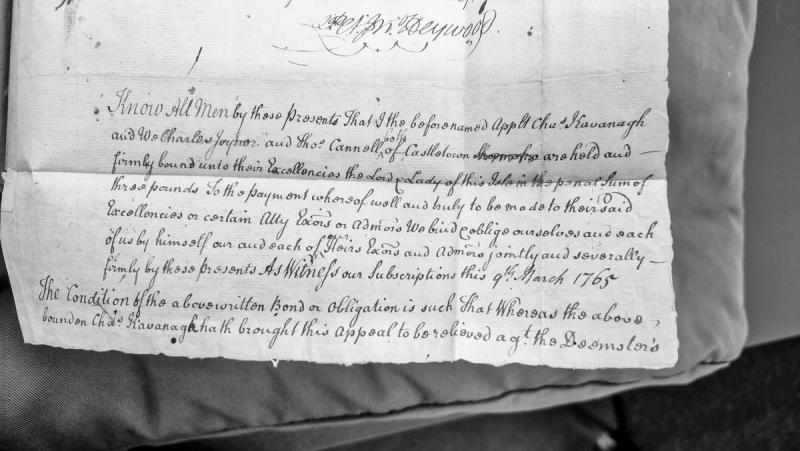
A recognisance bond dated 9 March 1765 in which Charles Kavanagh, Charles Joynor, and Thomas Cannoll bind themselves in the penal sum of three pounds to the Lord and Lady of the Isle. The document indicates that Kavanagh has brought an appeal to be relieved against a Deemster's judgment.
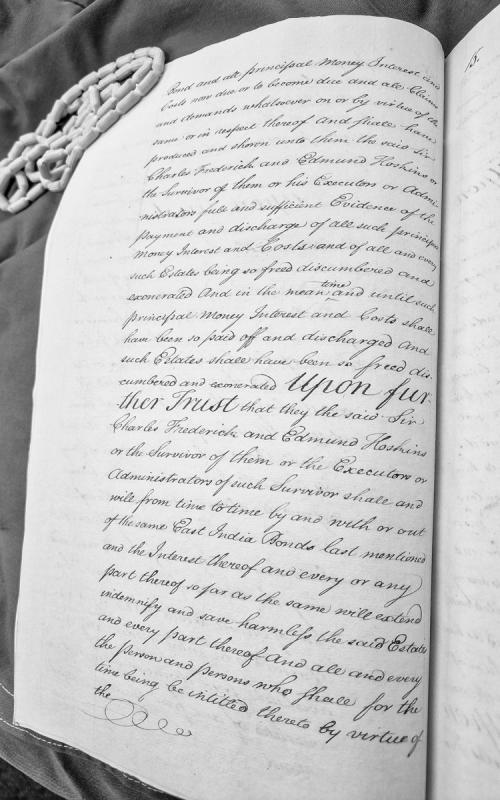
A legal instrument establishing a bond arrangement whereby estates are held in trust as security for payment of principal money, interest, and costs. The document outlines conditions for freeing the estates from encumbrance upon full discharge of obligations and includes indemnification provisions using East India Bonds.
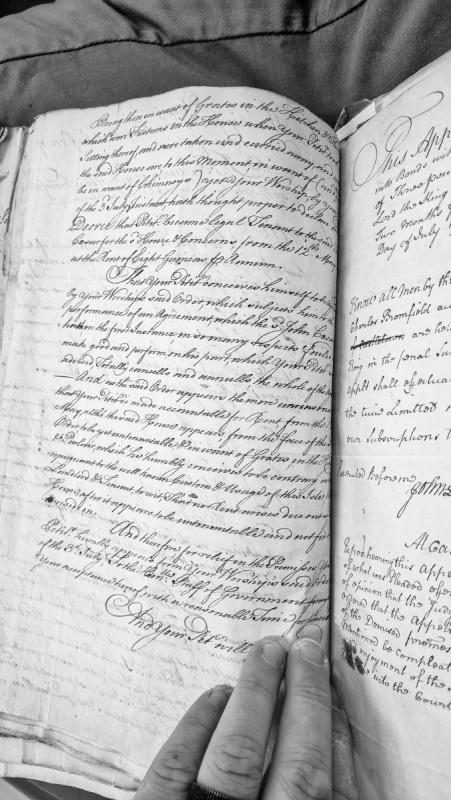
A partially legible bond document mentioning an appeal, with references to a penal sum of three pounds and obligations relating to property (demised premises). The document includes signature and judicial consideration of the appeal with orders regarding completion and enjoyment of the demised property.
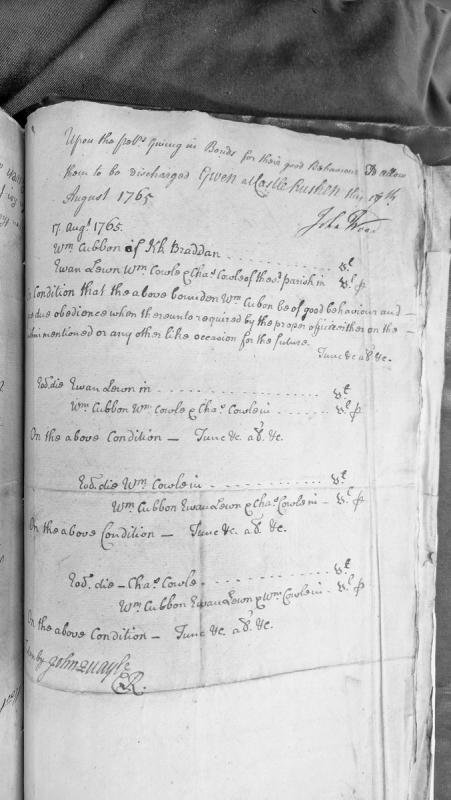
A legal document recording the posting of bonds by prisoners William Cubbon, Ewan Lown, William Cowle, and Charles Cowle at Castle Rushen. Each prisoner and three sureties enter into recognisances conditioned on good behaviour and obedience to officers.
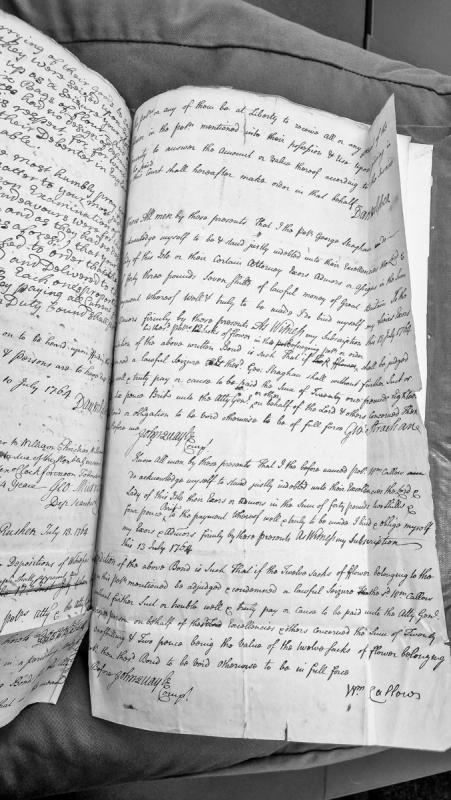
Two recognisance bonds dated 13 July 1764, executed before John Quayle (Comptroller), binding George Strahan and William Callow respectively to the Lord and Lady of the Isle of Man for the seizure of flower (flour). The bonds secure payment of specified sums if the seized goods are judged a lawful seizure.
A 1692 tariff schedule establishing customs duties on goods imported and exported from the Isle of Man, along with official fees payable to the Water Bailiff, Customer, and Searchers. Approved by the Earl of Derby (Lord of Man) at Castle Rushen Council. Relevant to understanding pre-Revestment Manx revenue administration and the smuggling trade context.
A 1692 tariff schedule approved by the Lord of Man, detailing inward and outward customs rates on goods, anchorage fees, and official fees for customs officials (Water Bayliff, Customer, Searchers). This document establishes the revenue system governing Isle of Man trade in the pre-Revestment period and provides context for smuggling incentives and fiscal administration.
A biographical sketch of Charles Lutwidge (1722-1784), receiver and surveyor-general of the Isle of Man post-Revestment, compiled from Burke's Landed Gentry (1858) and family records. Details his family lineage, positions in customs and revenue, and his controversial role implementing anti-smuggling laws after 1765. Notes connections to Whitehaven merchant families involved in tobacco and coal trade.
A genealogical and biographical compilation derived from Burke's Landed Gentry (1858) detailing Charles Lutwidge's family lineage, positions, and role in implementing anti-smuggling measures following the 1765 Revestment. The note contextualizes his authority as receiver and surveyor-general of the Isle of Man and his controversial influence over Treasury policy post-Revestment.
A biographical essay on Sir Wadsworth Busk, Manx Attorney General (1774-post-1792), covering his background, legal career, appointment to office, role in post-Revestment governance and the 1777 legislation, and personal life including his wife's tragic death in 1776. Includes discussion of his political alignment with Westminster interests and his contributions to Manx constitutional development.
A biographical sketch of Sir Wadsworth Busk, Manx Attorney General appointed in 1774, nine years after Revestment. Covers his legal career, family tragedy, role in post-Revestment Manx constitutional and legal reform, and his influence in mediating between Westminster interests and Manx concerns. Includes unpublished family letters and references to contemporary assessments of his character.
A glossary of ecclesiastical and chronological Latin and Norman-French terms found in medieval charters and historical documents. This reference work is essential for interpreting 13th-18th century Manx legal documents, many of which use Latin feast-day designations and calendar terminology. Relevant to understanding dating conventions in Revestment-era administrative records.
Extract from George Buchanan's 16th-century History of Scotland (A.D. 1577), describing the Isle of Man as part of the Western Isles (Æbudæ), its etymology, geography, and historical nomenclature. Includes editor's note on Hector Boethius's confusion of Man with Anglesey. Relevant as foundational historical and geographical context for understanding Man's position between Ireland, Scotland, and England.
Extract from George Buchanan's 16th-century History of Scotland describing the Isle of Man as one of the Western Isles (Æbudæ), with etymological notes on its names (Eubonia, Mevania, Manin) and basic geographical data (24 miles long, 8 broad). Establishes early modern geographic and linguistic understanding of Man's position relative to Ireland, Scotland, and England.
A papal bull issued by Pope Calistus III on 11 July 1458, appointing Thomas as bishop of Sodor and establishing the Church of Sodor as suffragan to the Church of York. The document includes both the English translation and original Latin text, with a memorandum recording its exhibition at London on 18 February 1458. This foundational ecclesiastical document is relevant to understanding the constitutional and religious framework of the Isle of Man before the Revestment.
Papal bull issued by Pope Calistus III in 1458 establishing the Church of Sodor (Isle of Man) as suffragan to the Archbishop of York. The document records the appointment of Thomas as Bishop of Sodor following the death of Thomas Burton, and the formal ecclesiastical union. Provides crucial evidence of the Church's constitutional relationship to York and the island's ecclesiastical governance in the pre-Revestment period.
A papal bull issued by Pope Celestine III in 1194 confirming Furness Abbey's ecclesiastical rights and liberties in the churches of Dalton and Ursewie, and protecting the monastery's independence from episcopal interference. The document references the authority granted by the Kings of the Isles (Olaws and Godred) and provides important medieval evidence of Isle of Man's ecclesiastical governance structure and Furness Abbey's significant holdings there.
Papal bull from Pope Celestine III (dated 10 June 1194) confirming to Furness Abbey the churches of Dalton and Ursewie in the Isle of Man, along with their chapels, tithes, and ecclesiastical liberties. The bull protects the abbey from episcopal interference and confirms rights previously granted by Manx kings Olaf and Godred. Relevant to understanding pre-Revestment Manx sovereignty, ecclesiastical jurisdiction, and the Abbey's historical claims on the island.
A papal bull issued by Pope Eugenius III in 1153 confirming the lands and possessions of Furness Abbey in Lancashire and the Isle of Man. The document lists specific grants from various donors including Earl Stephen, Robert Bovill, and King Olav of the Isles. Notable for its detailed record of Manx place-names and ecclesiastical holdings in the mid-twelfth century, providing context for pre-Revestment Manx territoriality and feudal relationships.

![Bond for Appeal to Staff of Government by Thomas [obscured]ain](https://historicallymanx.com/files/large/02ebcc485387d2f706e9db24343aad01daf86e6a.jpg)