Chapter 9 from 'The Land of Home Rule' (1893) covering the English Civil War period on the Isle of Man, including Lady Derby's resistance, William Christian's role in the surrender to Commonwealth forces, the Restoration, and Christian's execution and posthumous vindication by the Privy Council. Discusses constitutional status and the relationship between Manx and English authority.
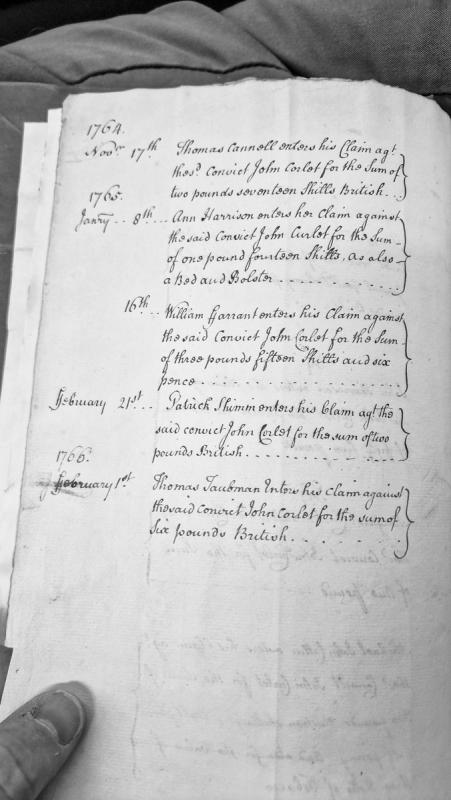
A register of financial claims entered against the convict John Corlet by various creditors between November 1764 and February 1766. The document records claims from five individuals totaling approximately £15, including both monetary sums and goods (a bed and bolster).
Letter from James Clarke to Henry Hobhouse (Under-Secretary of State) reporting the sudden death of Norris Moore, first Deemster of the Isle of Man, and noting the opportunity for judicial and administrative reform. Clarke emphasises Moore's legal ability, attributes his death to alcohol abuse, and identifies regulation of Deemsters' Courts and land administration as key issues for the island's governance.
Letter from James Clarke to Henry Hobhouse (Under-Secretary of State) reporting the sudden death of Norris Moore, first Deemster of the Isle of Man, and noting the need for enquiry into the regulation of Deemsters' Courts and administration of Manx lands. Provides insight into post-Revestment judicial administration and governance challenges on the Island.
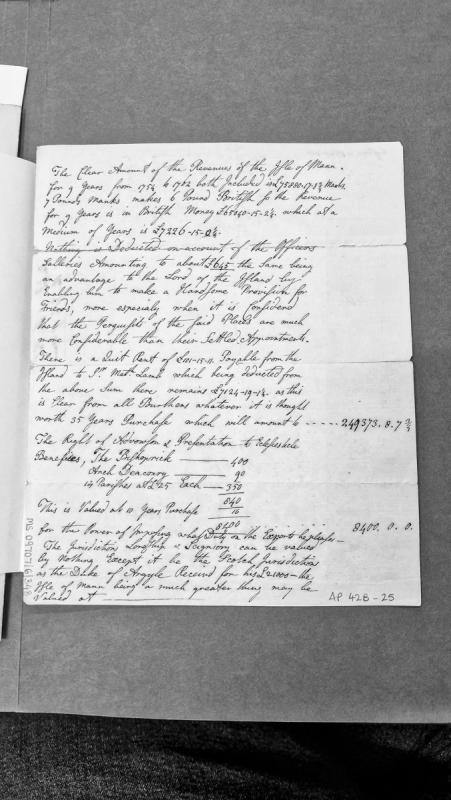
A revenue abstract detailing the clear revenues of the Isle of Mann for the nine-year period 1754-1762, calculated in both Manx and British currency. The document includes deductions for officer salaries and quit rents, provides valuations of ecclesiastical benefices and other rights, and appears to be an assessment or valuation document for the lordship.
Published verbatim record of House of Lords and House of Commons debates from the third session of the second Parliament of the United Kingdom (15 May – 12 July 1805). Contains extensive discussion of the Duke of Atholl's Claim (Isle of Man Revestment), smuggling prevention, revenue matters, naval affairs, and East India Company interests. Includes Parliamentary papers, financial accounts, and impeachment proceedings.
Comprehensive record of parliamentary debates from the opening of the Third Parliament of the United Kingdom in December 1806 through early March 1807. Contains debates on major issues including slave-trade abolition, negotiations with France, military estimates, finance, and Irish affairs. Includes complete ministry list and member roll for the 1806 Parliament.
A comprehensive record of Parliamentary debates from the second session of the Fourth Parliament of the United Kingdom (1808), covering debates in both Houses, King's speeches, messages, parliamentary papers, petitions, protests, and treaties. The volume includes extensive discussion of military expeditions (Copenhagen, Dardanelles), Orders in Council, trade policy, East India Company affairs, and American relations—contextual to understanding the commercial and constitutional environment in which the 1765 Isle of Man Revestment occurred.
Published collection of debates and proceedings from the second session of the Fourth Parliament of the United Kingdom (1808), covering House of Lords and Commons debates from 11 April to 4 July 1808. Includes accounts, petitions, reports, and financial records. While not directly about the Isle of Man Revestment (1765), this parliamentary record provides context on constitutional procedure, revenue matters, East India Company affairs, and comparative colonial/trading issues contemporaneous with the post-Revestment period.
Official record of parliamentary proceedings from the opening of the Fourth Parliament of the United Kingdom in June 1807, covering the election of Speaker Charles Abbot, royal commissions, and Lords' and Commons' debates on the King's Speech and parliamentary dissolution. While the 1765 Revestment predates this by 42 years, this published collection of parliamentary debates serves as essential contextual material for understanding Westminster procedure, constitutional conventions, and the political machinery that governed imperial and domestic affairs.
Volume 1 of Cobbett's Parliamentary Debates covering debates in both Houses of Parliament from November 1803 to March 1804 during the Second Parliament of the United Kingdom. Contains proceedings, motions, minority lists, accounts, estimates, returns, and legislative records for approximately 140 days of session. While not directly about the Isle of Man Revestment (which occurred in 1765), this contemporary record reflects the functioning of Westminster governance and Parliamentary procedure relevant to comparative constitutional context.
Volume III of Cobbett's Parliamentary Debates covering January–March 1805, comprising House of Lords and House of Commons proceedings, parliamentary papers, reports by the Commissioners of Naval Enquiry, and related government documents. Provides extensive debate records on war with Spain, Irish habeas corpus suspension, defence of the country, and naval administration during the Pitt administration.
Complete record of debates in both Houses of Parliament during the third session of the Second Parliament of the United Kingdom (13 March – 14 May 1805). Includes table of contents, proceedings on Lord Melville's conduct, Roman Catholic petitions, Irish fiscal matters, militia bills, naval affairs, and related Parliamentary papers and reports.
Table of contents and legislative record from Cobbett's Parliamentary Debates covering the Third and Fourth Parliaments of the United Kingdom (December 1806–August 1807). Includes debates in both Houses on Scotch Judicature, Slave-Trade Abolition, East India Company business, Irish matters, and American trade disputes. Contains enumeration of Acts passed during the sessions.
Letter from Col Mark Wilks (Speaker of the House of Keys) to James Clarke (Attorney-General) discussing proposed legislative reforms for the Isle of Man, including a police bill for property protection, a coroner's bill to reform jury procedures, and alignment with Peel's jury act provisions. References pending land sale and McHutchin's draft legislation. Reveals post-Revestment governance challenges and attempts to modernise Manx institutions while respecting traditional structures.
Private correspondence from Col Mark Wilks (Speaker of the House of Keys) to James Clarke (Attorney-General) discussing draft legislation for Isle of Man, including a police bill and coroner's bill intended to reform juries and protect property. References consultation with John McHutchin (Clerk of the Rolls) and coordination with UK Government policy under Mr Peel. Postscript addresses High Road Act expiration and concerns about lawlessness among the lower classes.
Colonel M Wilks writes to Lord Powis requesting intervention against the Duke of Atholl's alleged schemes to undermine the Isle of Man's constitutional governance and property rights. The letter traces the Revestment of 1765, the subsequent appointment of the Duke as Governor, and his attempts to subvert insular laws through Parliamentary bills and administrative manipulation. It requests protection for the independence of the Lieutenant Governor position from Atholl's influence.
Colonel M Wilks writes to Lord Powis (Home Office) in 1812 detailing the Duke of Atholl's repeated attempts to undermine the Isle of Man's constitutional rights and legislative independence since the 1765 Revestment. Wilks chronicles failed Parliamentary bills (1780–1783), the Duke's appointment as Governor (1792–93), efforts to control the Lieutenant Governor position, and current threats to the House of Keys' autonomy and property rights. The letter appeals for intervention to protect Manx constitutional liberties from aristocratic overreach.
Monograph examining the economic history of Boston, New York, and Philadelphia as nodal centers in Atlantic and global trade networks. Argues that colonial merchants' trans-imperial commerce and resistance to British mercantilist constraints formed the economic roots of American independence. Relevant for understanding how trade networks and smuggling created political tensions preceding the Revolution.
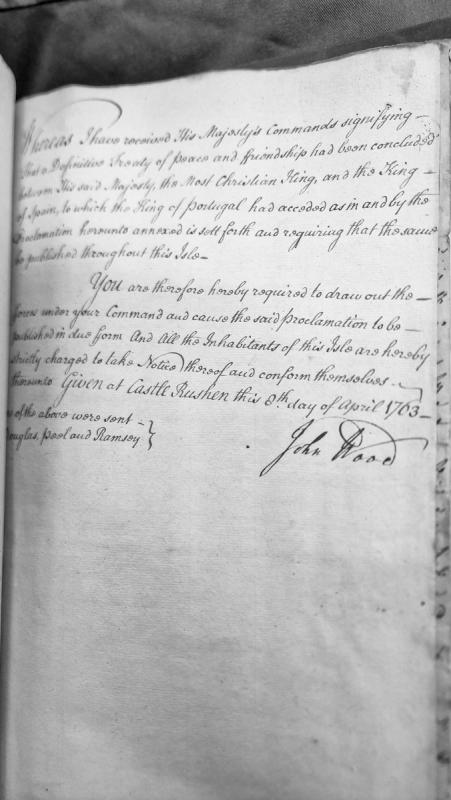
An administrative directive issued at Castle Rushen commanding the publication of a Proclamation announcing the conclusion of a Definitive Treaty of Peace and Friendship between Great Britain, France, Spain, and Portugal. Copies were to be distributed to Douglas, Peel, and Ramsey on the Isle of Man.
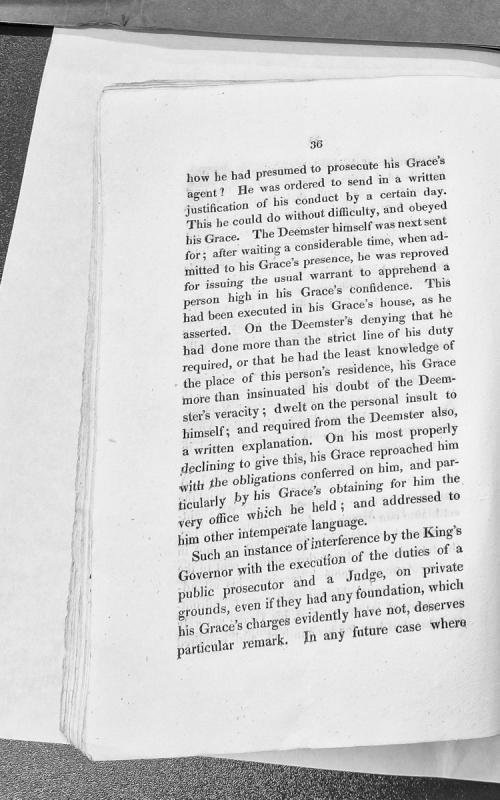
A critical account of a Governor's improper intervention in the execution of judicial duties, specifically regarding the prosecution of the Governor's agent and the issuance of an arrest warrant. The text discusses how the Governor summoned both a prosecutor and a Deemster (judge) to remonstrate with them, demanding written justifications and employing intemperate language, which is presented as an abuse of executive power over the judiciary.
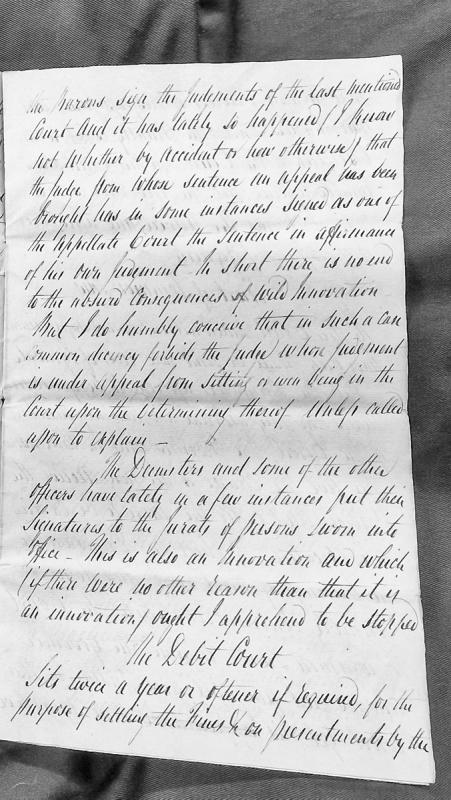
A legal opinion or memorandum discussing procedural irregularities in Manx courts, including instances where judges have signed judgments on appeal cases involving their own prior decisions, and innovations regarding officer signatures on oaths of office. The author argues against these practices as departures from established procedure.
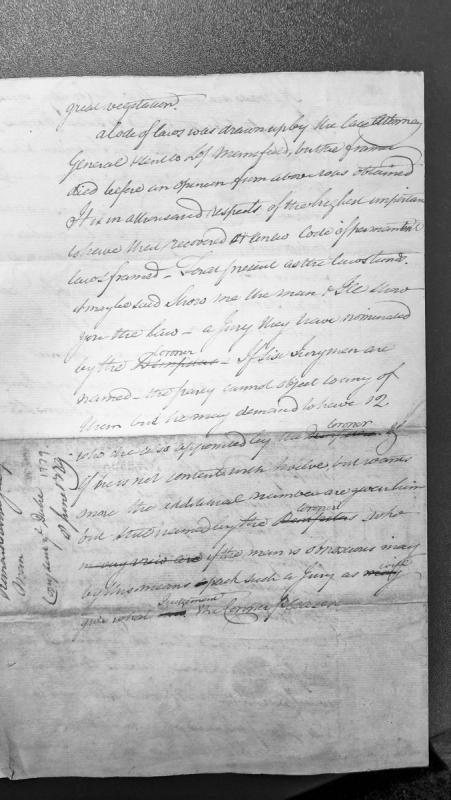
A critical analysis of the deficiencies in Manx law, noting that a code drawn up by the late Attorney General Heintom of Mansfield was never completed. The document discusses the problematic nature of jury selection procedures, where the Coroner has excessive power to nominate and pack juries, potentially compromising judicial impartiality.
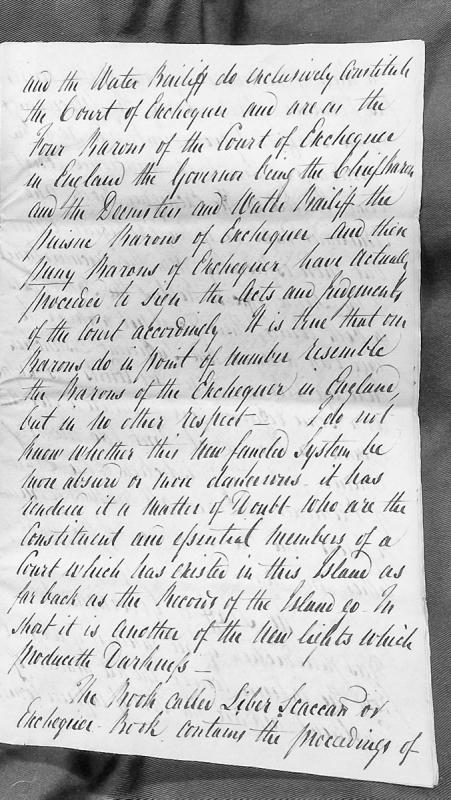
A legal opinion or argumentative text discussing the composition and structure of the Court of Exchequer in the Isle of Man, comparing it to the English Court of Exchequer. The author critiques a 'new fangled System' that has created confusion about which members constitute the court, and references the Liber Scaccari (Exchequer Book).
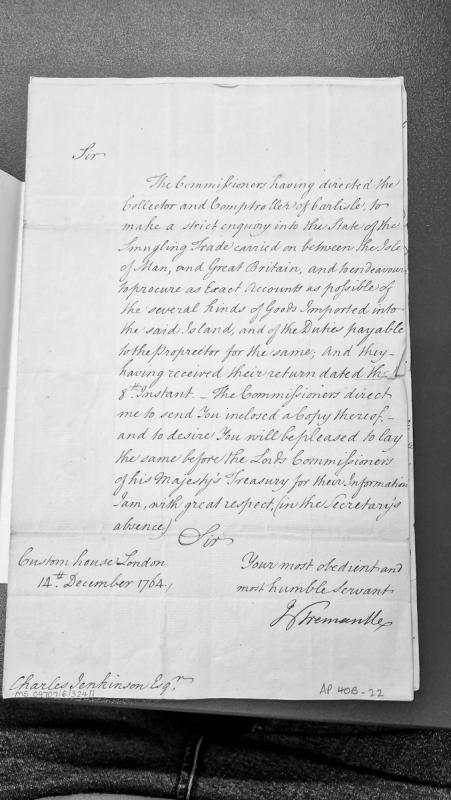
Official correspondence from the Custom House in London transmitting a report from the Collectors and Comptrollers of Carlisle regarding smuggling activities and goods imports to the Isle of Man. The Commissioners direct that this report be forwarded to the Lords Commissioners of the Treasury for their information.