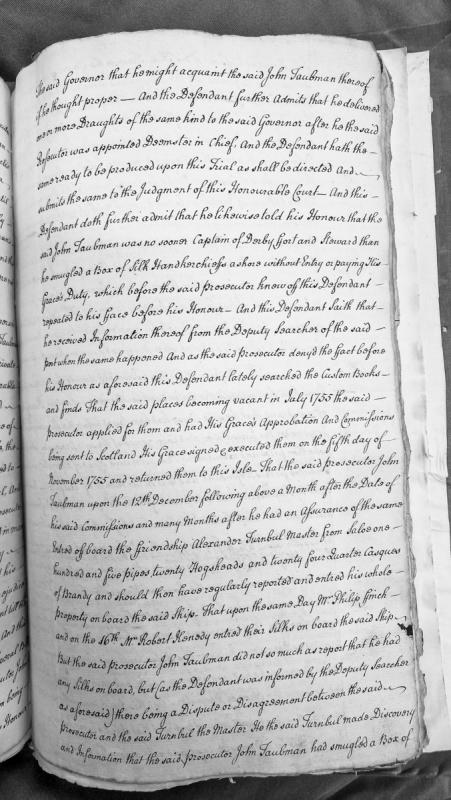
A legal document containing a defendant's admissions and evidence regarding allegations of smuggling and misconduct by John Taubman, who held the position of Captain of Derby fort and Howard. The document discusses draughts (drafts) presented to the Governor, smuggling of silk handkerchiefs, and customs records from 1755 involving brandy importation aboard the Friendship.
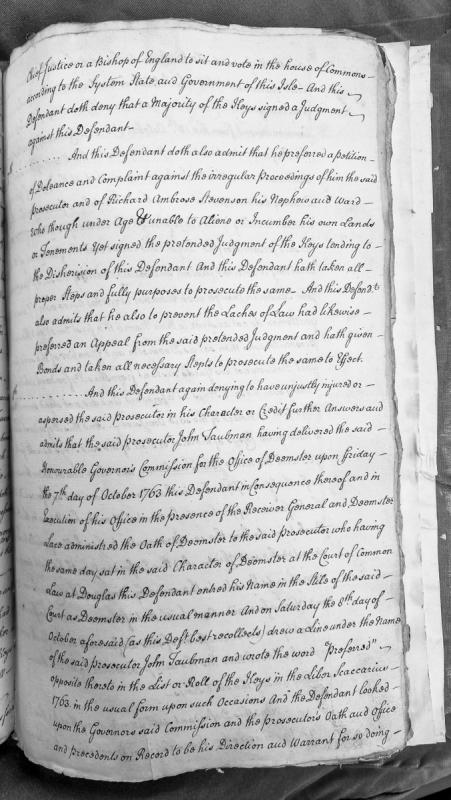
A defendant's legal response denying accusations of injuring the prosecutor's character and providing details of administrative procedures related to John Taubman's appointment as Deemster in October 1763. The document addresses disputes over a House of Keys judgment, an appeal, and the proper execution of the appointment process.
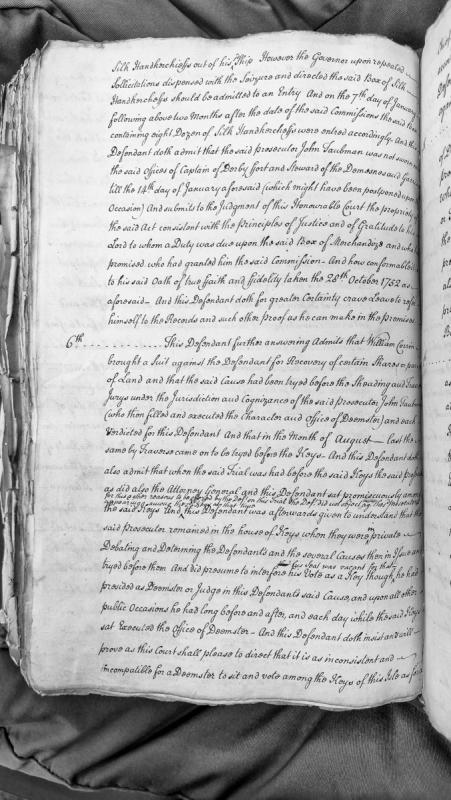
A legal answer/defence document in which the defendant responds to charges related to the seizure of silk handkerchiefs from a ship and challenges the propriety of John Taubman's conduct in voting as a Key while serving as Deemster in a related land dispute case. The document raises questions about conflict of interest and adherence to judicial oaths.
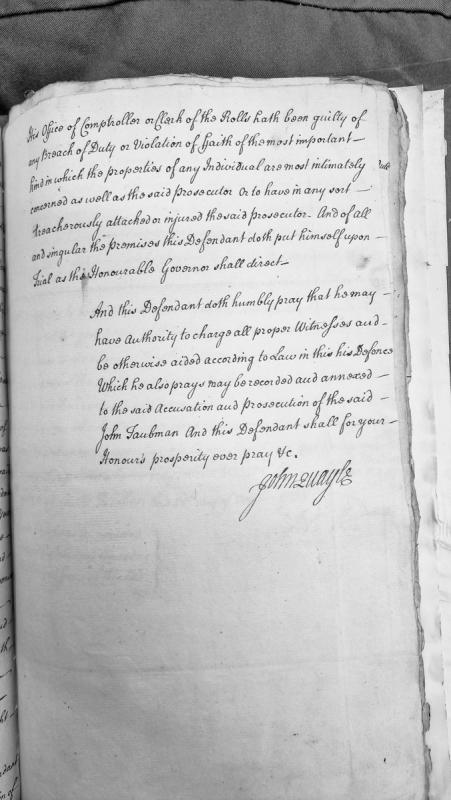
A formal legal defense document wherein the defendant (John Quayle) denies charges of breach of duty or violation of faith in his office, specifically regarding the Comptroller or Clerk of the Rolls position. The defendant requests authority to call witnesses and prays that this defense be recorded and annexed to the accusation brought by John Taubman.
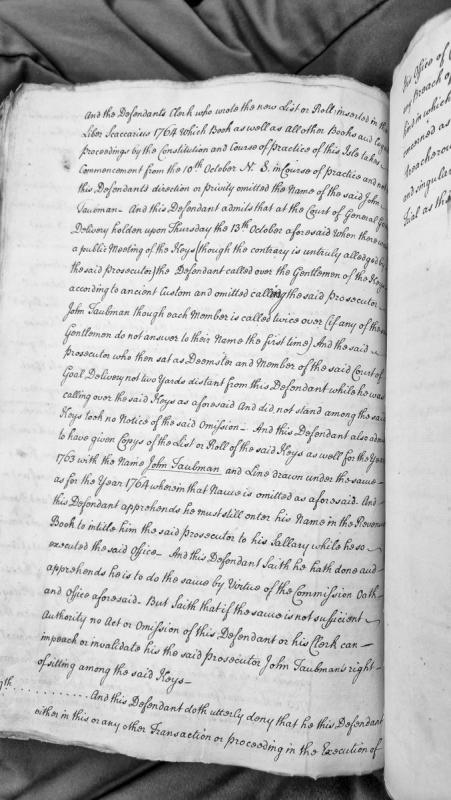
A legal defense document in which the defendant responds to allegations regarding the omission of John Taubman's name from the official list (Liber Scaccarius) of the House of Keys for 1764. The defendant argues that the omission was procedural and made by a clerk without his direction, and that Taubman's rights as a member remain unimpaired.
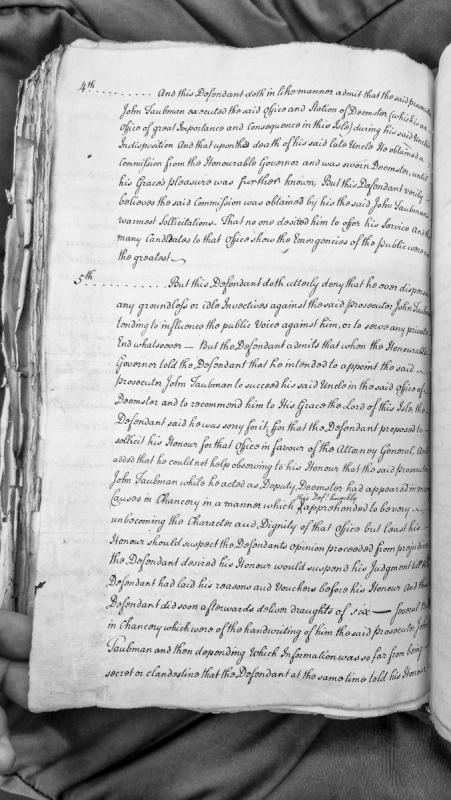
A defendant's legal response addressing allegations about interference in John Taubman's appointment to the office of Deemster on the Isle of Man. The defendant admits Taubman served as Deputy Deemster during his uncle's illness and obtained a commission from the Governor, but denies spreading malicious invectives. The defendant claims to have merely expressed concerns about Taubman's conduct in Chancery cases to the Governor.
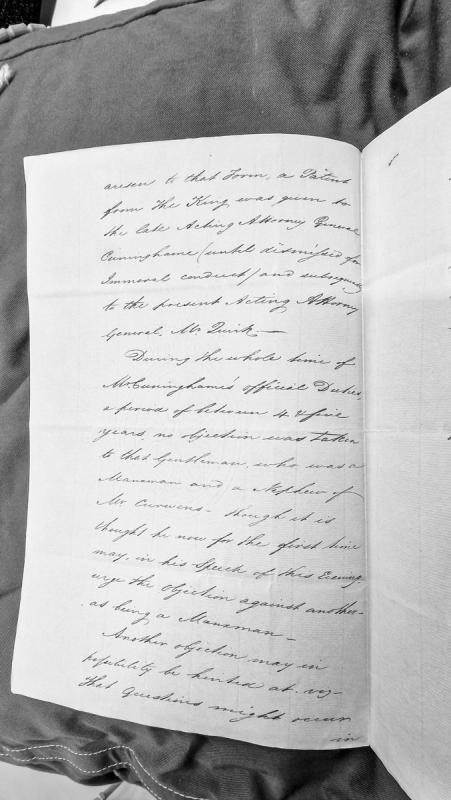
A fragment of a legal or administrative document defending the appointment of an Acting Attorney General against potential objections based on Manx origin. The text references the previous Acting Attorney General Cunninghame (dismissed for immoral conduct) and the current Acting Attorney General Quirk, arguing that similar objections were not raised during Cunninghame's tenure despite his being a Manxman.
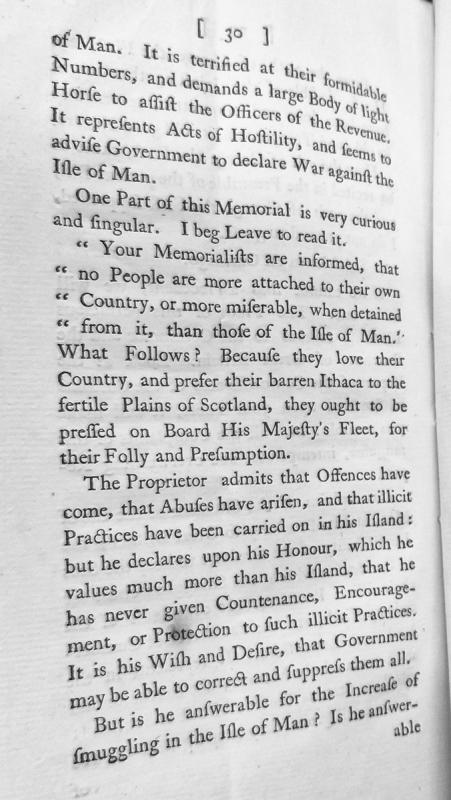
A legal defense or opinion addressing a memorial accusing the Isle of Man of smuggling and illicit practices. The document defends the Proprietor against charges, distinguishes between his responsibility and the actions of inhabitants, and critiques the memorial's logic regarding Manx attachment to their homeland. The text appears part of a larger argument questioning whether the Proprietor bears accountability for increased smuggling.
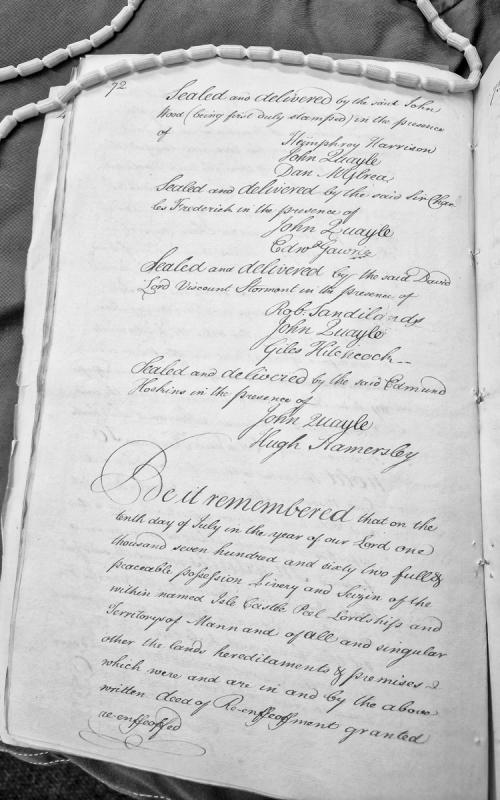
A legal document recording the sealed delivery of a deed of re-enfeoffment relating to Isle Castle, Peel, and the Lordships and Territories of Mann. Multiple parties sealed and delivered the document in the presence of witnesses on July 10, 1762, transferring full possession, livery and seizin of lands and hereditaments.
A sworn deposition from 1633 in which John Casen, servant to Lord Strange, testifies about delivering correspondence to Edward Christian, captain of the Isle of Man, and Christian's serious illness. The document provides insight into early 17th-century Isle of Man governance and the health crisis affecting the military command. It is part of the Manx Society's published collection of Monumenta de Insula Manniae.
A sworn deposition by John Casen, servant to Lord Strange, testifying to the poor health of Captain Edward Christian, governor of the Isle of Mann, as of March 1633. Casen delivered letters from Lord Strange to Christian in late January and observed him bedridden throughout his stay. The document attests to Christian's incapacity to travel by horseback due to a lingering sickness that began in September 1632.
Record of depositions taken by a jury of indictment in Rushen Sheading concerning the discovery and counterfeiting of copper pence on the Isle of Man. The case involves George Wilks (accused of manufacturing counterfeit coins) and his son John Wilks. Includes witness testimonies, evidence of casting equipment and counterfeit coins, and subsequent court proceedings including a controversial acquittal by the Grand Jury and a petition challenging the jury's fine.
Legal depositions and inquest proceedings from Rushen Sheading concerning the discovery and investigation of counterfeited Manx copper pence. George Wilks and his son John Wilks were suspected of counterfeiting; evidence includes sworn testimonies from witnesses, soldiers, and the coroner, recovered counterfeit coins, and molds. The grand jury indicted George Wilks but he was later acquitted by the 24 Keys, who found the grand jury's proceedings illegal under the 1709 counterfeiting act. Includes subsequent petitions and fines.
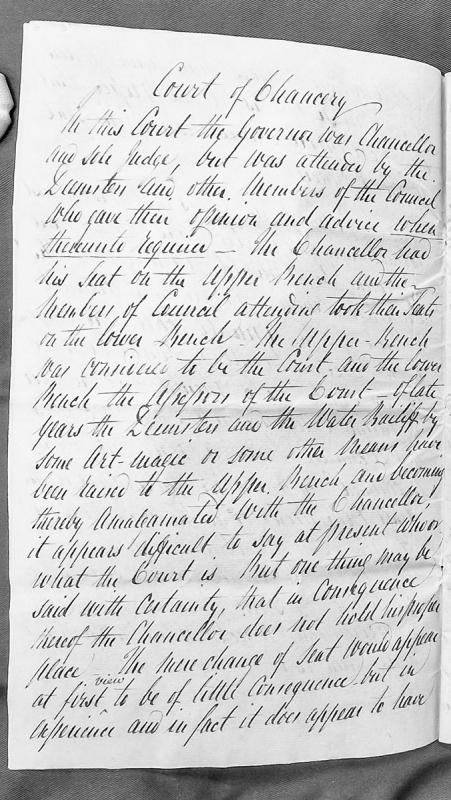
A legal or administrative document describing the structure and composition of the Court of Chancery on the Isle of Man, including the role of the Governor as Chancellor and sole judge, the advisory role of Deemsters and Council members, and recent changes whereby Deemsters and the Water Bailiff have been elevated to the Upper Bench alongside the Chancellor. The author expresses concern about the consequences of these structural changes.
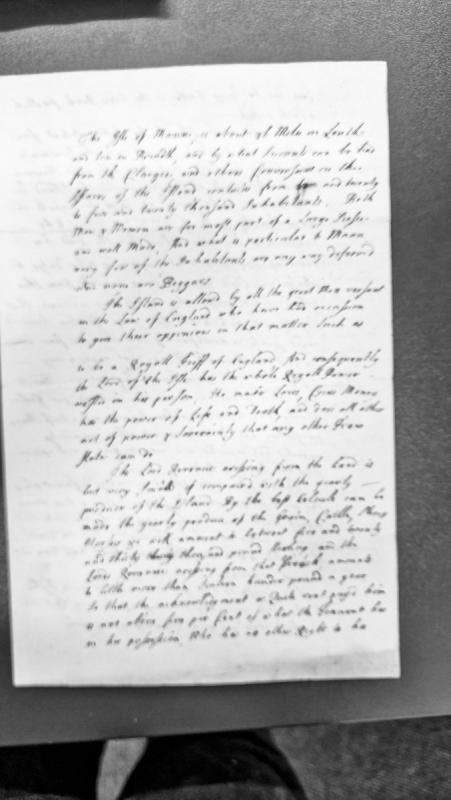
A descriptive account of the Isle of Man covering its dimensions (31 miles long, 10 miles broad), population estimates (24,000 inhabitants), physical characteristics of inhabitants, and its legal status as a Royal Feoff of England. The document discusses the Lord's regalia power and analyzes the island's economic productivity and revenue structure.
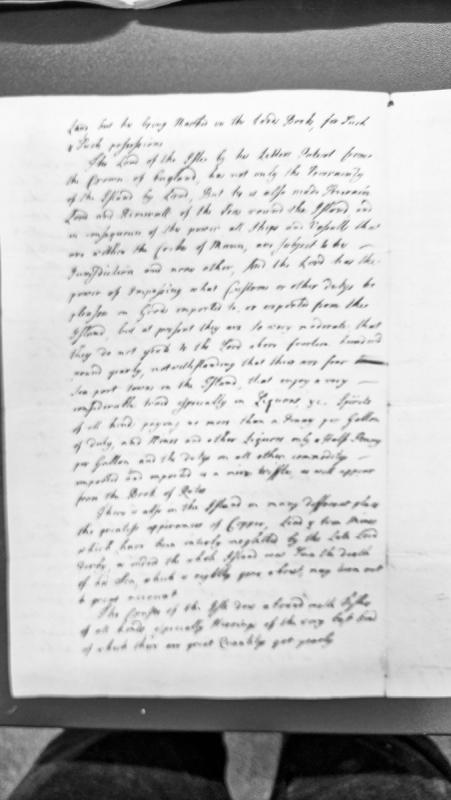
A document describing the Lord of the Isle's authority over Mann granted by Letters Patent from the Crown of England, including his sovereignty over land and sea, powers to impose customs duties, and the island's natural resources including mineral deposits and fishing grounds. The text notes the moderate customs revenues and the neglect of mining development under the late Lord Derby.
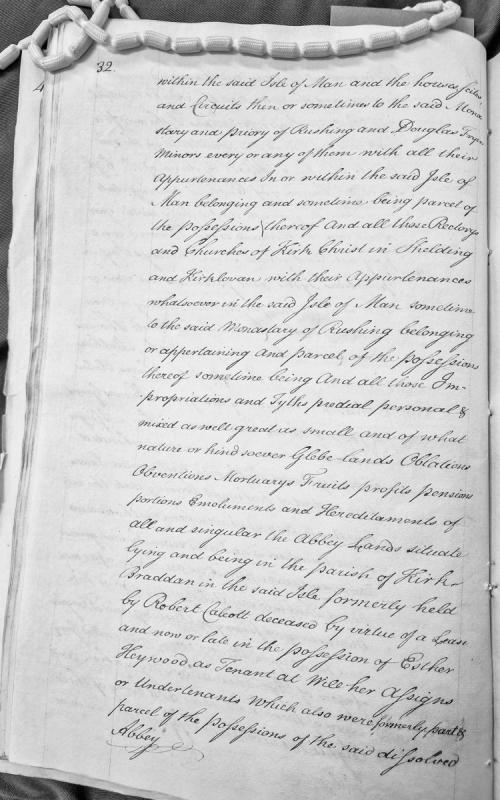
A legal document excerpt describing the extent and nature of lands, houses, churches, and ecclesiastical revenues belonging to dissolved monasteries in the Isle of Man. The text details properties formerly held by the Monastery of Rushen and others, including churches at Kirk Christ in Shelding and Kirklovan, along with various tithes, glebe lands, and other church revenues.
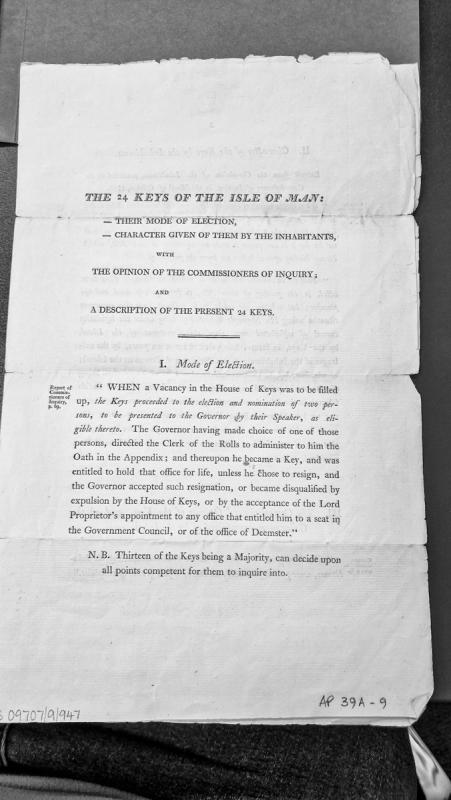
A printed pamphlet describing the structure and function of the House of Keys in the Isle of Man, including their mode of election as reported by the Commissioners of Inquiry. The document outlines the procedure for filling vacancies, the role of the Governor, and the requirements for holding office.
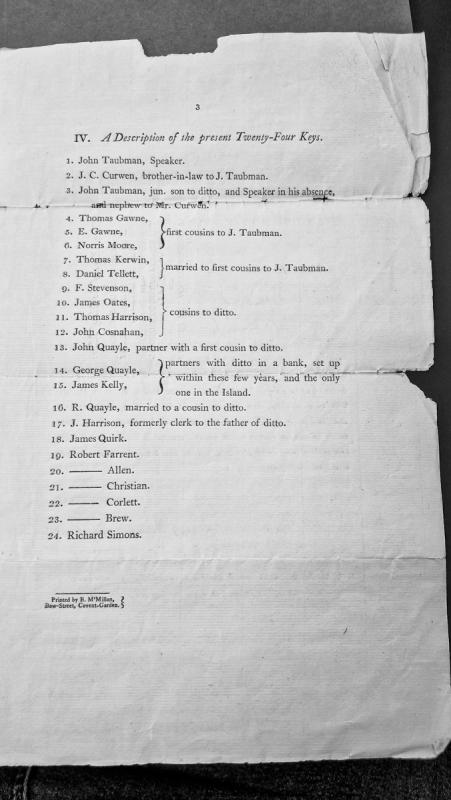
A printed list describing the composition of the House of Keys (the Manx legislature) at a particular point in time, identifying all 24 members by name and noting their family relationships, professional connections, and business interests. The document emphasizes the interconnected nature of the governing body through kinship and partnership ties.
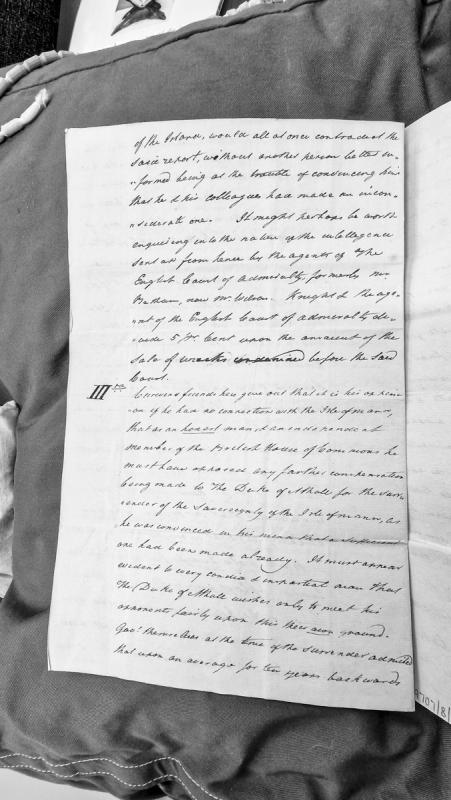
Fragment of a longer administrative or political correspondence discussing intelligence reports from admiralty agents, fee structures for wreck sales, and debate over compensation paid to the Duke of Atholl for surrendering sovereignty of the Isle of Man. References to Member of Parliament Curwen and his position on these matters.
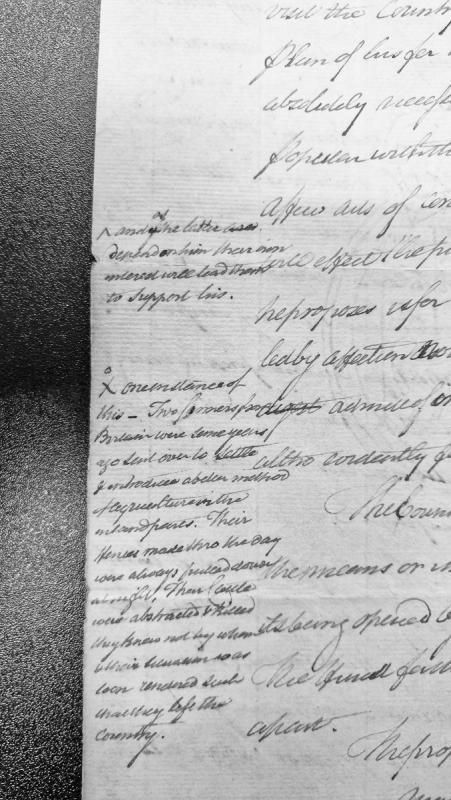
A fragmentary document containing two overlapping handwritten texts discussing agricultural reform in the Isle of Man. The left-hand text describes an instance where two British farmers were sent to introduce improved farming methods but faced local opposition including destruction of fences and theft of cattle, forcing them to leave. The right-hand text is largely obscured but appears to discuss proposals and popular support for improvements.
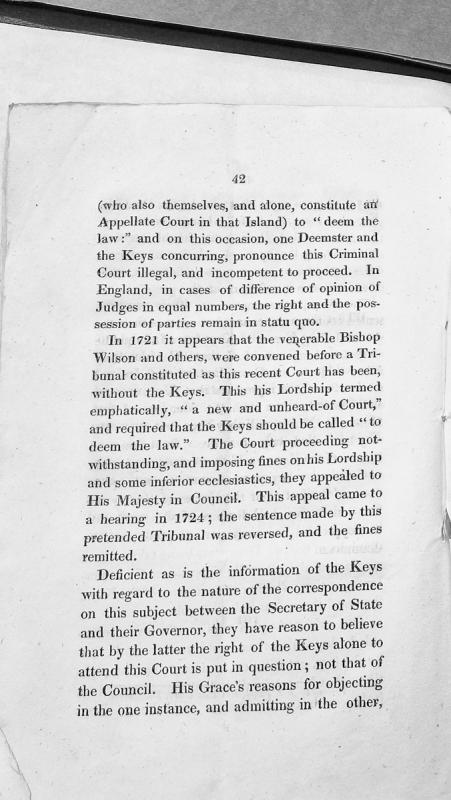
A legal document discussing the constitutional composition and authority of criminal courts on the Isle of Man, referencing historical precedent from 1721 when Bishop Wilson challenged a court convened without the Keys. The document compares Manx court procedures to English practice and addresses disputes over whether the Keys (House of Keys) should participate in such tribunals.
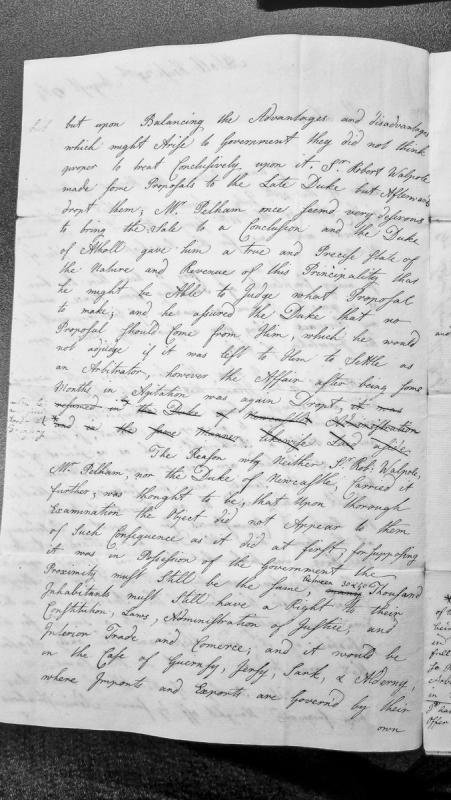
This document discusses historical attempts by various British government officials (Sir Robert Walpole, Mr. Pelham, Duke of Newcastle) to negotiate the purchase or acquisition of the Isle of Man from the Duke of Atholl. It explains why these proposals ultimately failed, noting that examination revealed the island's limited strategic value given that its population would retain constitutional rights regardless of ownership.
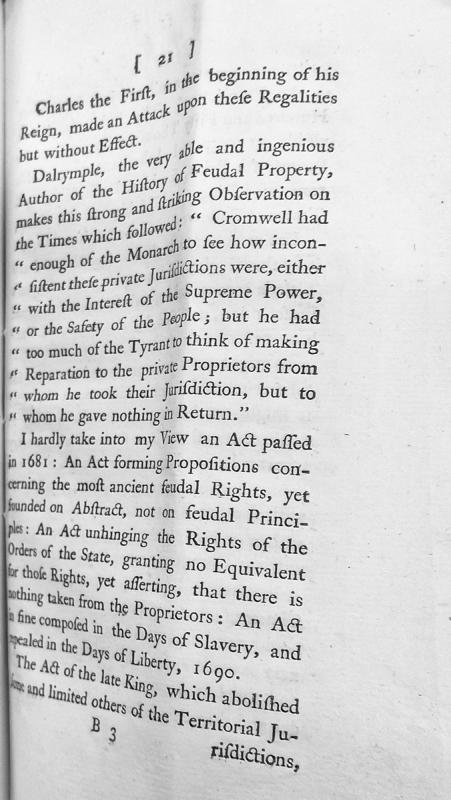
An excerpt from a printed pamphlet discussing historical attacks on private regalities and jurisdictions, particularly referencing Dalrymple's History of Feudal Property and Acts of 1681 and 1690 concerning feudal rights. The author critiques the abstract principles underlying these acts and their impact on proprietors' jurisdictions.
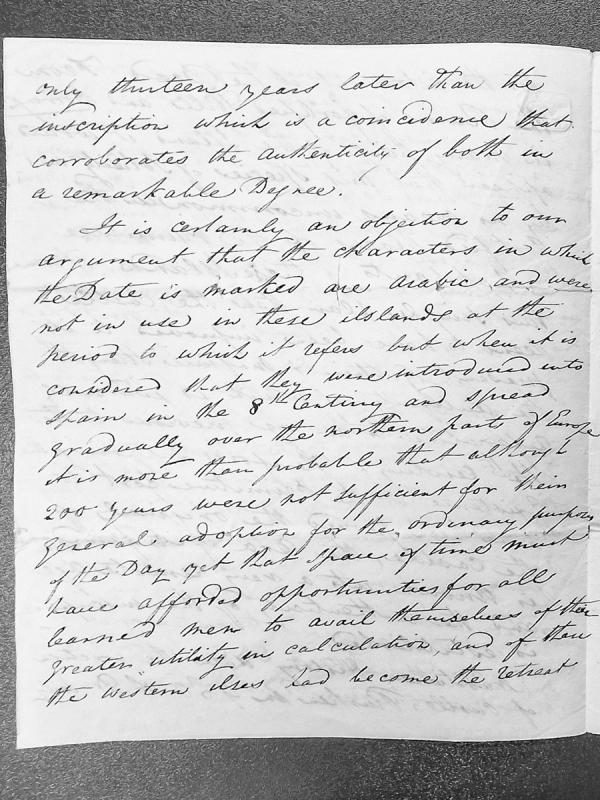
Fragment discussing the authentication of historical inscriptions through chronological coincidence and examining the adoption of Arabic numerals in the northern European regions, particularly the Western Isles. The text addresses objections to dating arguments based on character usage.