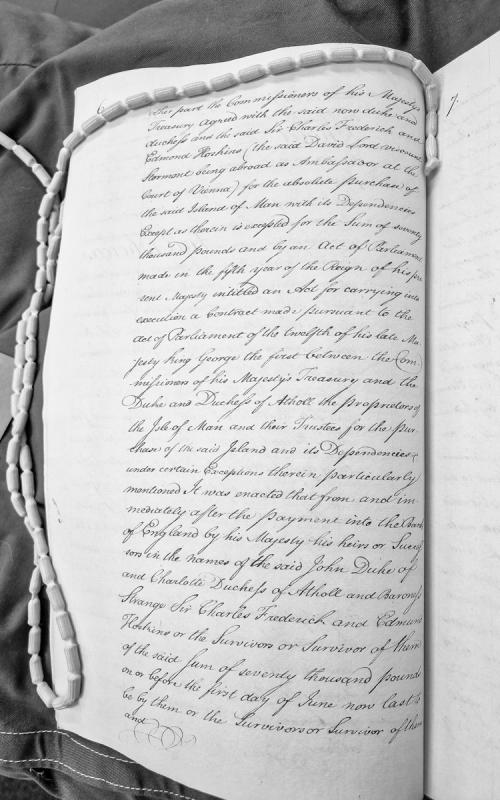
Fragment of legal text describing an Act of Parliament authorizing the purchase of the Isle of Man and its dependencies from the Duke and Duchess of Atholl for seventy thousand pounds. The document details the negotiation between the Commissioners of His Majesty's Treasury and the proprietors, referencing earlier parliamentary acts and naming the parties involved in the transaction.
The Act of Settlement 1703 is a foundational Manx constitutional and property law document passed by Tynwald Court. It codifies the relationship between the Earl of Derby (Lord of Mann) and his tenants, establishing customary estates of inheritance, standardising fines on descent and alienation, and resolving long-standing disputes over tenancy terms. The act also addresses cottages, intacks, mortgages, and quarries. This document is central to understanding Manx landholding law, feudal relations, and governance structures before the 1765 Revestment.
The 1703 Act of Settlement, passed at Tynwald Court, formally codified and confirmed the estates, tenures, fines, rents, suits, and services owed by tenants to James, Earl of Derby, Lord of the Isle of Man. The Act resolved long-standing disputes between the Lords and tenants, established hereditary customary estates, fixed fine schedules for inheritance and alienation, and set terms for mortgages, cottages, intacks, and quarries. It is fundamental to understanding Manx land law and property rights on the eve of the 18th century.
A brief historical overview of the 1703/4 Act of Settlement (Act of Tynwald), describing how Manx farmers gained rights to possess and alienate land, ending feudal restrictions imposed by the Seventh Earl. The article credits Bishop Wilson as the reform's architect and references A.W. Moore's History of the Isle of Man and Spenser Walpole's Land of Home Rule as key sources.
A web-based historical summary of the 1703/4 Act of Settlement (Act of Tynwald), which granted Manx farmers/tenants the right to possess and alienate their land, ending a century of feudal discontent under the Seventh Earl of Derby. The page contextualises the act as the Manx equivalent of Magna Carta and credits Bishop Wilson as the reform agent.
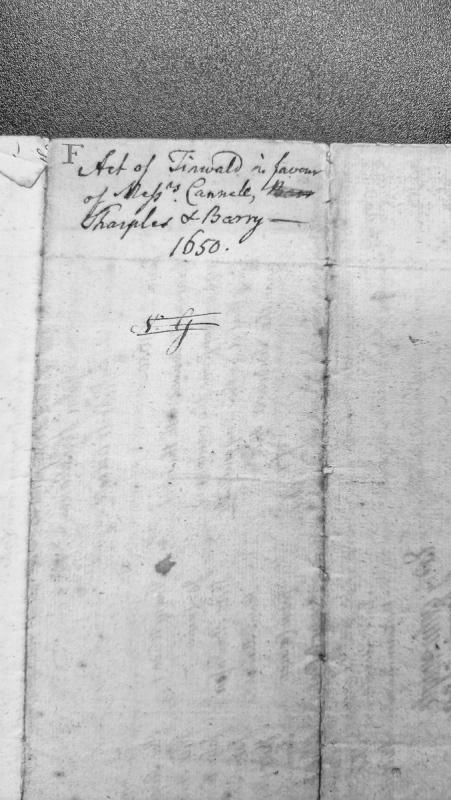
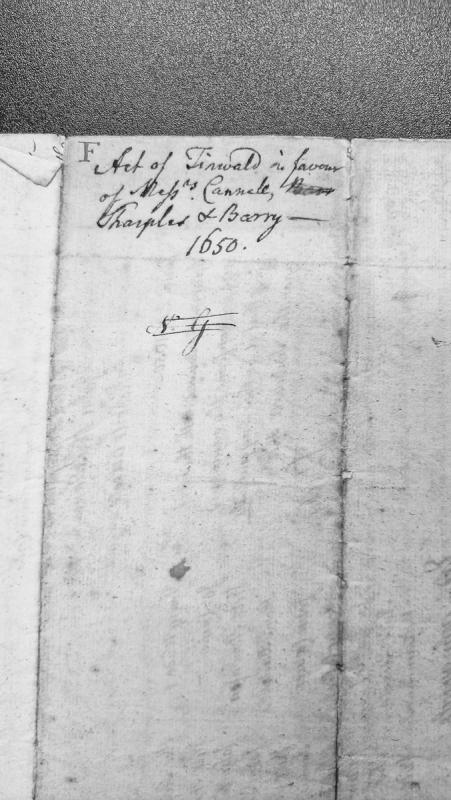
An Act of Tinwald (Manx legislative body) from 1650 granting favour or privileges to three named parties: Cannele, Sharples, and Barry. The document appears to be a legislative record or formal act.
An Act of Tinwald (the Manx legislative body) from 1650 favouring the merchants or parties Cannell, Sharples and Barry. The document appears to be a legislative enactment granting some privilege, right, or favour to these named individuals.
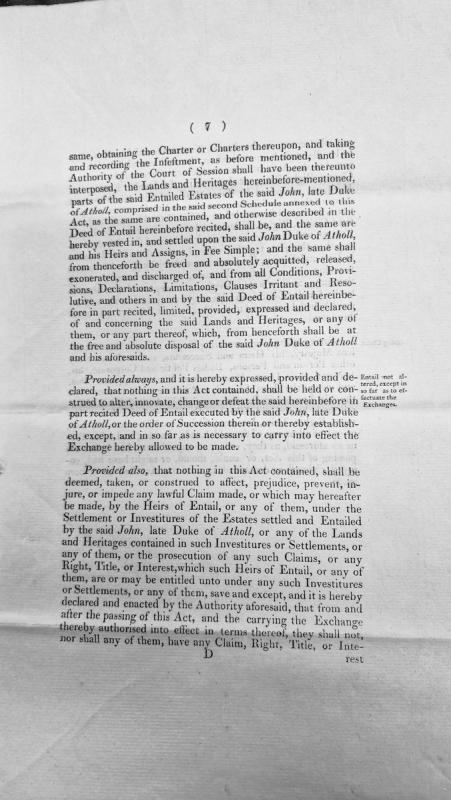
This is an excerpt from a legislative act concerning the settlement and entailment of lands belonging to John, late Duke of Atholl. The document details the vesting of certain lands in fee simple and the conditions under which entail provisions may be altered through authorized exchanges, while preserving the rights of heirs of entail.
This is an excerpt from Chapter 46 of an Act passed during the reign of George III, concerning regulations for distillers and makers of spirits. The preamble outlines problems with distillers withdrawing their still-house entries while leaving equipment in place, suspected illicit night-time distilling, and the inadequacy of penalties preventing excise officers' access to premises. The legislation aims to strengthen revenue security and fraud prevention.
This is an excerpt from a printed parliamentary act (14 Geo. III, Cap. 73) extending regulations for distillers of Low Wines and Spirits, particularly concerning furnace doors, stills, and locks under excise control. It addresses fraud prevention in wash still charges and clarifies that distillers cannot claim allowances for increased wash due to water or other fluids.
This is an excerpt from a statute during the reign of George III (Cap. 46), focusing on excise regulations for spirit distillers. It prescribes standards for wash still piping to prevent fraud, sets penalties for violations, and grants excise officers powers to sample liquors during fermentation and conveyance.
This is an excerpt from a statute (anno regni vicesimo quarto, session 2) establishing regulations for the distillery of corn spirits in Scotland. Section XLV authorizes the Commissioners of Excise in Scotland to empower persons to erect and operate stills in specified Highland parishes and counties, effective from October 1st, 1784, due to previous legislation's ineffectiveness in Highland regions.
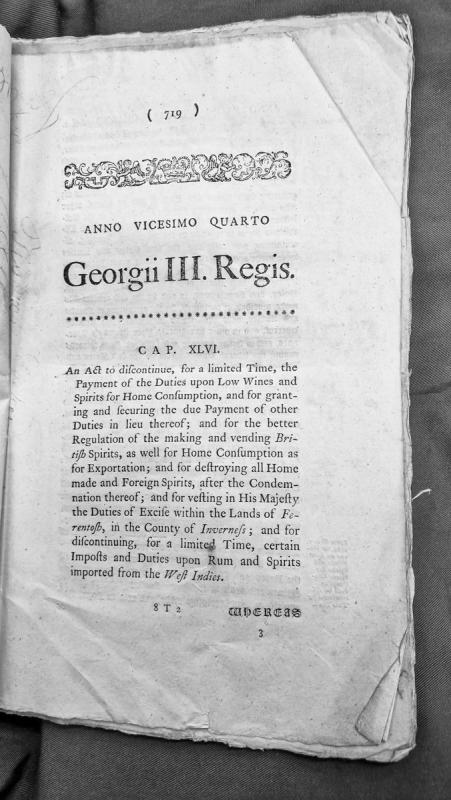
A printed parliamentary act from the 24th year of King George III's reign concerning the regulation of duties on low wines, spirits, rum, and related excise matters. The act addresses both domestic consumption and exportation, regulates British spirit production, and establishes duties within specific Scottish lands.
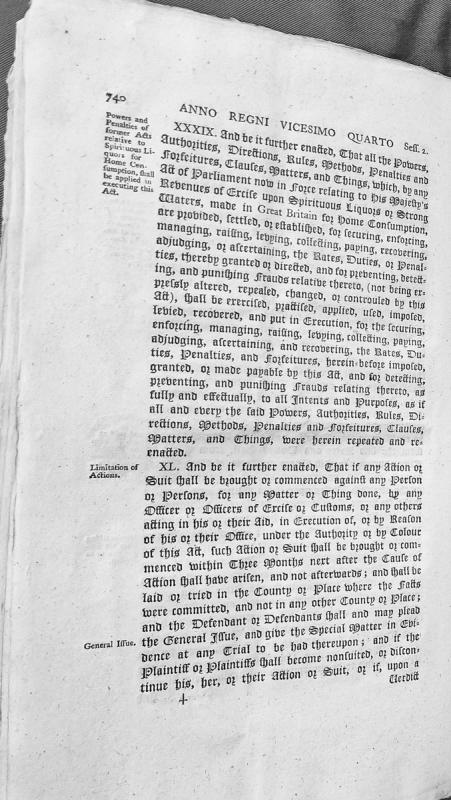
This is a page from a legislative act (Section 2, Year 24 of a monarch's reign) establishing excise regulations on spirituous liquors and strong waters. Sections XXXIX and XL detail the application of existing excise powers and penalties, and establish a three-month limitation period for actions against excise officers acting under the act's authority.
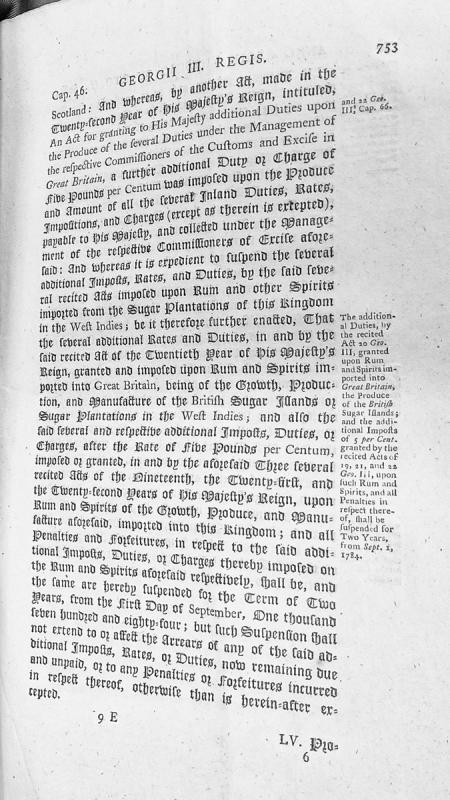
An excerpt from a statute of George III regarding the suspension of additional duties and imposts on rum and spirits imported from the British Sugar Islands in the West Indies for a two-year period commencing September 1, 1784. The act references and builds upon previous legislation from the 19th, 20th, 21st, and 22nd years of the King's reign.
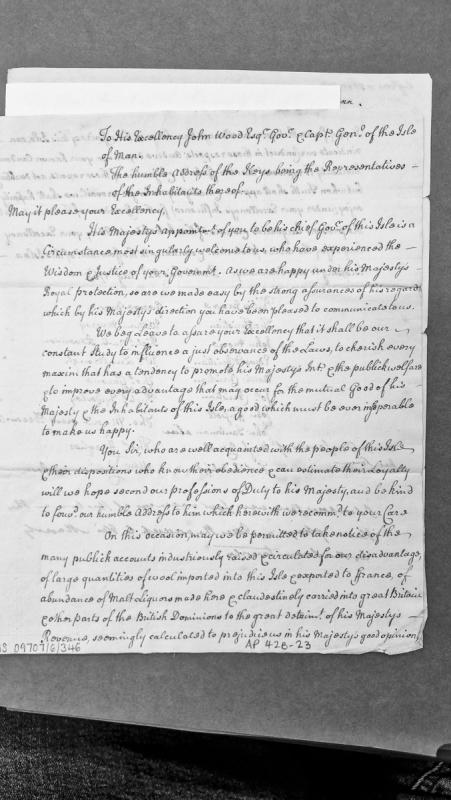
A formal address from the House of Keys (representatives of the Isle of Man inhabitants) to Governor John Wood, expressing loyalty to His Majesty and defending against accusations of smuggling wool to France and malt liquors to Britain. The document affirms the Keys' commitment to upholding the law and the Crown's interests while seeking to counter negative reports circulating about the island.
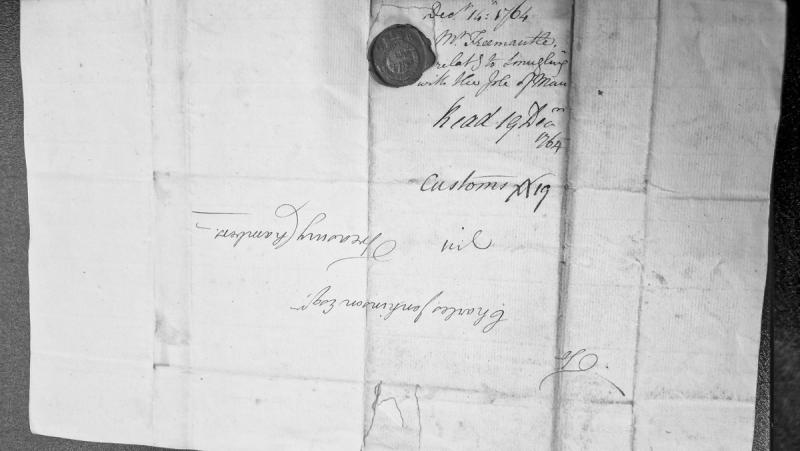
Fragment of an upside-down address panel or cover letter notation, containing initials 'M. G.' and partial address information referencing Wanstead and individuals named Stock Beaumont and possibly Chard. The document is largely illegible with multiple uncertain readings.
A partial fragment showing an address or direction to George Joynson Esq at Treasury Chambers. The document appears to be upside-down in the source, suggesting it may be the verso of another document or an envelope/wrapper.
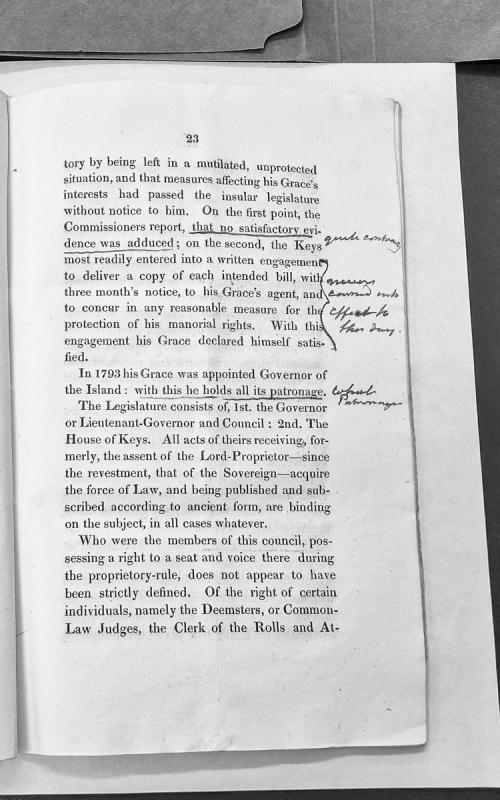
This document discusses the administrative structure of the Isle of Man, including the role of the Governor (appointed in 1793), the House of Keys, and the composition of the Council. It addresses a dispute between the Lord-Proprietor and the insular legislature regarding manorial rights and legislative procedure, with reference to measures requiring the Sovereign's assent.
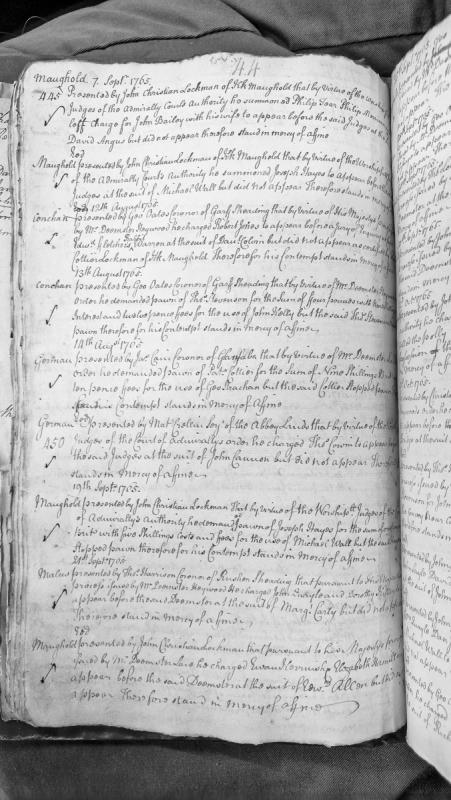
A series of court presentments from various Manx sheadings documenting summonses and charges issued by coroners and court officers for non-appearance before Admiralty and Deemster courts, as well as contempt of court for refusal to provide pawn (security). Multiple cases involve debt collection matters and suits between parties.
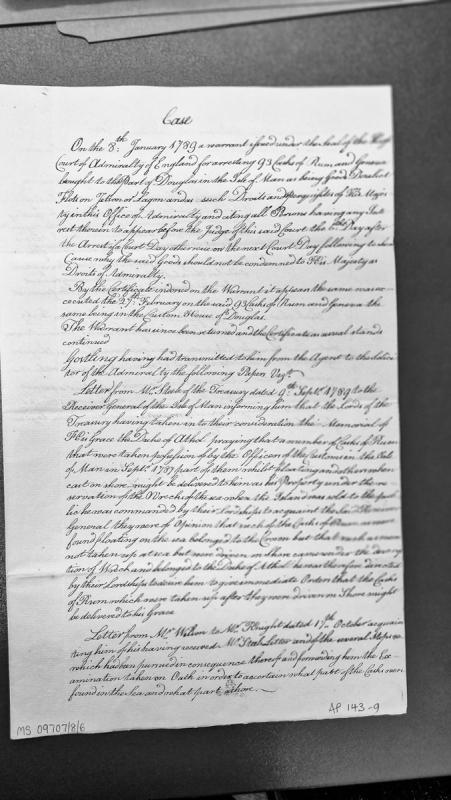
This document concerns an Admiralty Court warrant issued on 8 January 1789 for the arrest of 93 casks of rum and Geneva brought to Douglas, Isle of Man, claiming them as derelict flotsam and jetsam belonging to the Crown. It documents correspondence between the Treasury, Receiver General, and various officials regarding ownership of the casks, with particular reference to the Duke of Athol's claim under wreck reservation rights granted when the Island was sold to the public.
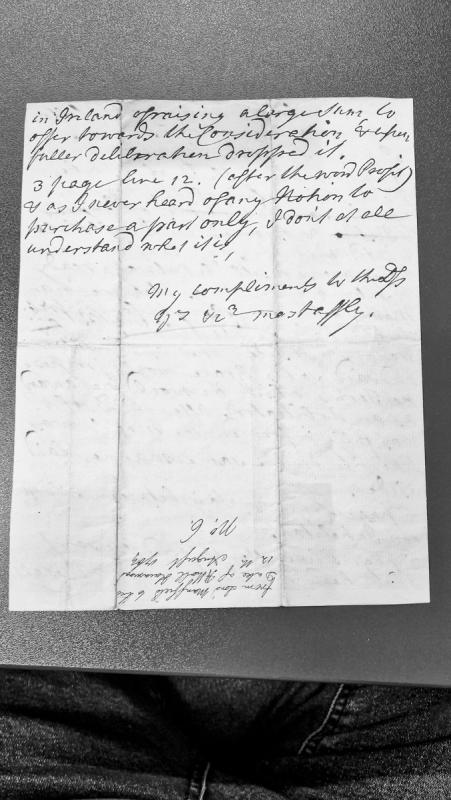
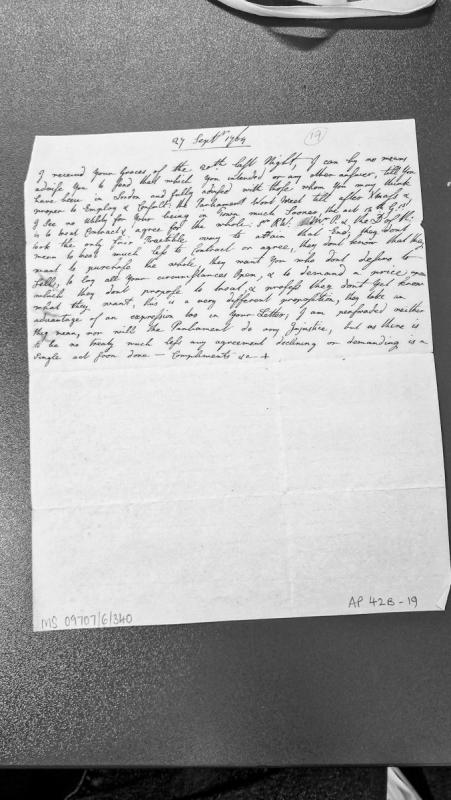
A letter dated 27 September 1764 advising the recipient against sending an intended response until after consulting with advisors in London. The correspondent discusses parliamentary proceedings, contract negotiations, and the proposed purchase of property or rights, referencing Act 12 of George I and various parties including Sir R.W., Mr P., and the Bishop of Man.
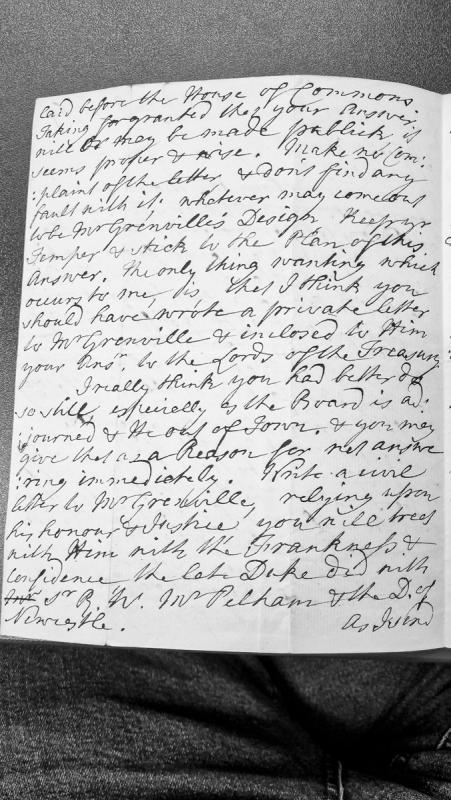
A draft letter or note providing strategic advice on handling a response to be laid before the House of Commons. The writer counsels maintaining composure, avoiding complaints, adhering to a prepared answer plan, and suggests writing a private letter to Mr Grenville accompanying an official response to the Lords of the Treasury.
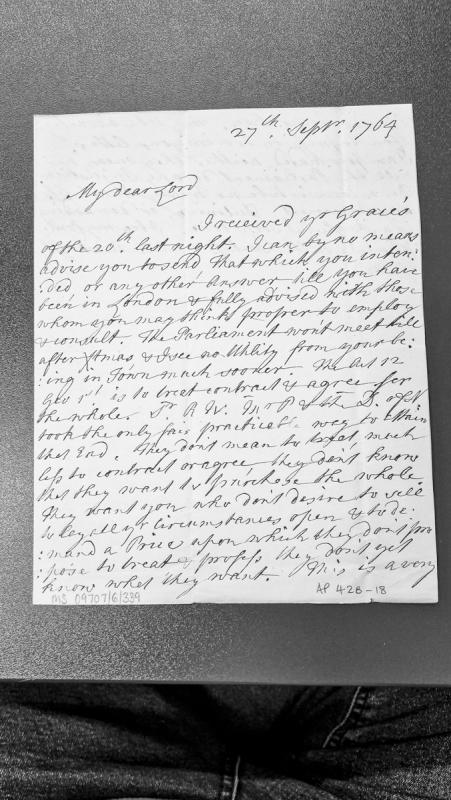
A letter of advice from the sender to their addressee (addressed as 'My dear Lord') regarding a contractual or commercial negotiation. The sender counsels against sending a reply until the recipient has consulted with legal advisors in London, noting that Parliament will not meet until after Christmas. The letter discusses the Act 12 Geo 1st and the intentions of Sir A.W., Mr P., and the Duke of N. regarding a potential purchase or agreement.
A 16th-century obligation and covenant document recording an agreement between Hugh Salusbury, George Salusbury, and William Wright regarding a lease of tithes and commodities in the Isle of Man, held in trust by William Cotgreve of Chester. The document references the Earl of Derby's authority over the lease and illustrates early modern property arrangements and feudal relationships on the island.