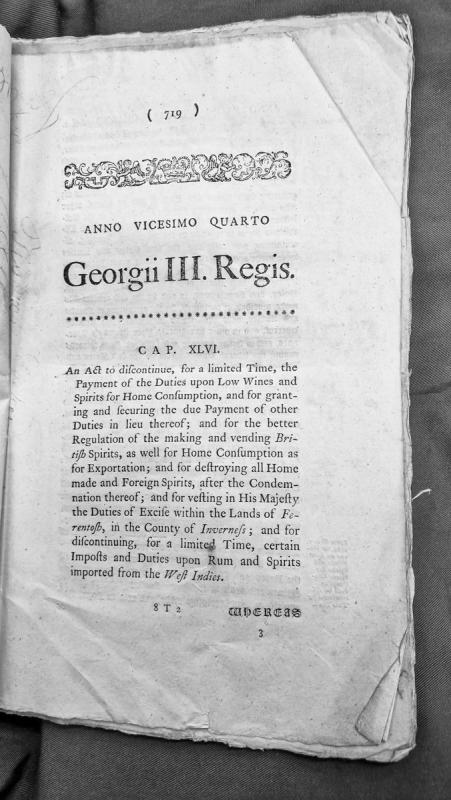
A printed parliamentary act from the 24th year of King George III's reign concerning the regulation of duties on low wines, spirits, rum, and related excise matters. The act addresses both domestic consumption and exportation, regulates British spirit production, and establishes duties within specific Scottish lands.
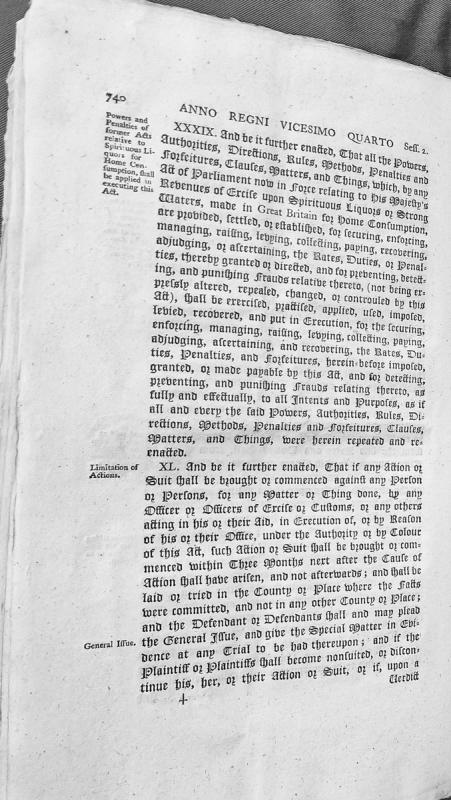
This is a page from a legislative act (Section 2, Year 24 of a monarch's reign) establishing excise regulations on spirituous liquors and strong waters. Sections XXXIX and XL detail the application of existing excise powers and penalties, and establish a three-month limitation period for actions against excise officers acting under the act's authority.
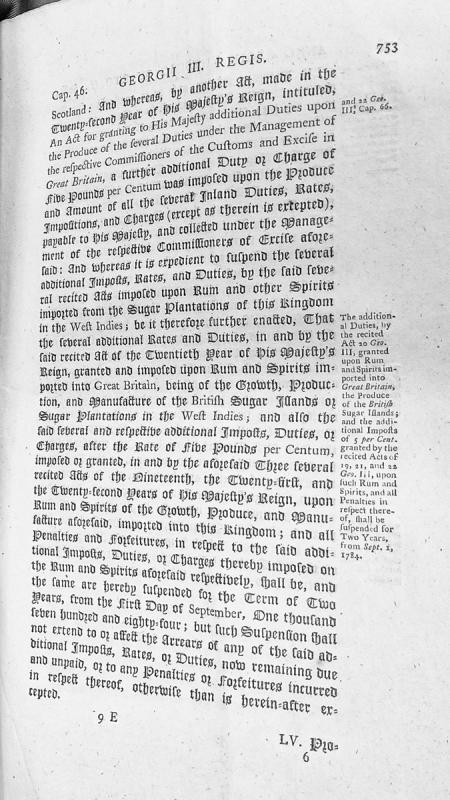
An excerpt from a statute of George III regarding the suspension of additional duties and imposts on rum and spirits imported from the British Sugar Islands in the West Indies for a two-year period commencing September 1, 1784. The act references and builds upon previous legislation from the 19th, 20th, 21st, and 22nd years of the King's reign.
This stone was rescued from the old parish church, which was demolished in 1869. It is a piece of architectural detail, possibly from an earlier church on this site. The surface is now very eroded, but casts taken in the early 1900s show more detail. The panel shows two figures standing to either side of a tree, the obvious interpretation being that it represents Adam and Eve at the Tree of Knowledge.
Eve, on the left, her long hair gathered in a braid and flowing down her back as far as her waist, raises an apple to her mouth. Adam, on the right, has shorter hair which falls to his shoulders and is shown reaching towards the tree while covering his nakedness with his left hand. The tree stands between Adam and Eve, but is a rather small specimen: the tree is more usually depicted rising above the two figures, with its branches overhanging them.
It would be conventional for the scene also to depict the serpent, but if this was ever present it has been eroded or cut away.
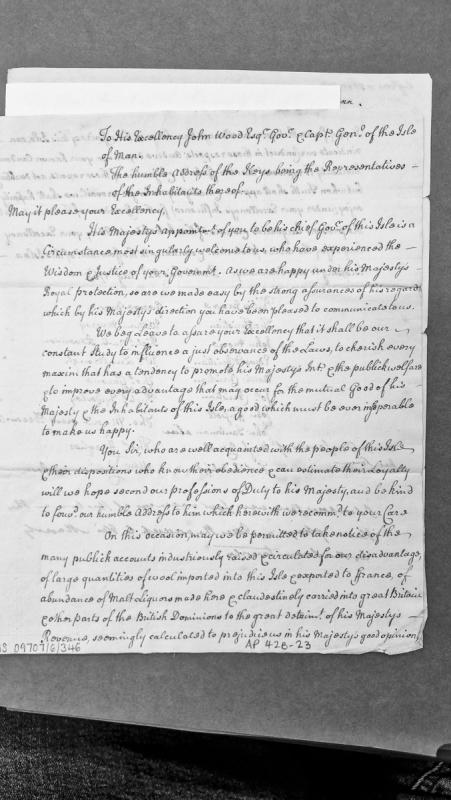
A formal address from the House of Keys (representatives of the Isle of Man inhabitants) to Governor John Wood, expressing loyalty to His Majesty and defending against accusations of smuggling wool to France and malt liquors to Britain. The document affirms the Keys' commitment to upholding the law and the Crown's interests while seeking to counter negative reports circulating about the island.
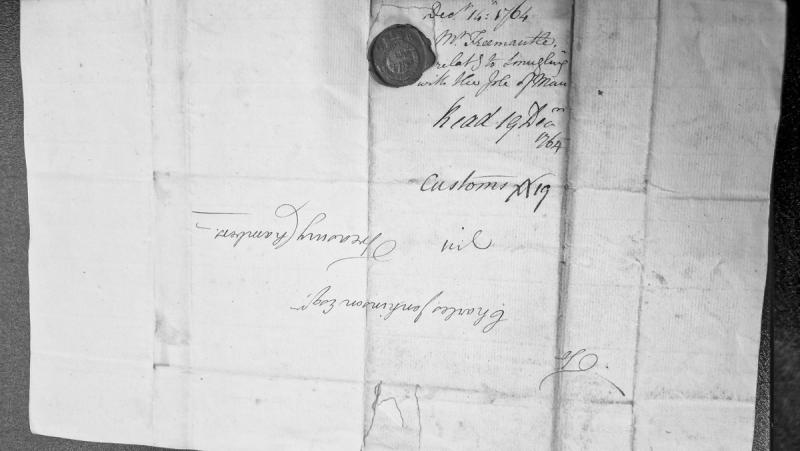
Fragment of an upside-down address panel or cover letter notation, containing initials 'M. G.' and partial address information referencing Wanstead and individuals named Stock Beaumont and possibly Chard. The document is largely illegible with multiple uncertain readings.
A partial fragment showing an address or direction to George Joynson Esq at Treasury Chambers. The document appears to be upside-down in the source, suggesting it may be the verso of another document or an envelope/wrapper.
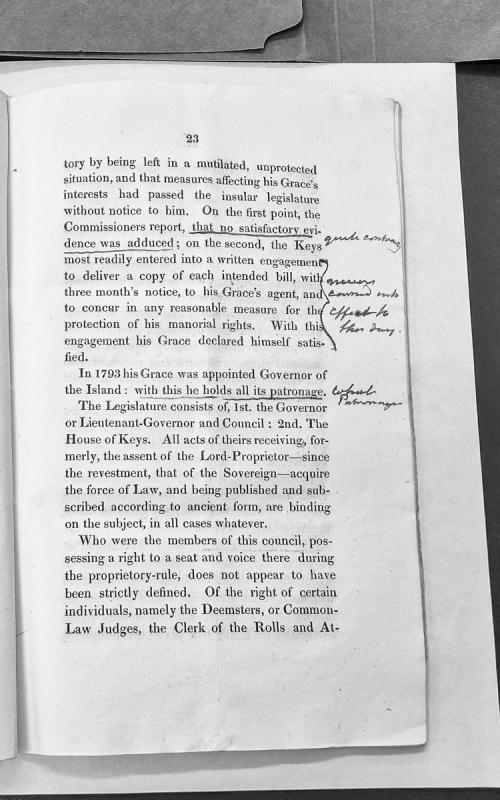
This document discusses the administrative structure of the Isle of Man, including the role of the Governor (appointed in 1793), the House of Keys, and the composition of the Council. It addresses a dispute between the Lord-Proprietor and the insular legislature regarding manorial rights and legislative procedure, with reference to measures requiring the Sovereign's assent.
David Beatty, 1st Earl Beatty (1871-1936), was a Royal Navy admiral who commanded the Grand Fleet during the latter stages of the First World War. He had a connection to the Isle of Man through his residence and visits to the Island.
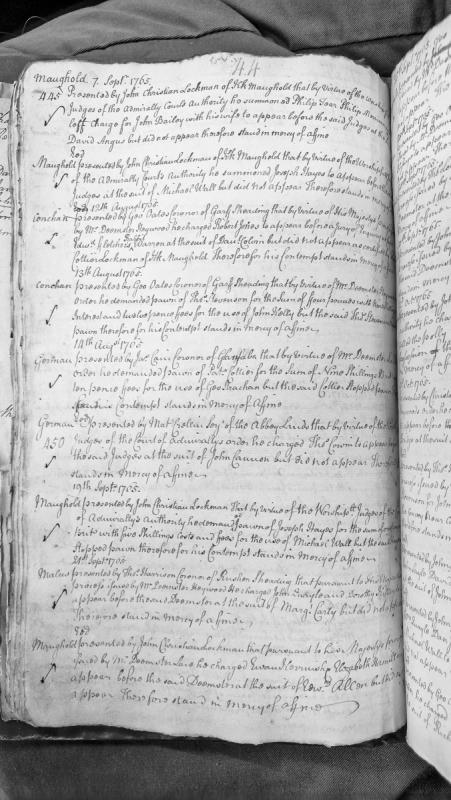
A series of court presentments from various Manx sheadings documenting summonses and charges issued by coroners and court officers for non-appearance before Admiralty and Deemster courts, as well as contempt of court for refusal to provide pawn (security). Multiple cases involve debt collection matters and suits between parties.
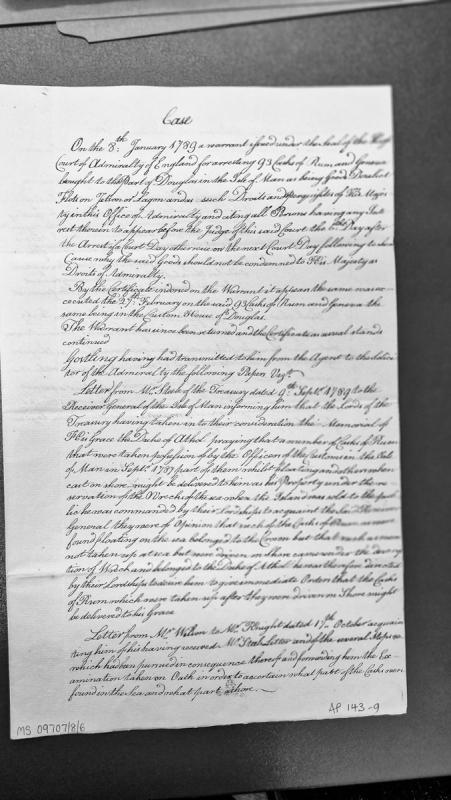
This document concerns an Admiralty Court warrant issued on 8 January 1789 for the arrest of 93 casks of rum and Geneva brought to Douglas, Isle of Man, claiming them as derelict flotsam and jetsam belonging to the Crown. It documents correspondence between the Treasury, Receiver General, and various officials regarding ownership of the casks, with particular reference to the Duke of Athol's claim under wreck reservation rights granted when the Island was sold to the public.
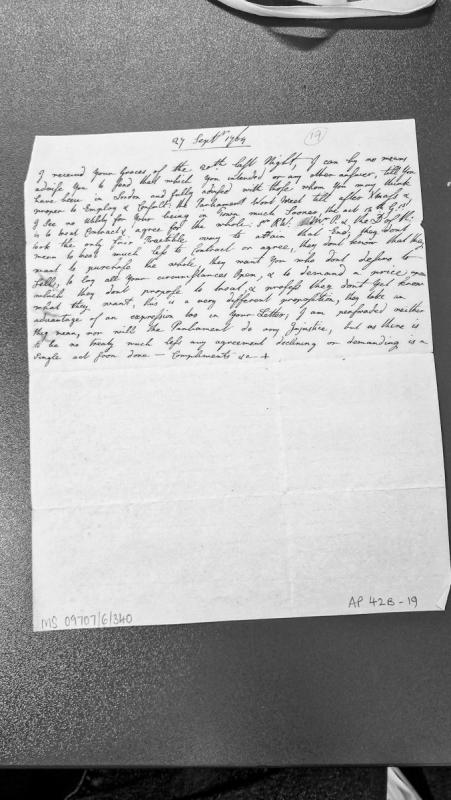
A letter dated 27 September 1764 advising the recipient against sending an intended response until after consulting with advisors in London. The correspondent discusses parliamentary proceedings, contract negotiations, and the proposed purchase of property or rights, referencing Act 12 of George I and various parties including Sir R.W., Mr P., and the Bishop of Man.
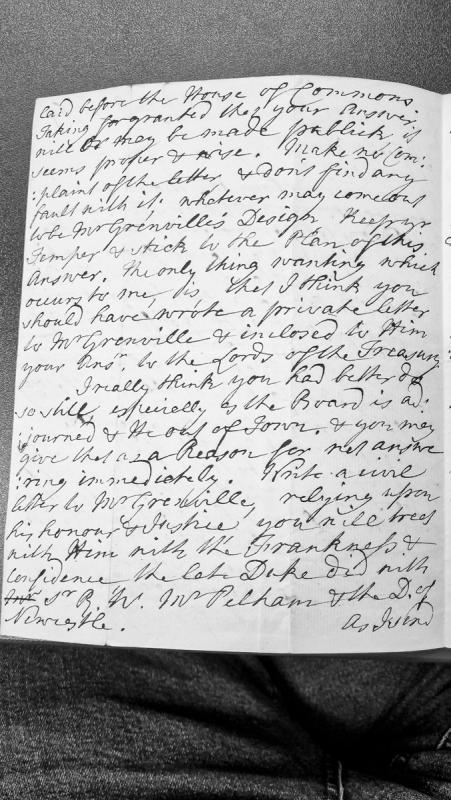
A draft letter or note providing strategic advice on handling a response to be laid before the House of Commons. The writer counsels maintaining composure, avoiding complaints, adhering to a prepared answer plan, and suggests writing a private letter to Mr Grenville accompanying an official response to the Lords of the Treasury.
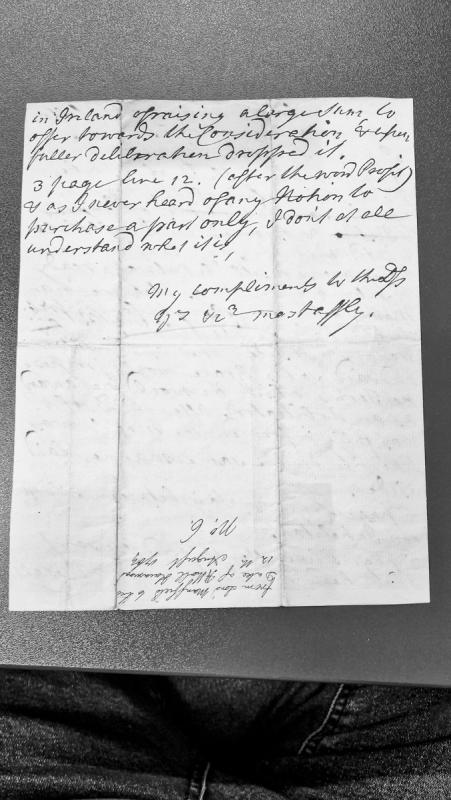
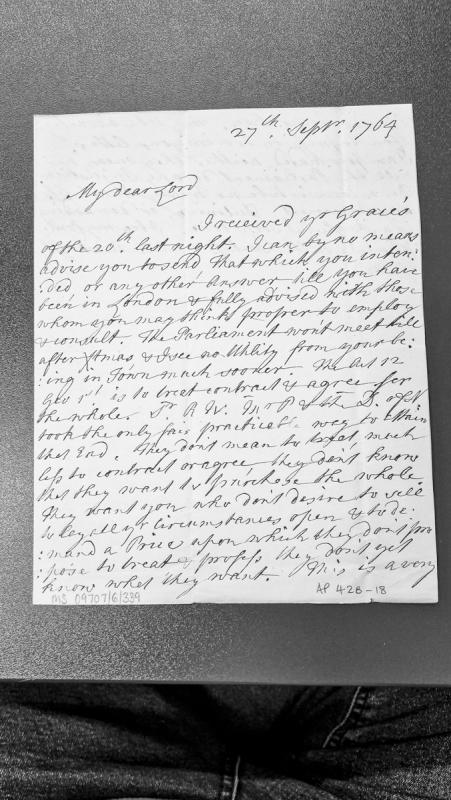
A letter of advice from the sender to their addressee (addressed as 'My dear Lord') regarding a contractual or commercial negotiation. The sender counsels against sending a reply until the recipient has consulted with legal advisors in London, noting that Parliament will not meet until after Christmas. The letter discusses the Act 12 Geo 1st and the intentions of Sir A.W., Mr P., and the Duke of N. regarding a potential purchase or agreement.
The Aeroplane and Seaplane Store stood among RAF Jurby's wartime hangars, which reportedly included an F-Type hangar, two T2-type hangars, four Bellman hangars and nineteen Blister hangars serving the training station. No historical detail specific to this individual store building beyond its registration and the station's general complement of hangars could be verified online.
A 16th-century obligation and covenant document recording an agreement between Hugh Salusbury, George Salusbury, and William Wright regarding a lease of tithes and commodities in the Isle of Man, held in trust by William Cotgreve of Chester. The document references the Earl of Derby's authority over the lease and illustrates early modern property arrangements and feudal relationships on the island.
A 1587 obligation/indenture between Hugh Salusbury, George Salisbury, and William Wright (parson of Warton) concerning a lease of tythes and commodities in the Isle of Man, held in trust by William Cotgreve of Chester. The document evidences early modern property arrangements in Man and the Earl of Derby's ownership interests. Relevant to understanding pre-Revestment Manx territorial and ecclesiastical administration.
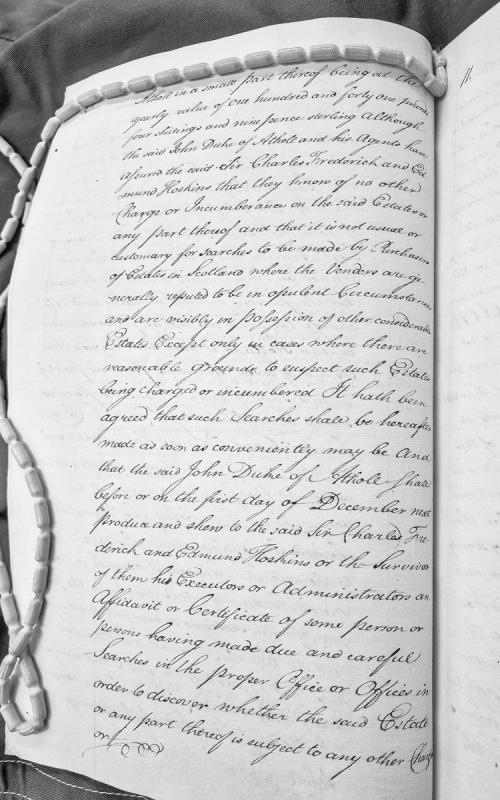
A legal document concerning an agreement between the Duke of Atholl and Sir Charles Frederick and Edmund Hoskins regarding the sale or conveyance of Scottish estates. The document stipulates that searches shall be conducted to verify whether the estates are subject to any charges or encumbrances, with the Duke of Atholl obligated to produce affidavits or certificates by December 1st confirming the results of such searches.
A dual-language (English/Latin) transcription of a 1426 treaty between Norwegian and Scottish kings concerning sovereignty over the Hebrides and Isle of Mann. The document records delegated representatives from Eric of Pomerania (Norway) and James I of Scotland meeting in Bergen to ratify prior agreements between Magnus IV, Halo V, and Alexander III regarding territorial claims.
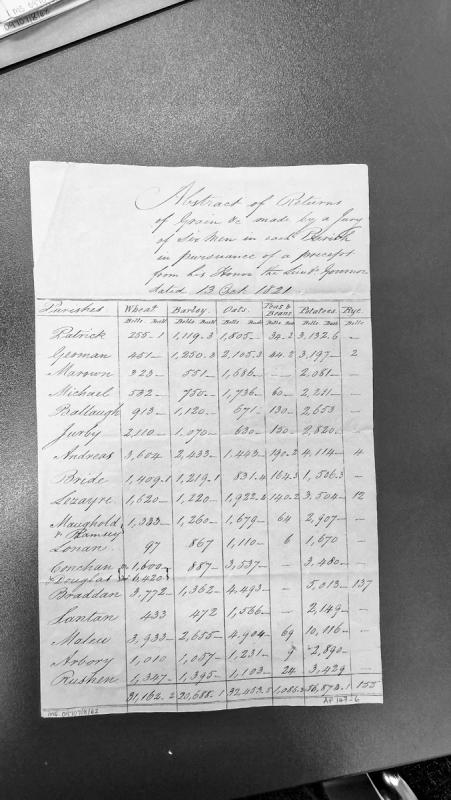
A tabular revenue abstract recording agricultural production by Manx parish, with measurements in bolls and bushels across five columns (likely representing different grain types or years). The data covers all major parishes of the Isle of Man with totals at the bottom, appearing to be an administrative record for taxation or tithes.
Prehistoric flint scatter.
A single worked prehistoric flint was recovered from Albany Road in Peel by CH Cowley.
The description is too vague to pinpoint and the grid reference relates to the midpoint on the road for indicative purposes only.
The antiquary Charles Harry Cowley was an avid collector of worked flint and coarse stone artefacts revealed by agricultural activity, mainly on farms located around Peel, and occasionally from further afield. He was active from 1900 until 1943. His entire collection of artefacts, together with a daybook cataloguing his discoveries, was later donated to Manx National Heritage.
The Albert Tower is a 14 metre high slate and granite tower, built in 1848 to commemorate the visit of Albert, Prince Consort in 1847. It is located on Lhergy Frissell, overlooking the town of Ramsey.