A letter from the Lord Lieutenant (Hertford) to the Lords of the Treasury requesting payment for the transport costs of two troops of Hales Dragoons from the Isle of Man to Ireland in 1766. The document details an expense of £235 5s 5d incurred by George Carleton, a Dublin merchant, for provisioning the troops' transport. This illustrates the administrative and financial machinery surrounding military movements post-Revestment.
Cosy Nook is a row of vernacular cottages on Shore Road at the western end of Port Erin beach, long used as a café and a familiar landmark on the seafront. The building now houses Kishtey Çheh, a beach spa. Beyond its location and current use, detailed construction history for the building was not found.
Cott-ny-Greiney on Beach Road, Port St Mary, is registered as a traditionally thatched Manx cottage, a rare surviving example of the island's older vernacular building style close to the shore. No further verifiable history beyond this listing description could be found online.
Cottage Grove Lake is a locality in Ohio associated with early Manx settlement in the Western Reserve region. Manx emigrants began arriving in north-east Ohio from the 1820s, establishing farming communities across the area that maintained close ties with the Island and with the larger Manx community in nearby Cleveland.
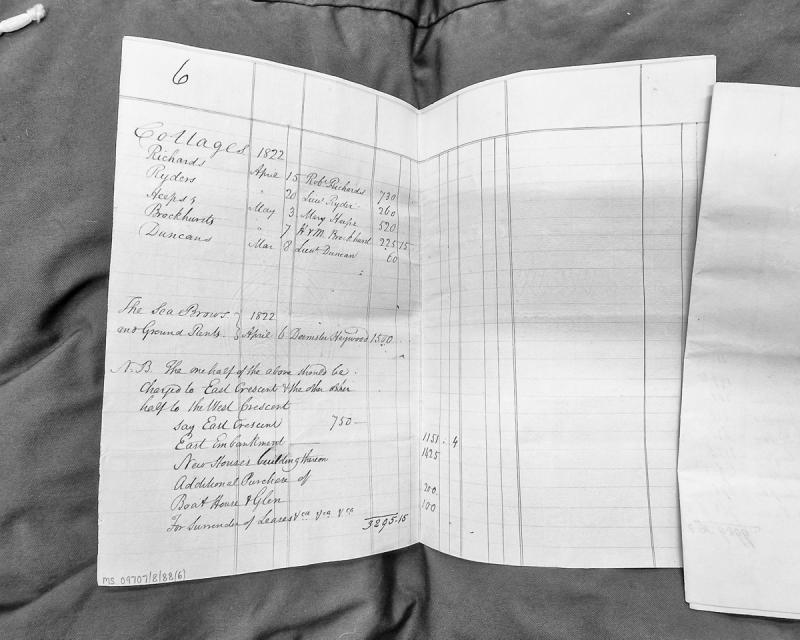
A revenue or rent roll abstract listing various cottages and properties with associated rental values and charges for 1822. Entries include cottages, sea brows, ground rents, embankment properties, and new houses with amounts in pounds and shillings. Contains administrative notes regarding allocation between East and West Crescent.
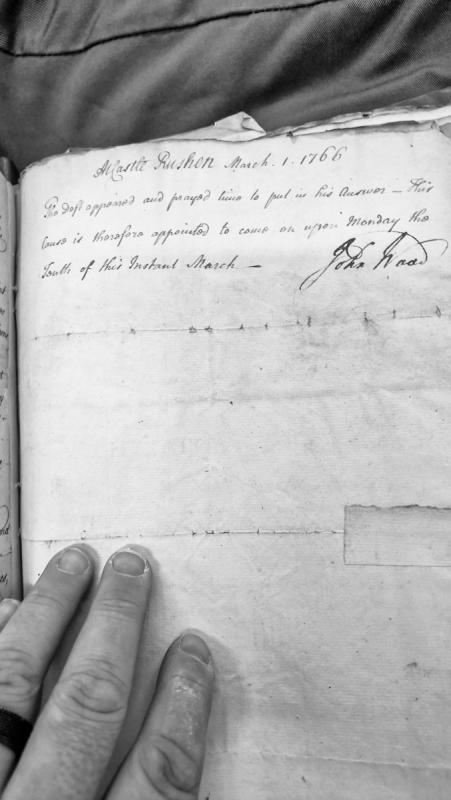
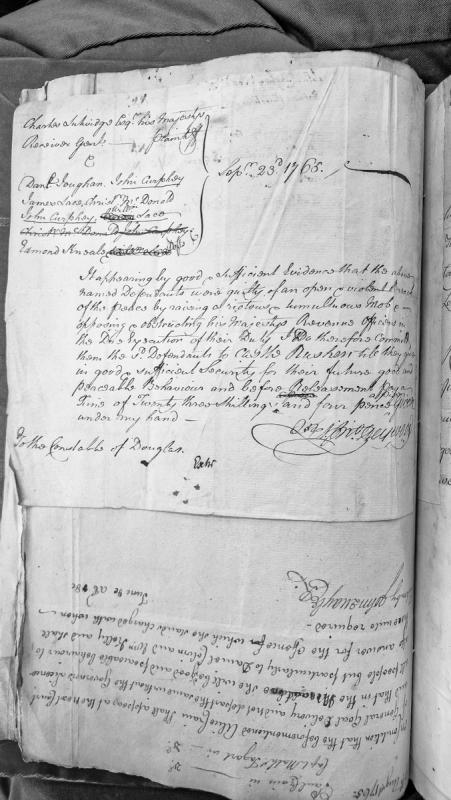
A brief court record from Castle Rushen dated March 1, 1766, documenting that a defendant (Deft) requested time to submit an answer, with the case being rescheduled for Monday, March 4th. The entry is signed by John Wood.
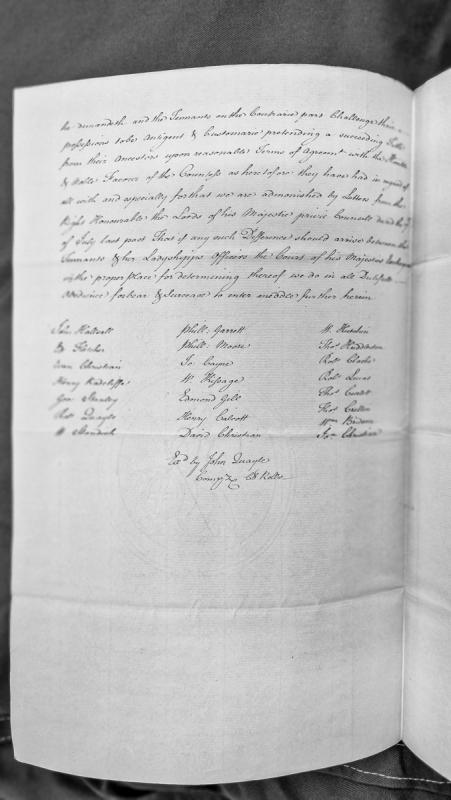
A court presentment regarding a dispute between a landlord (likely the Countess) and tenants over possession rights. The court defers the matter to His Majesty's Court, citing instructions from the Privy Council dated July of an unspecified year. The document records the decision and lists multiple court officials or jurors.
Ramsey's old Court House and police station on Parliament Street once served as the town's judicial building; it has since been repurposed and is now used as a community and town-centre event space. It is registered on the Isle of Man's Registered Buildings list as a public building. No further verifiable detail on its construction date or architect was found online.
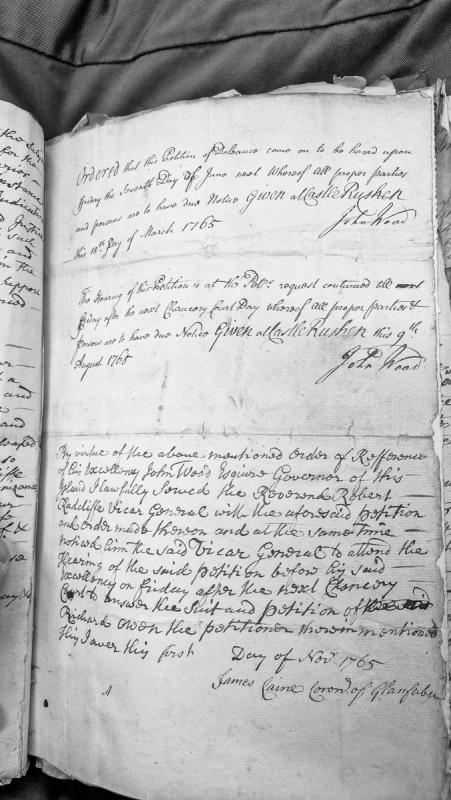
A series of court orders and notices relating to a petition by Dobauco (or Richard Owen) against Reverend Robert Radcliffe. The document records multiple adjournments of the hearing between June and November 1765, culminating in a sworn statement of service by James Caine, Coroner of Glanfaba, confirming notice was served on the Vicar General.
A court order written upside-down at the bottom of a page, dated June 4th 1782, concerning the disposal of property at Ramsey and instructions for the next court session. The document references collectors and servants, and mentions an offense related to corn.
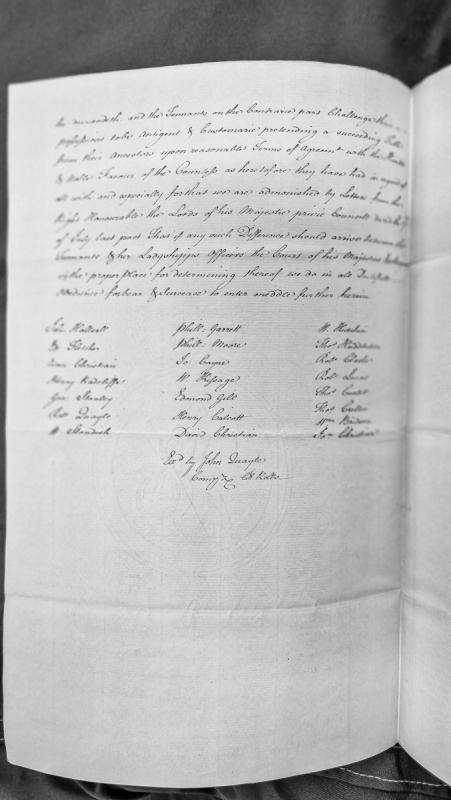
A court presentment documenting a dispute between a demandant and tenants over ancient and customary possessions. The court defers judgment, citing instructions from the Lords of the Privy Council dated July that disputes between tenants and the Countess's officers should be determined by the Court of His Majesty. The document records the signatures of numerous jurors or court officials.
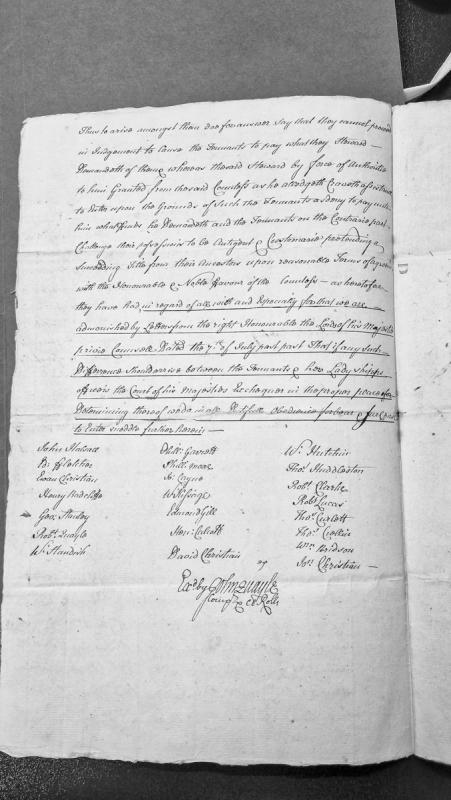
A court presentment addressing disputes between tenants and a Countess's Steward concerning demanded payments and customary land possession rights. The court defers judgment, citing instructions from the Privy Council that such matters should be determined by the Court of the Exchequer rather than local courts.
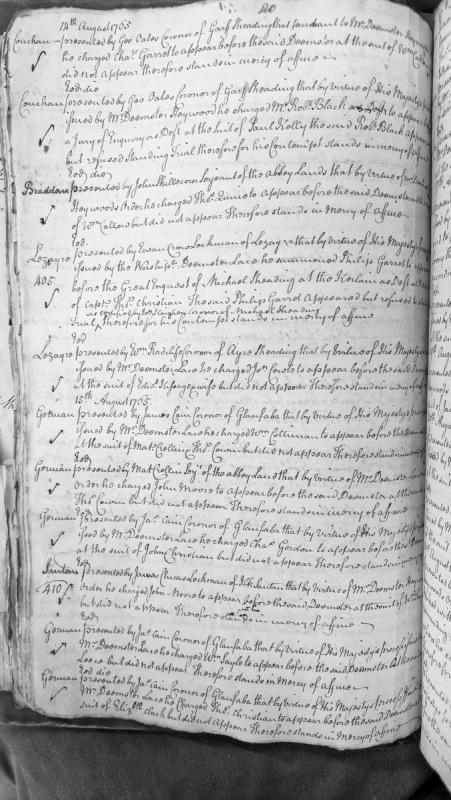
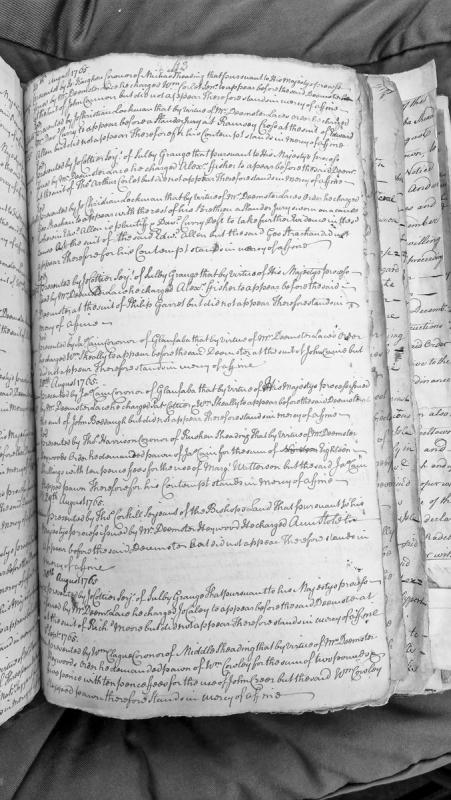
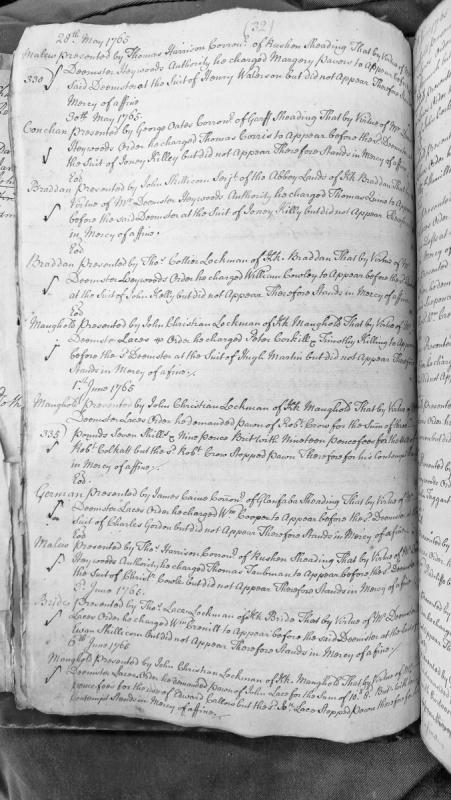
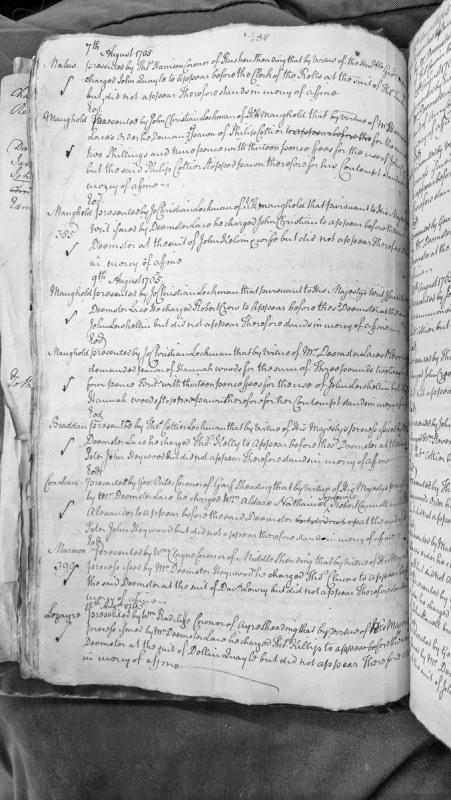
A series of court presentments from the Isle of Man documenting cases of non-appearance before the Deemster and contempt of court. Various coronors and sergeants present charges against individuals who failed to appear for trial or refused to stand trial, with all defendants standing in mercy of fines.
A record of court presentments issued by Deemsters Lace and Heywood documenting failures to appear before the Deemster and contempt of court proceedings. Multiple individuals are noted as standing in mercy of fines for non-compliance with summonses and orders across various Manx sheadings.
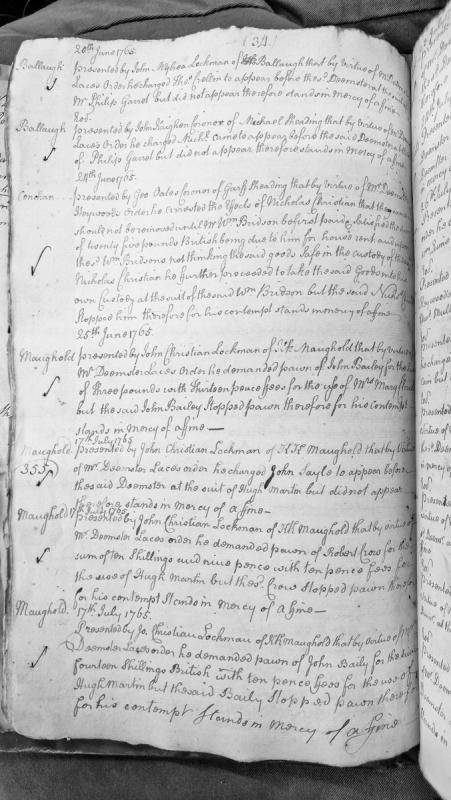
A series of court presentments documenting failures to appear before Deemsters Lace and Heywood, and instances of stopped pawn, with various parties standing in mercy of fines. The document records complaints presented by lockmans and coronors across multiple Sheadings.
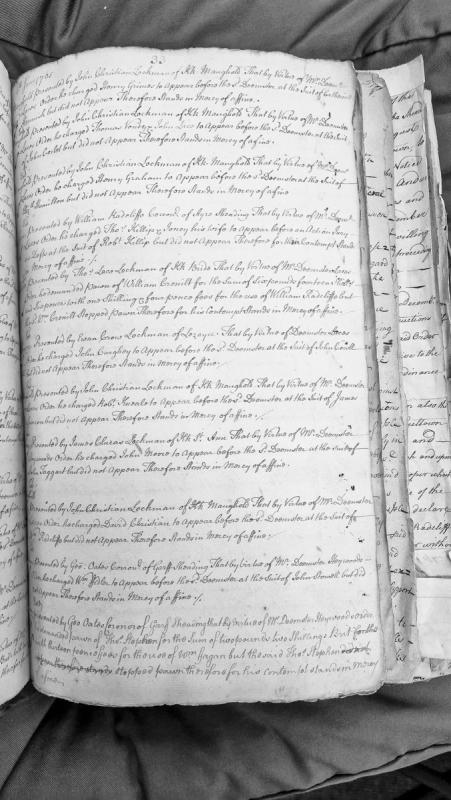
A record of multiple court presentments from various Manx parishes (Ballaugh, Conchan, Maughold) documenting failures to appear before the Deemster and contempt of court in civil suits. Cases involve debt collection and enforcement of court orders, with defendants standing in mercy of fines for non-compliance.
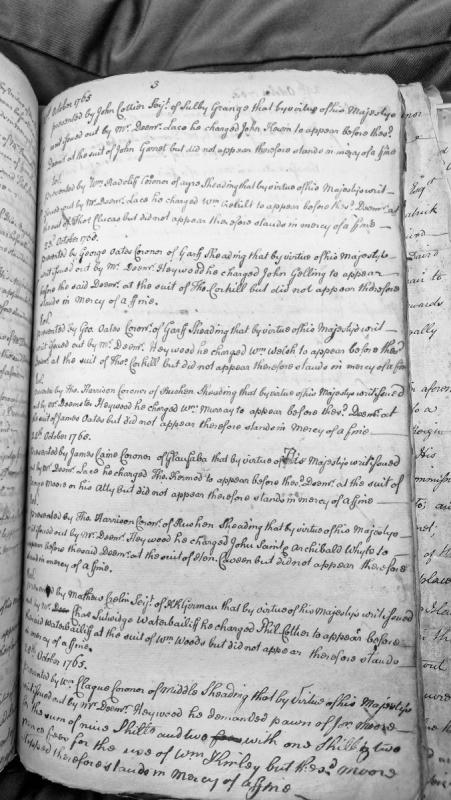
A court presentment document recording multiple cases of defendants who failed to appear before Deemsters (judges) in response to writs issued on behalf of various plaintiffs. The presentments cover the period from 1 to 20 October 1765 and list the defendants, plaintiffs, and the court officers (Sergeants and Coroners) who served the writs. All defendants are noted as standing in mercy of a fine for non-appearance.
A series of court presentments from various Manx parishes documenting cases where defendants failed to appear before Deemsters Heywood and Lace, or failed to provide pawns as ordered. Each presentment records the date, parish, presenter (typically a Coronor or Lockman), defendant, plaintiff, and the nature of the default, with all cases resulting in fines.
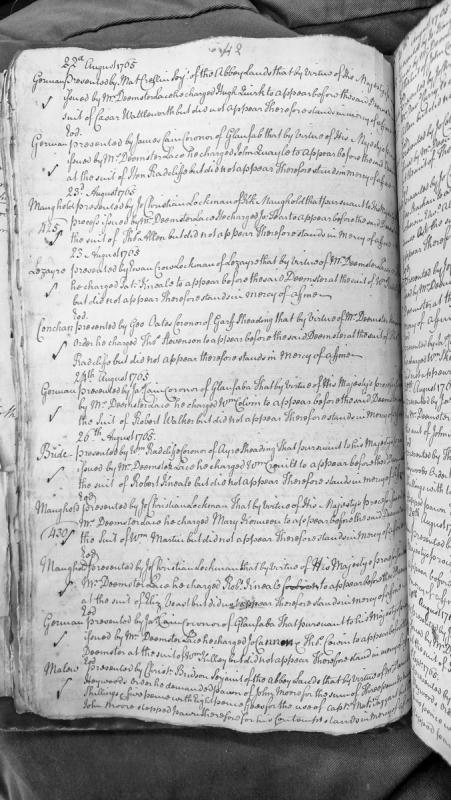
A series of court presentments from various parishes (German, Maughold, Lezayre, Conchan, Bride, Malow) documenting individuals charged to appear before Deemster Lace but who failed to do so, resulting in fines. The document includes cases spanning 22-26 August 1765 across multiple Manx sheadings and parishes.
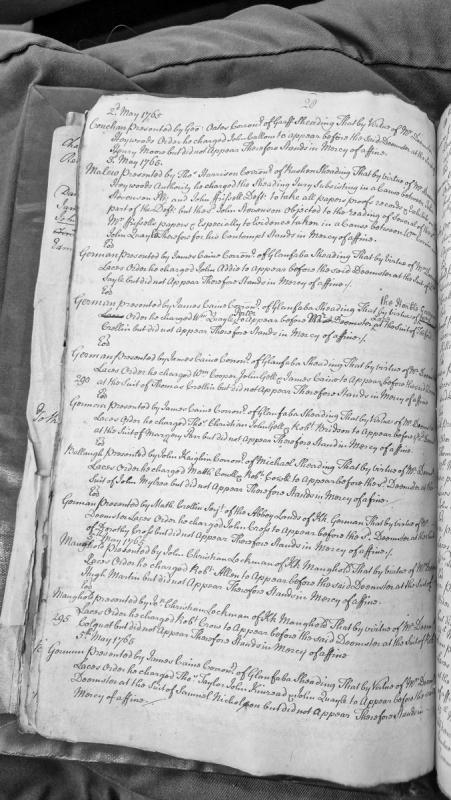
A series of court presentments from various sheadings (Garff, Rushen, Glenfaba, Michael, Maughold) documenting cases where defendants failed to appear before Deemster Laces when charged by coronals or sergeants. Each presentment notes the defendant(s), the plaintiff, and the penalty of standing in mercy of a fine.
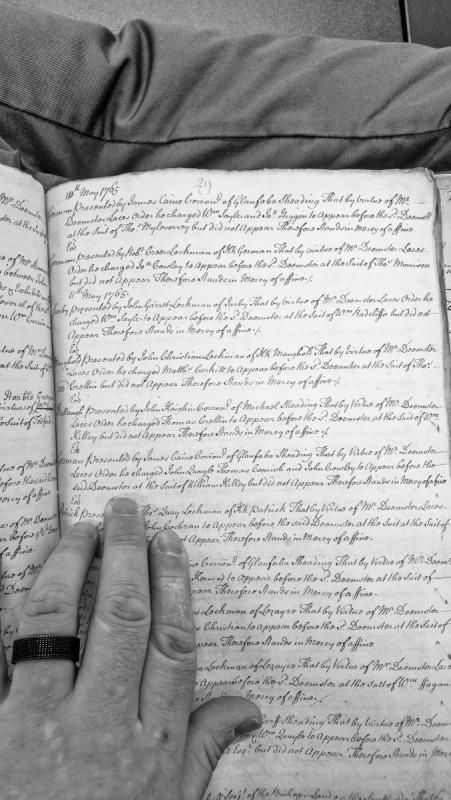
A series of court presentments documenting individuals charged to appear before Deemster Laces at the suits of various parties but who failed to appear. The document records presentments from multiple Manx sheadings (administrative divisions) including Glanfaba, Kirk German, Jurby, Maughold, Michael, and Lezayre, all standing in mercy for fines.
A series of court presentments from various parishes in the Isle of Man documenting cases where individuals failed to appear before the Deemster or Clerk of the Rolls in response to writs or orders. Multiple defendants stood in contempt and mercy of fines for non-appearance.