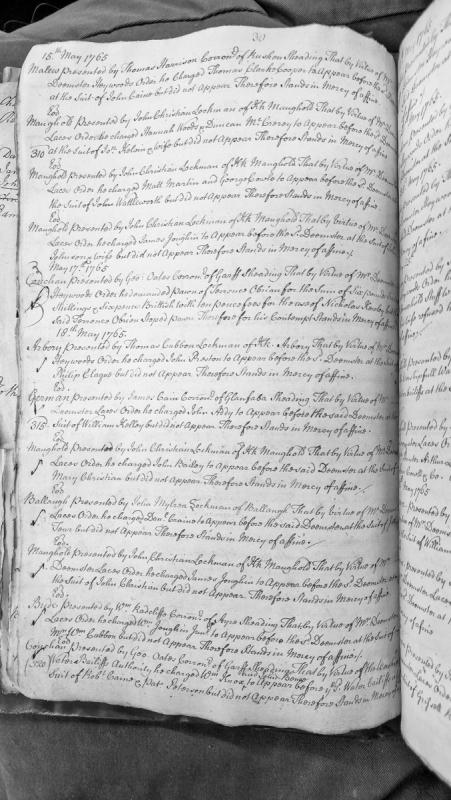
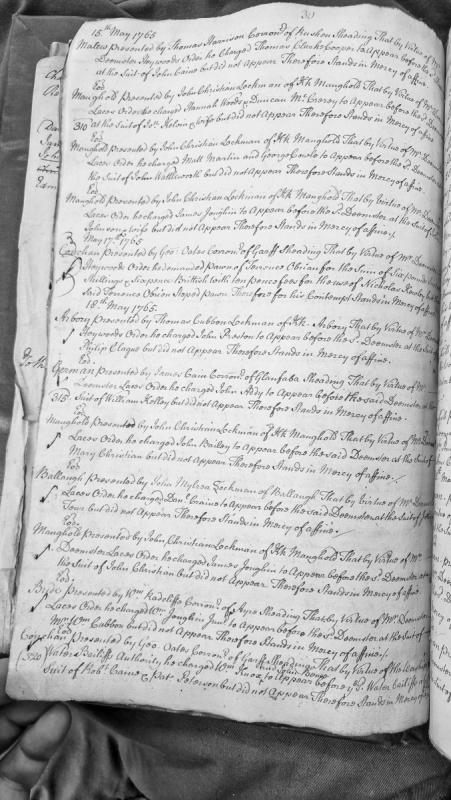
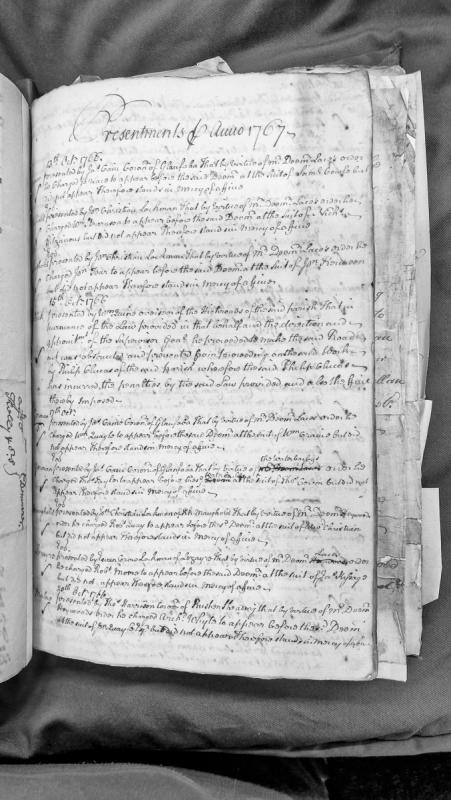
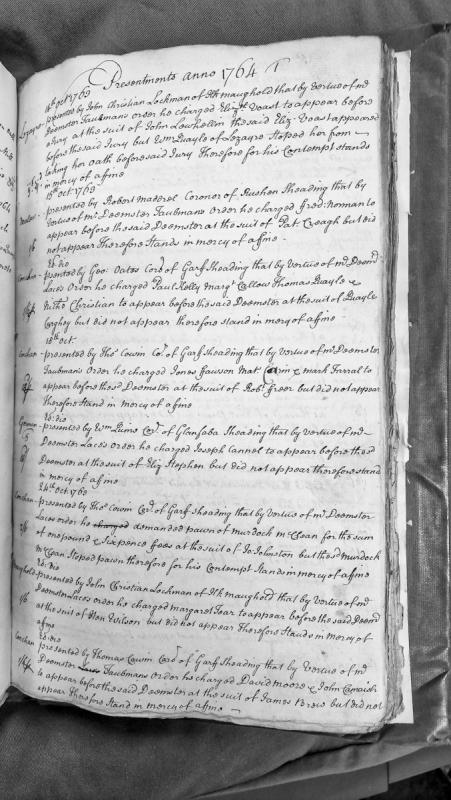
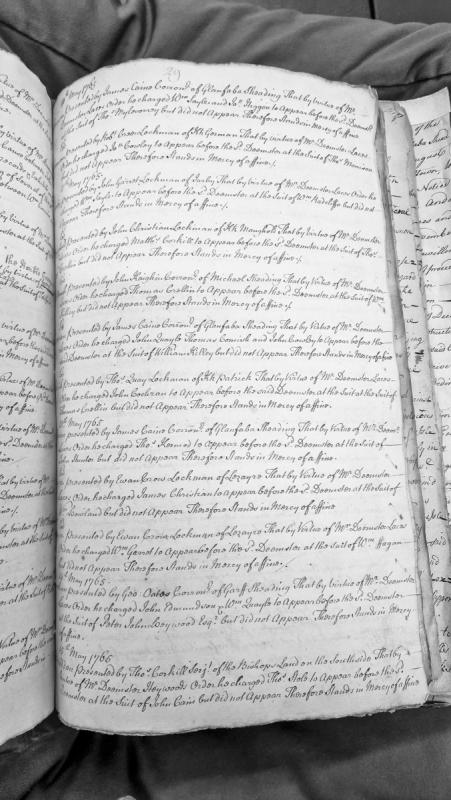
A series of court presentments documenting cases where defendants failed to appear before the Deemster in response to summons issued by Coronors and Lockmans across various Manx sheadings (Rushen, Maughold, Garff, Arbory, Glanfaba, Ballaugh, Ayre). All cases resulted in the defendants standing in mercy of a fine for contempt.
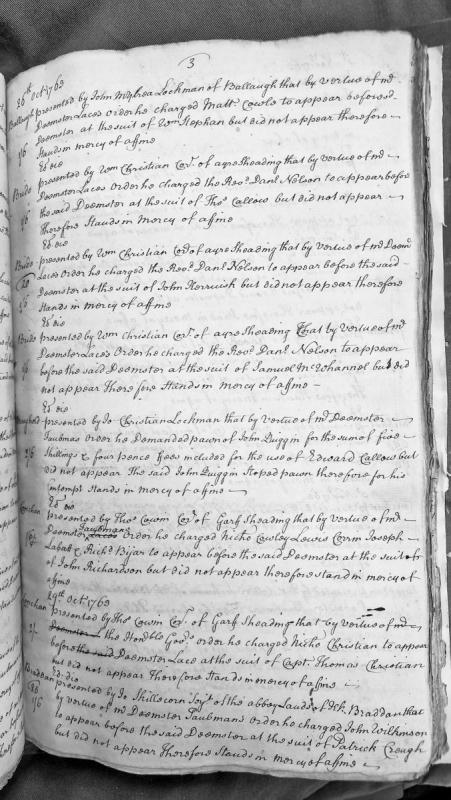
A series of court presentments documenting individuals charged to appear before the Deemster but failed to do so, resulting in fines. The presentments cover multiple parishes (Ballaugh, Bride, Maughold, Conchan, Braddan) and detail various civil suits and contempt cases from October 1763.
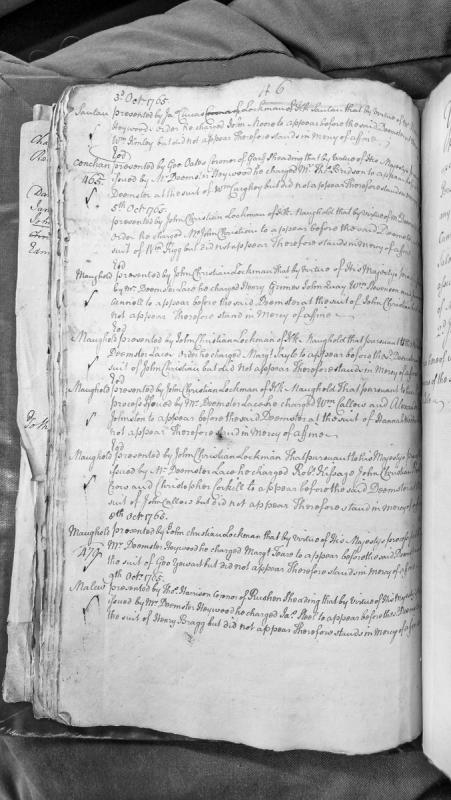
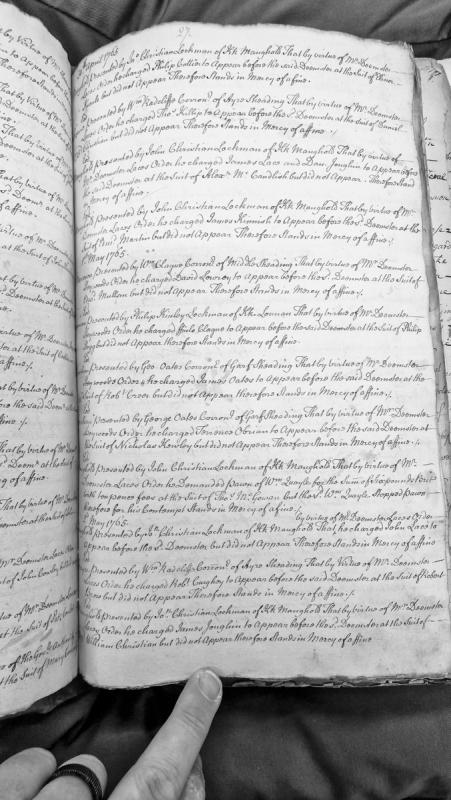
A series of court presentments recording charges brought by Lockmen and Coroners against various individuals who failed to appear before the Deemster in response to summonses. The presentments span October 3rd to 9th, 1765, and involve matters from multiple sheadings including Santan, Lod, and Maughold.
A series of court presentments documenting individuals charged to appear before Deemsters Lace and Heywood but who failed to do so, resulting in fines. The presentments cover multiple Manx sheadings including Maughold, Ayre, Marown, Loman, and Garff, with charges presented by local lockmen and coronals.
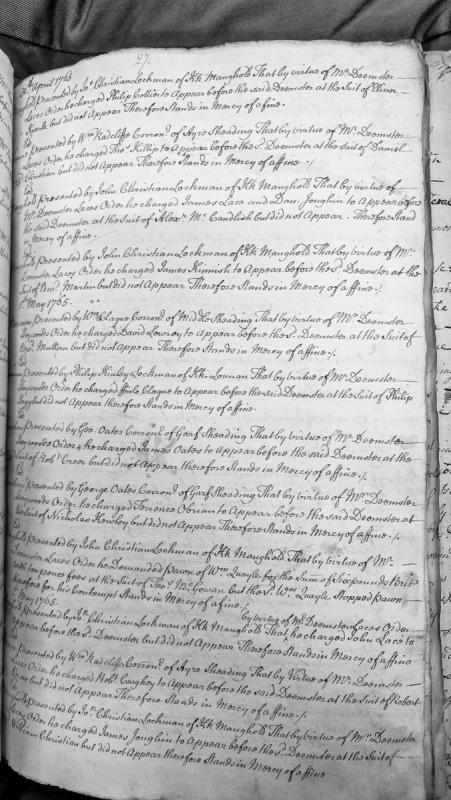
A series of court presentments documenting individuals charged to appear before various Deemsters (magistrates) who failed to do so, and were therefore placed in mercy of fines. The document records presentments made by Lockmans and Colonels of various Sheadings over several dates in April and May 1765.
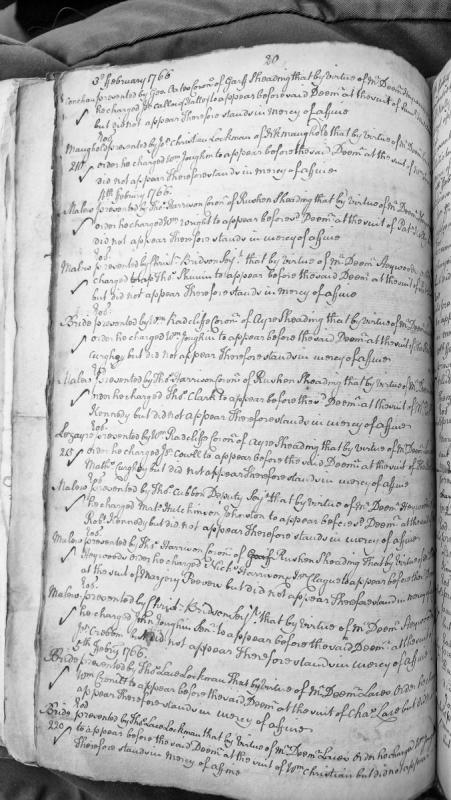
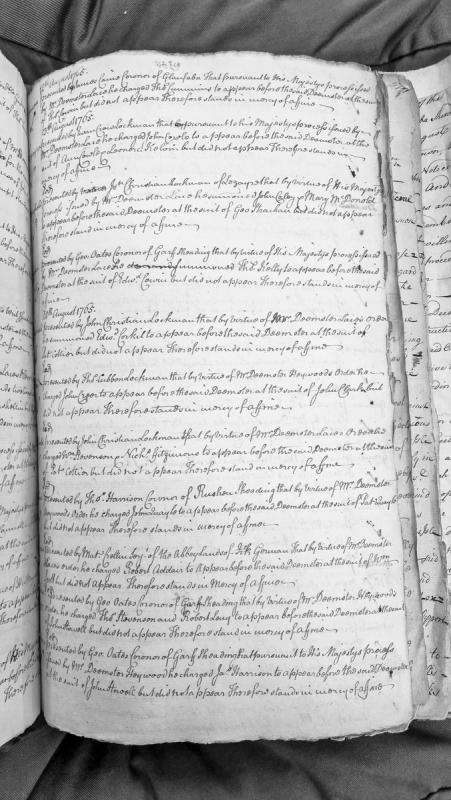
A series of court presentments from February 1766 documenting cases where individuals failed to appear before various Deemsters (judges) in response to charges brought by plaintiffs. Multiple sheadings are represented including Garff, Maughold, Rushon, Ayre, and Bride. Each entry records the presenting official, the charged individual, the Deemster, and the plaintiff, with the notation that the defendant did not appear and therefore stands in mercy of a fine.
A series of court presentments documenting cases where individuals failed to appear before Deemsters (judges) in response to writs issued by Deemsters Lace and Heywood. The presentments detail charges brought by various officers including sergeants, lockmans, and coronors, with defendants standing in mercy of fines for contempt of court.
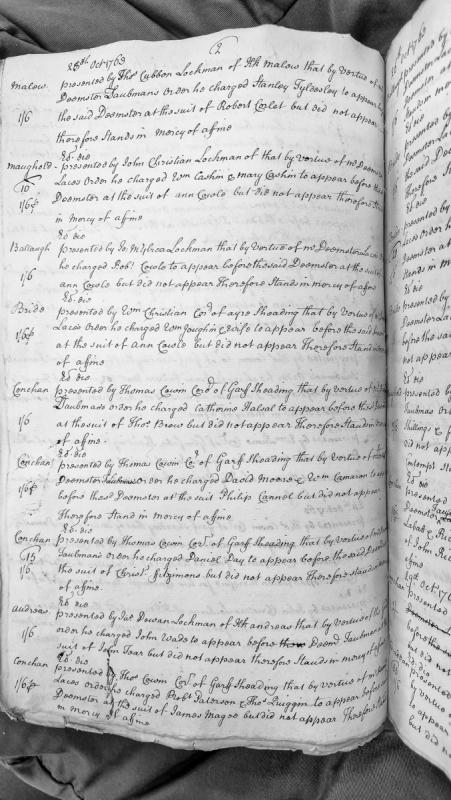
A series of court presentments documenting defendants charged by various Lockmans and Constables who failed to appear before named Deemsters (judges) in civil suits. Multiple parishes are represented including Malow, Maughold, Ballaugh, Bride, Conchan, and Andreas. All cases note the defendants stand 'in mercy' for their non-appearance.
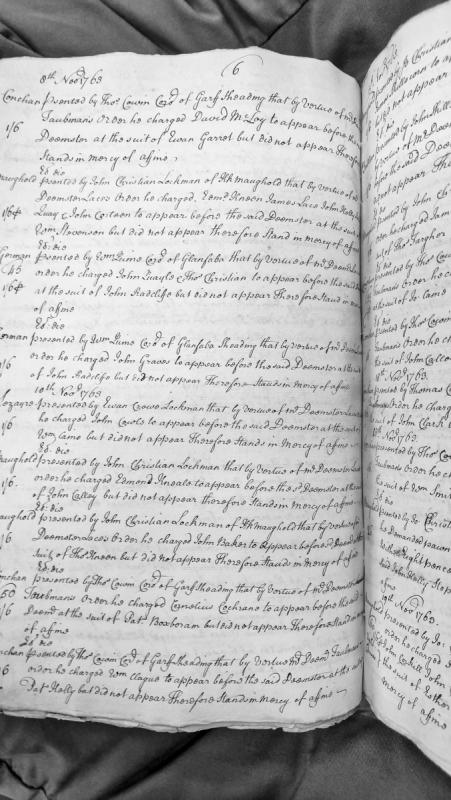
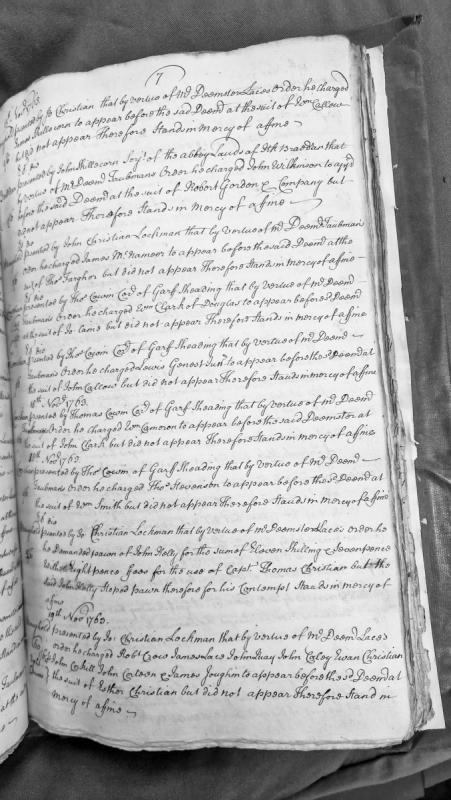
A series of court presentments documenting individuals charged by constables to appear before the Deemster but who failed to do so. The document records presentments from multiple sheadings (Garf, Maughold, Glanfaba, and Lezayre) on 8th and 10th November 1763, with defendants standing in mercy of a fine for non-appearance.
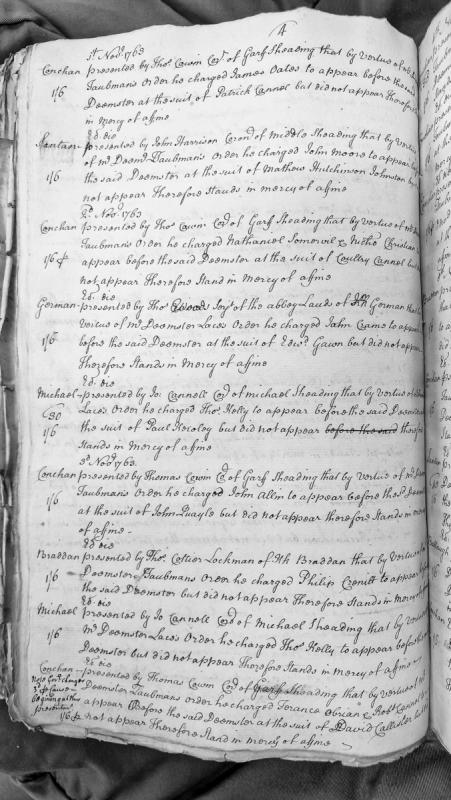
A series of court presentments documenting cases where individuals failed to appear before the Doomster (chief magistrate) when summoned by various Coroners and Officers. Each entry records the summoning officer, the defendant who failed to appear, the plaintiff's name, and notes that the defendant stands in mercy of a fine. The document covers presentments from 1st to 3rd November 1763.
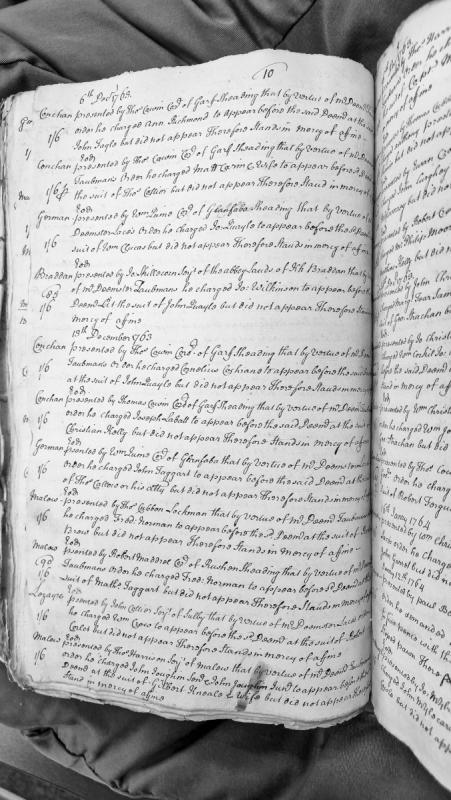
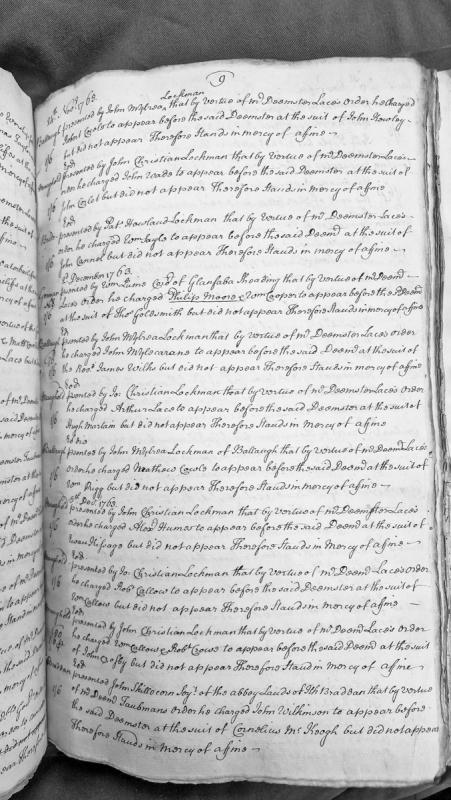
A court record documenting multiple presentments by various constables and sergeants across Manx sheadings, reporting that defendants charged to appear before Deemsters failed to do so and are therefore subject to fines. The document covers cases from Conchan, German, Braddan, Malow, Lezayre and other districts between 6th and 19th December 1763.
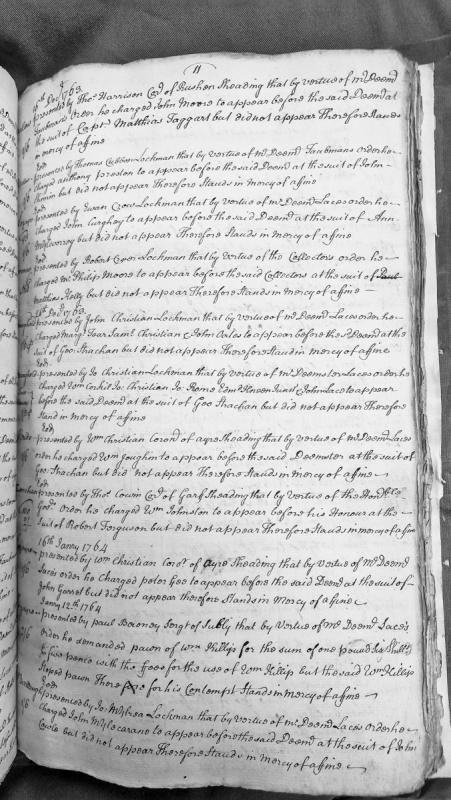
A series of court presentments from November 1763 documenting cases where defendants charged by various constables and sergeants failed to appear before Deemster Taubman (and Deemster Laces in one instance) in response to legal suits. All defendants are recorded as standing in mercy of the court.
A series of court presentments from various Manx parishes recording instances where defendants failed to appear before the Deemster in response to summons. Each entry documents the coronet or lockman who issued the charge, the defendant's name, the plaintiff, and notes that the defendant stands in mercy of affine (a penalty for non-appearance).
A series of court presentments from October 1766 recording non-appearances before various Deemsters and instances of obstruction of highway work. The document lists charges brought by Coronals and Lockmans against individuals for failure to appear at the suit of plaintiffs, and one case of obstruction by Philip Clucas during highway maintenance work in Glaufaba parish.
A series of court presentments from October 1763 documenting various breaches of court orders, non-appearances before the Deemster, and contempt of court. The presentments are made by Coronors and other officials from different Sheadings (Maughold, Rushen, Garff, and Glanfaba), with fines imposed in mercy for each offence.
A series of court presentments documenting failures to appear before various Deemsters (judges) in response to summons. The document records presentments made by Coroners and Lockmans across different sheadings, with accused parties standing in mercy of fines for non-appearance.
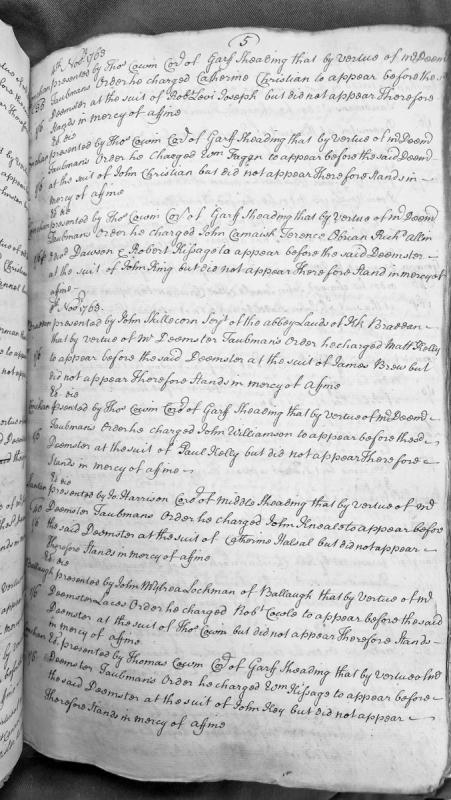
A series of court presentments recording individuals charged by various Doomsters (magistrates) who failed to appear before them in response to suits. The document lists multiple cases from November 1763 involving non-appearance, with defendants standing in mercy of fines. Cases involve various sheadings including Maughold, Braddan, and Garff.
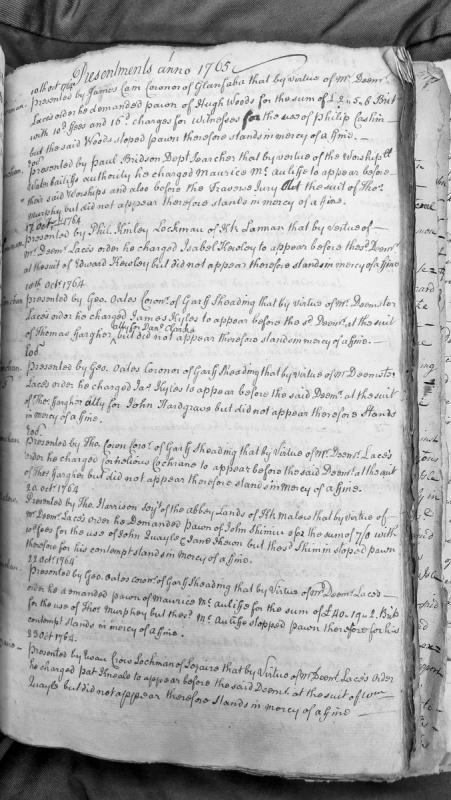
A series of court presentments from October 1764 recording cases of non-appearance before the Deemster and instances of stopped pawn (contempt of court). The presentments were made by various officials including Coronors, Lockmans, and Searchers across multiple Sheadings (German, Conchan, Malew, Laire). Each case notes the plaintiff, defendant, and that the accused stands in mercy of a fine.
A series of court presentments documenting failures to appear before Deemsters and other officials, and contempt of court. Various officers (Coroners, Lockmans, Sergeants) present cases on behalf of plaintiffs, with defendants charged to appear before Deemsters Taubman and Lace, the Collector, or the Governor, but who failed to comply. All defendants stand in mercy of fines.
A record of court presentments documenting cases where defendants charged by various lockmen failed to appear before the Deemster (judge) as ordered. The presentments cover multiple parishes (Ballaugh, Maughold, Bride, German, Braddan) and record fines imposed for non-appearance.
A series of court presentments documenting cases where individuals summoned by order of Deemsters Lace and Heywood failed to appear before the court. Each entry records the coronor or lockman who issued the summons, the defendant's name, the plaintiff, and notes that the defendant stands in mercy of a fine for non-appearance.
A series of court presentments by various Coroners and Lockmans of the Isle of Man reporting that individuals charged to appear before the Deemster by order did not attend, and therefore stand in mercy of a fine. Records multiple cases of non-appearance across different sheadings and parishes.
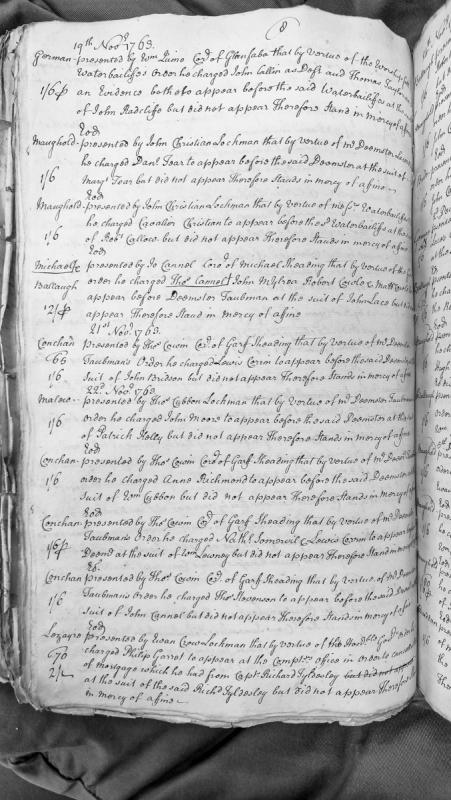
A series of court presentments recording individuals charged to appear before various Deemsters and Waterbailiffs in November 1763 but who failed to do so, resulting in fines. The document lists cases from multiple sheadings (Glenfaba, Maughold, Michael, Garff, Malew, Lezayre) with details of the suits and parties involved.
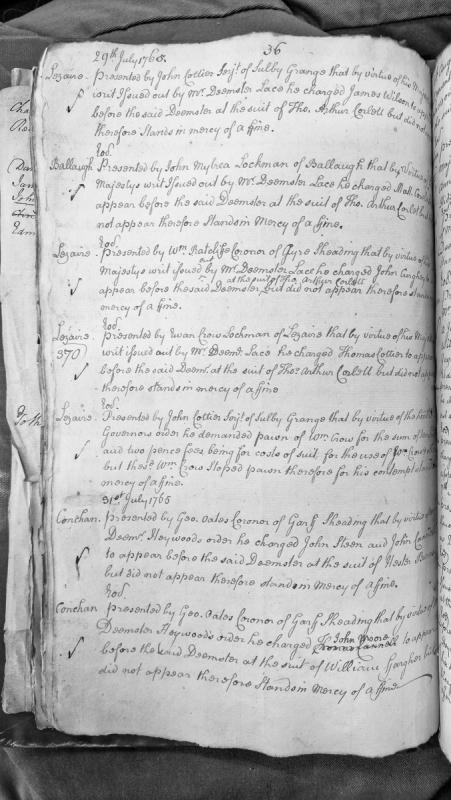
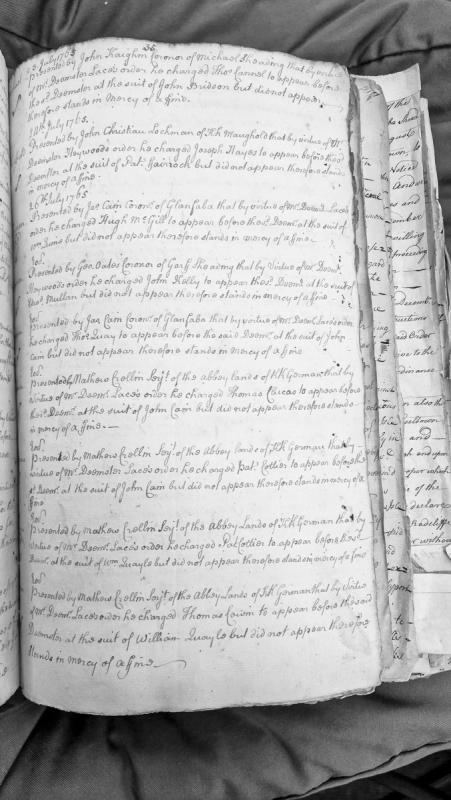
A series of court presentments documenting individuals charged by coronors and sergeants to appear before Deemsters (judges) at the suit of various plaintiffs but who failed to appear, resulting in fines. The document records eight separate cases from July 1765 across multiple sheadings of the Isle of Man.
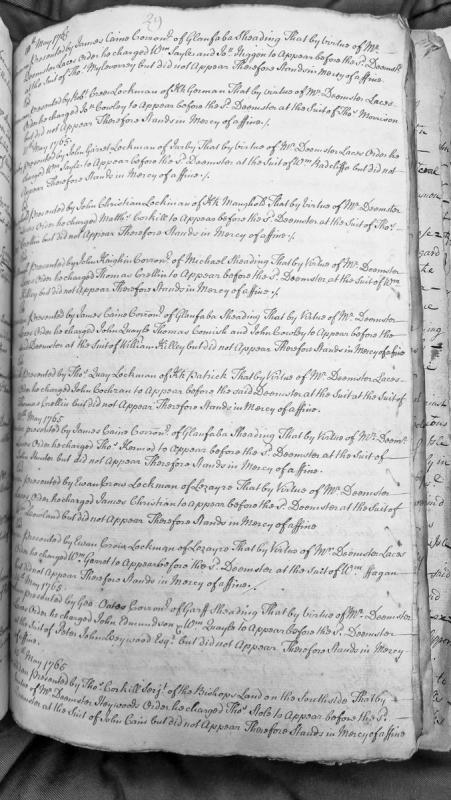
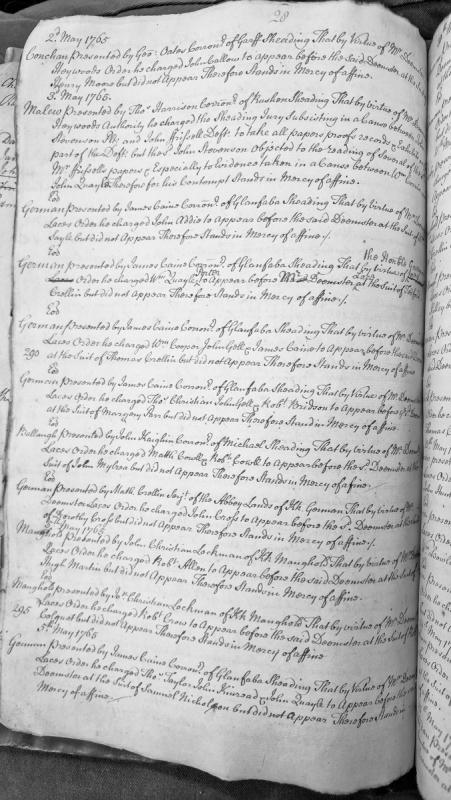
A series of court presentments documenting individuals charged to appear before the Doomster (chief judge) in various Isle of Man sheadings but who failed to do so. Each presentment records the charging party, the defendant, the plaintiff, and the consequence (standing in mercy of a fine). The document covers cases from May 2–5, 1765.