A legal opinion addressing the settlement of an annuity under a marriage contract involving Lord Glenlyon and the Duke. The document discusses issues with a Deed of Entail that omits mention of an annuity, recommends infeftment procedures under Scottish law, and outlines necessary English legal instruments for securing the annuity payment.
A comprehensive legal opinion examining the Isle of Man's constitutional status, the extent of the Lord's rights and jurisdiction, the tripartite governmental structure (Lord, Governor and Council, House of Keys), and the island's commercial privileges. The document details the Lord's maritime and fiscal authorities, citing specific acts of Parliament including 12 Geo. I (1726) and discussing historical petitions against trade restrictions.
A legal opinion opposing a parliamentary Bill that transfers jurisdiction over insular seizures to British or Irish courts and grants all forfeitures to proprietors rather than the Lord of Man. The document argues this violates the Lord's rights under the Parliamentary Charter and threatens gradual erosion of his authority.
A legal opinion or argumentative text discussing the limits of royal prerogative and parliamentary legislative power. The author argues that the Crown cannot infringe upon grants sealed with the Great Seal, and that Parliament will not take private property without necessity and compensation. The text references historical precedents including Charles I and customs revenues.
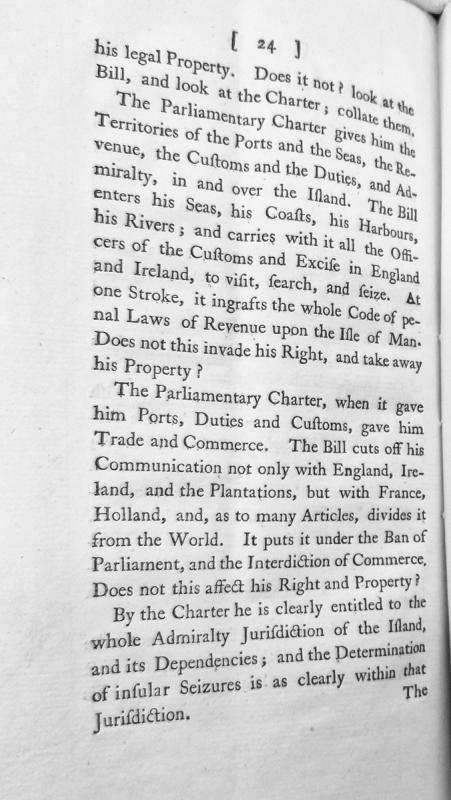
This document presents a legal argument comparing a Parliamentary Charter granting the Isle of Man autonomy over ports, customs, duties, and admiralty with a proposed Bill that would extend English and Irish revenue laws to the island. The author contends that the Bill violates charter rights by imposing customs officers and penal revenue laws, restricting trade with foreign nations, and infringing on admiralty jurisdiction.
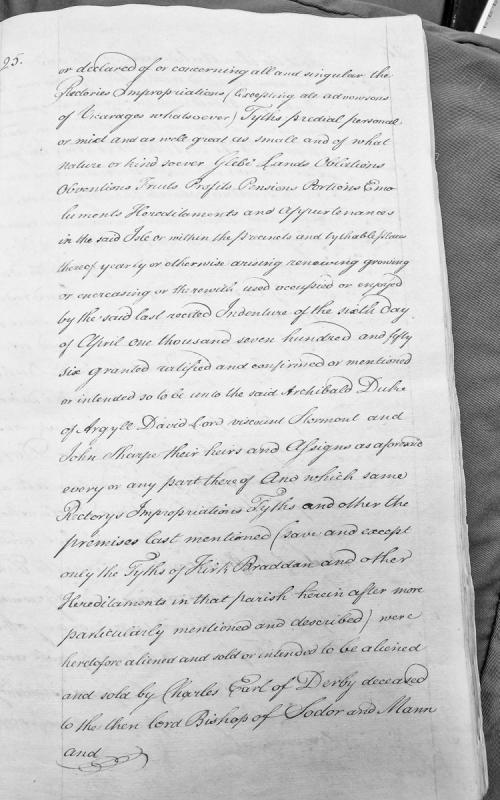
A legal document fragment detailing the transfer and confirmation of rectories, impropriations, tithes, glebe lands and ecclesiastical properties in the Isle of Man. References an indenture of April 6, 1756 granting these properties to Archibald Duke of Argyle, David Lord Viscount Stormont, and John Sharpe. Mentions prior alienation by Charles Earl of Derby to the Bishop of Sodor and Mann.
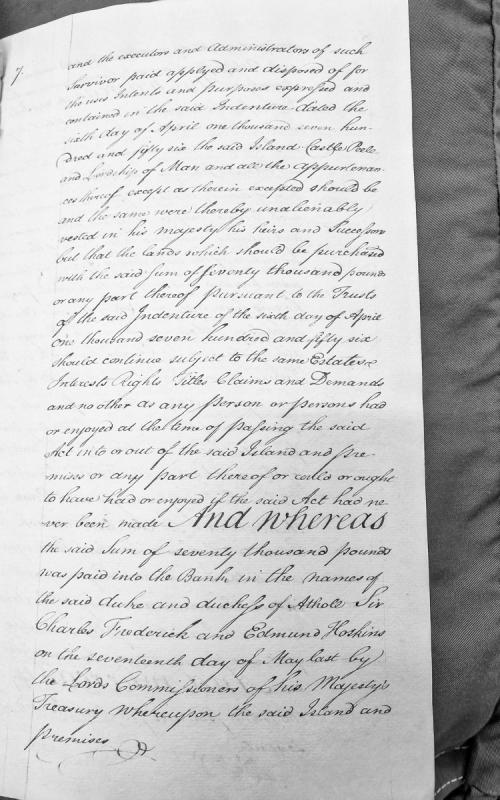
This is an excerpt from a legal document (page 7) discussing the vesting of the Isle of Man, its castles, and appurtenances in His Majesty's heirs and successors, with reference to an Indenture dated 6 April 1756. It records the payment of £70,000 into the Bank on 17 May by the Lords Commissioners of His Majesty's Treasury for the Duke and Duchess of Atholl and others.
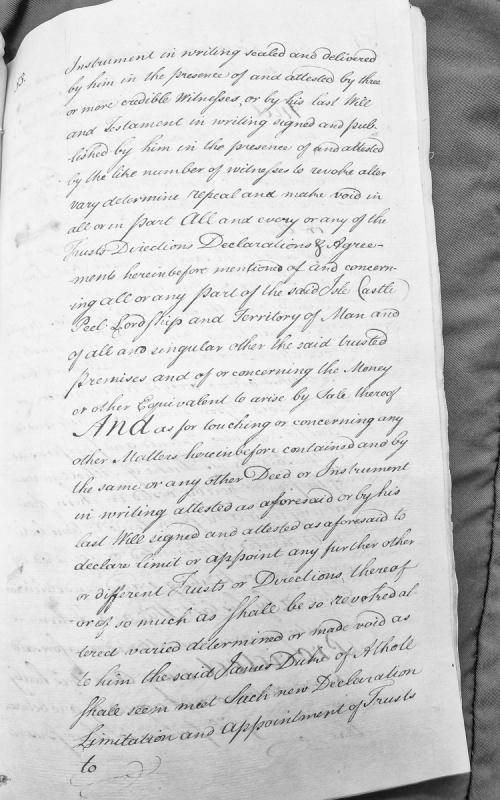
Fragment of a legal document detailing provisions for trusts, directions, and declarations concerning the Isle of Man, Peel Castle, Lordship and Territory. The text outlines conditions for revocation, alteration, and appointment of new trusts by James, Duke of Atholl, through written instruments attested by credible witnesses or by will.
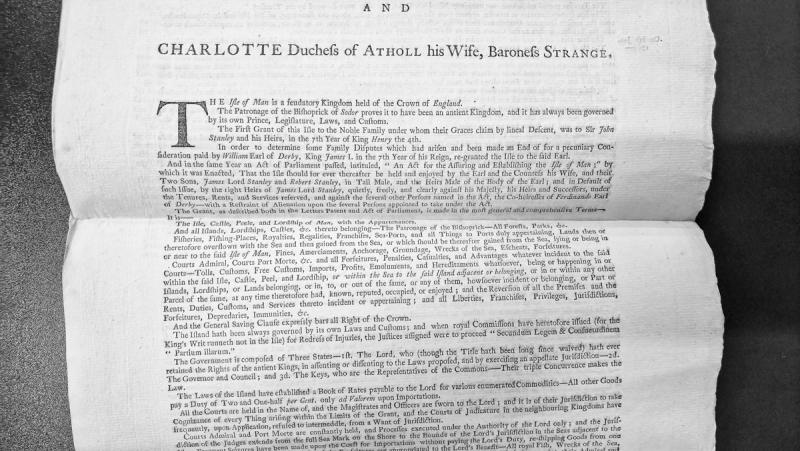
A comprehensive legal document outlining the historical grants, constitutional structure, and rights of the Isle of Man as a feudatory kingdom. It details the 1406 grant to Sir John Stanley and subsequent re-grant by King James I in 1607, describes the tripartite government structure (Lord, Governor and Council, and the Keys), and enumerates the extensive rights conveyed including maritime jurisdiction, customs duties, and judicial authority.
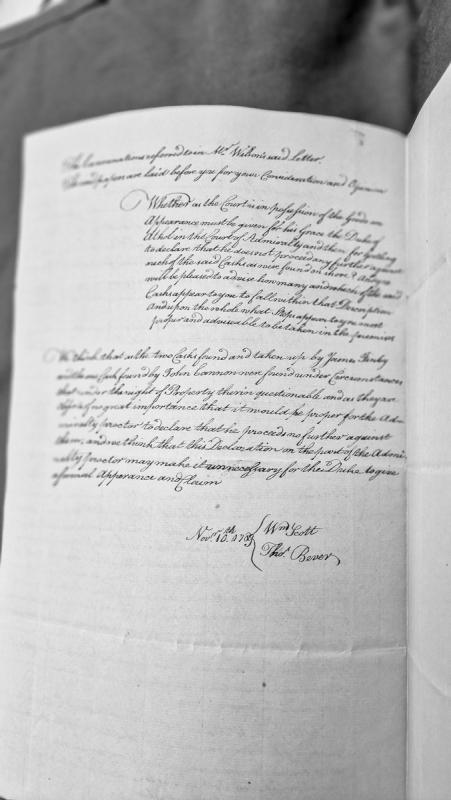
A legal opinion regarding the proper course of action in an admiralty matter involving casks found on shore. The opinion addresses whether the Duke of Athol must make a formal appearance in Court of Admiralty and advises on which casks should be released from proceedings.
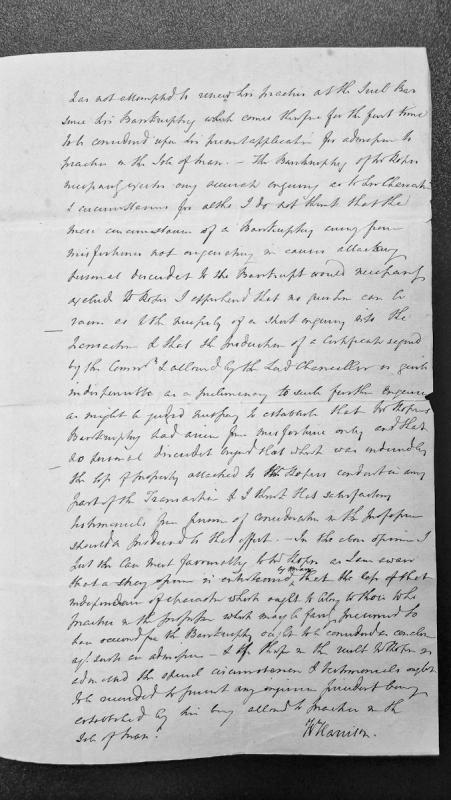
A legal opinion addressing the application of Mr Roper for admission to practice at the Bar in the Isle of Man following his bankruptcy. The opinion discusses whether bankruptcy itself should be grounds for exclusion and sets conditions for admission, including production of a bankruptcy certificate and testimonials from the profession.
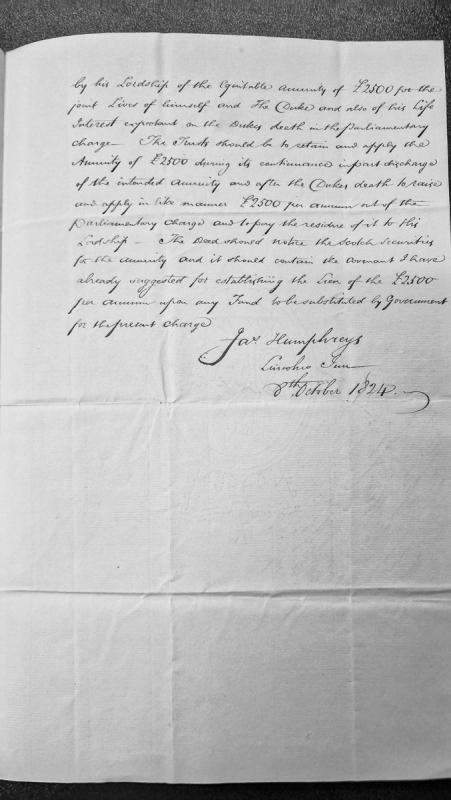
A legal opinion regarding the establishment of trust arrangements for an equitable annuity of £2500 payable during the joint lives of a nobleman and a Duke, with provisions for the life interest thereafter. The opinion addresses the retention and application of annuity payments, Scottish securities, and covenant requirements for establishing a lien on governmental funds.
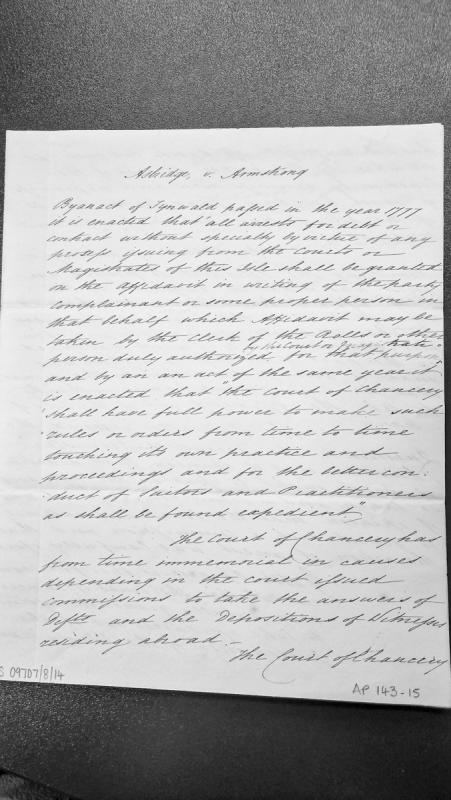
A legal opinion citing Tynwald acts of 1777 regarding arrest procedures for debt and contract, and the powers of the Court of Chancery to regulate its own practice. References the court's historical authority to issue commissions for taking depositions.
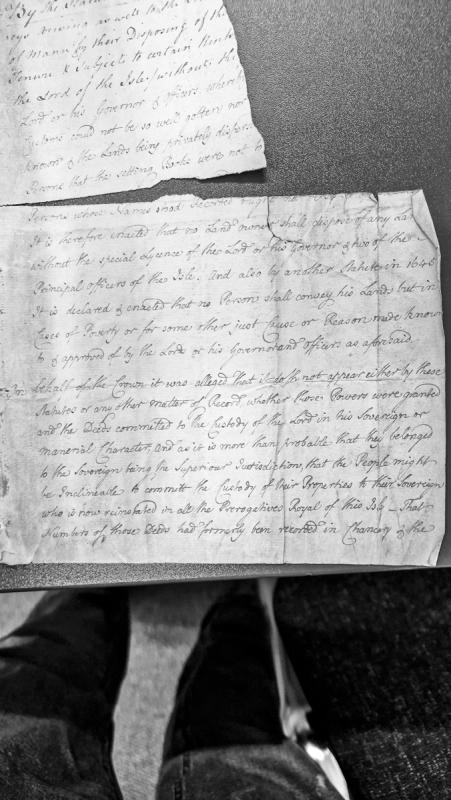
A legal document discussing statutes governing the disposal of lands in the Isle of Man, particularly referencing enactments regarding the Lord's or Governor's licensing authority. The document presents arguments on behalf of the Crown concerning the custody of property deeds and the sovereign's prerogatives.
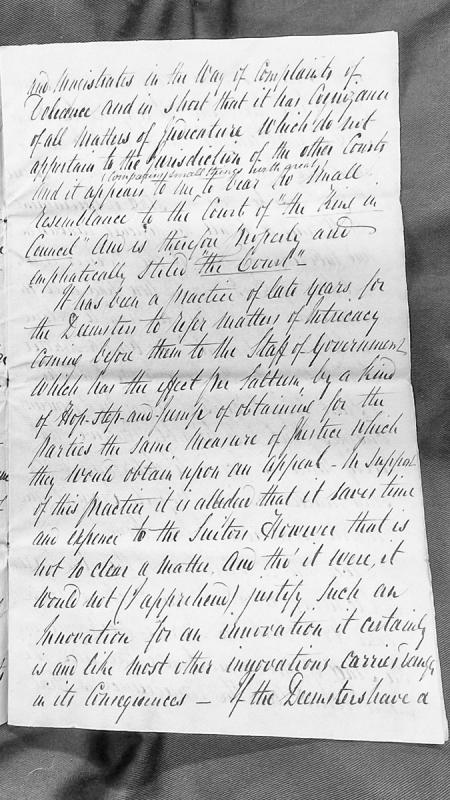
A fragment of a legal opinion discussing the jurisdiction and structure of the Island's courts, particularly the Council court and its resemblance to the Court of the King in Council. The author critiques a recent practice of Deemsters referring complex matters to the Staff of Government as an irregular innovation that bypasses proper appeal procedures.
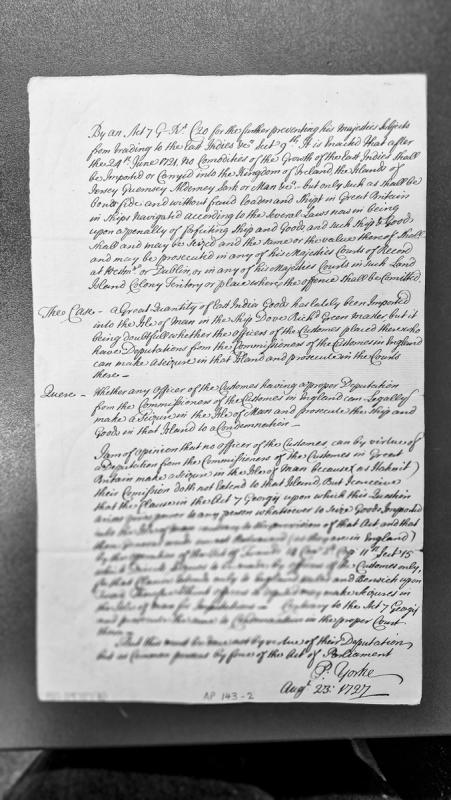
A legal opinion by P. Yorke addressing whether customs officers with deputations from English commissioners can legally seize East India goods imported into the Isle of Man and prosecute them in island courts. The opinion examines Act 7 G.R. C.20 and concludes that while customs officers cannot seize by virtue of their deputation, any person may seize contraband goods under the act's provisions.
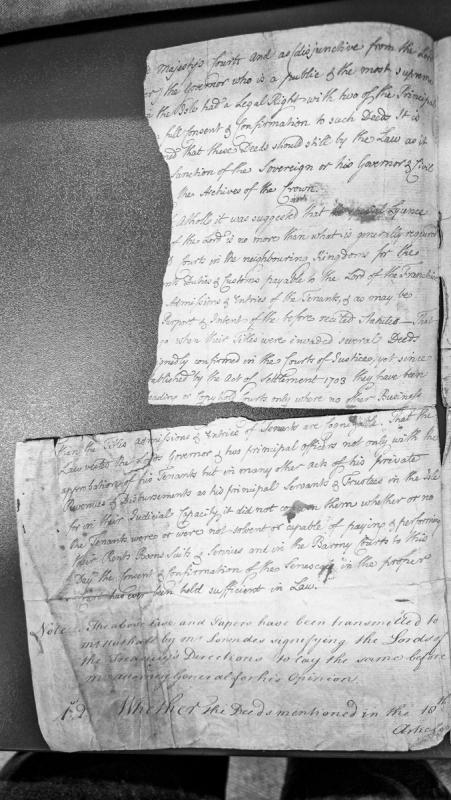
A legal opinion discussing the validity and confirmation of deeds in the Isle of Man, the authority of the Governor and principal officers regarding tenant admissions and entries, and the jurisdiction of courts established by the Act of Settlement 1703. The document references the case being transmitted to the Attorney General for formal opinion.
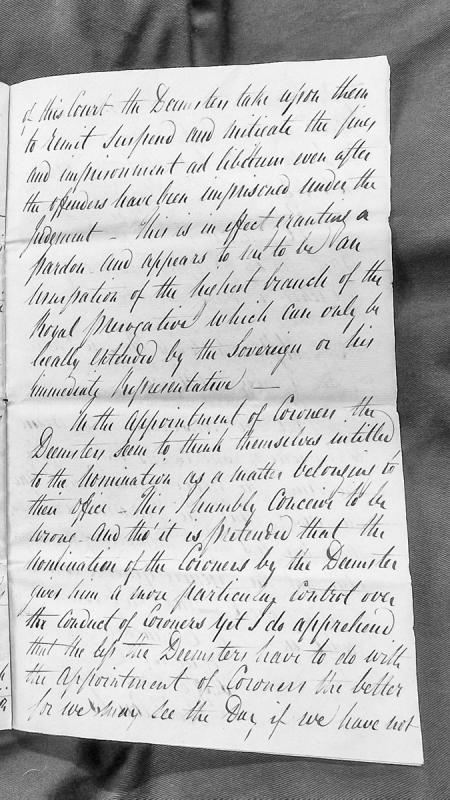
A legal opinion critiquing the scope of Deemster authority in the Isle of Man court system, particularly their powers to remit, suspend, and mitigate fines and imprisonment, and their role in appointing coroners. The author argues these powers constitute an usurpation of the Royal Prerogative.
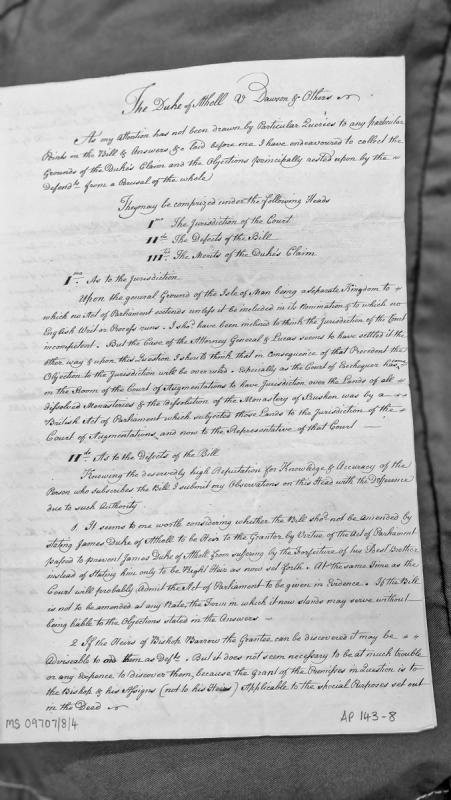
A legal opinion addressing the Duke of Atholl's claim against Dawson and others, covering three main issues: the jurisdiction of the court, defects in the bill, and the merits of the Duke's claim. The opinion discusses precedent cases, parliamentary acts concerning dissolved monasteries, and recommends amendments to the bill.
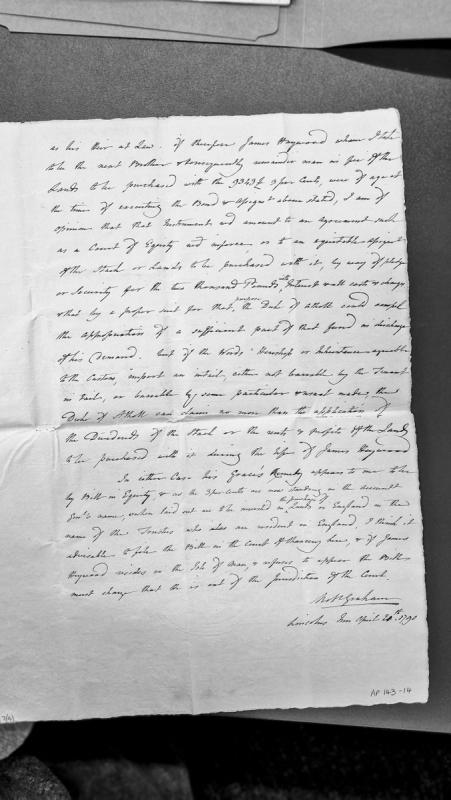
A legal opinion addressing whether a bond and assignment executed by James Heywood constitutes an enforceable equitable claim by the Duke of Atholl over £9,342 in 3% consols and lands to be purchased therewith, as security for a £2,000 debt. The opinion discusses remedies available depending on whether the words 'Kinship or Inheritance' create a barrable or unbarrable entail.
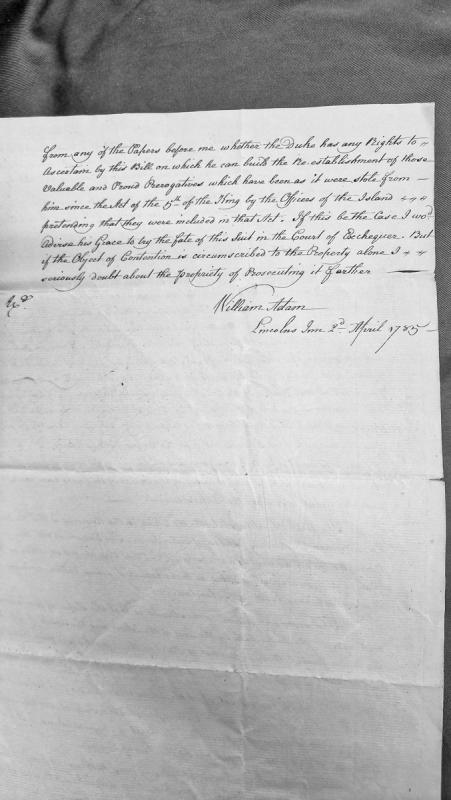
A legal opinion from William Adam concerning whether a Duke possesses rights to re-establish prerogatives allegedly lost since an Act of the King, with advice on whether to pursue the matter in the Court of Exchequer or limit the case to property disputes.
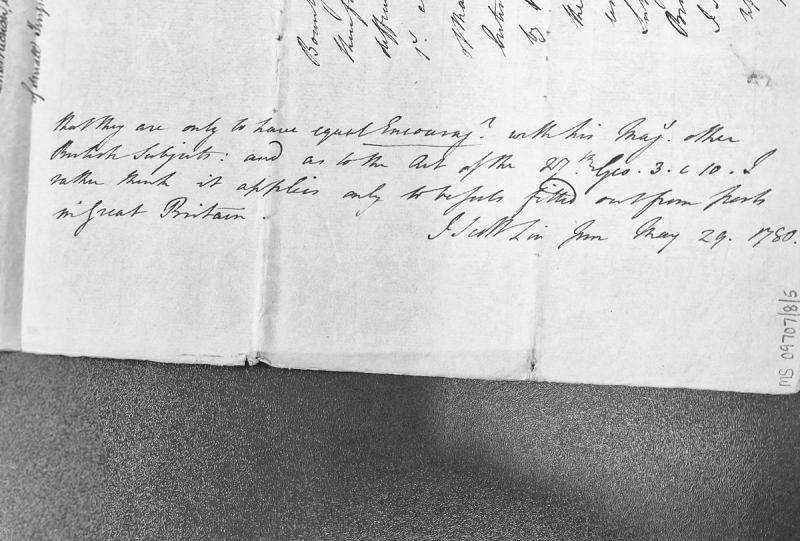
A legal opinion fragment addressing the equal encouragement of His Majesty's subjects and interpreting the scope of the Act of the 27th of George 3, chapter 10, as it applies to vessels fitted out from ports. The opinion suggests the Act applies only to vessels fitted out from Great Britain ports.
A formal legal opinion by Charles Searle (Attorney General) and Peter John Heywood (Deemster) on a memorial by John Quayle claiming ancient feudal privileges attached to the Barony of St. Trinions. The opinion examines the historical basis of baronial privileges, feudal tenure, and the question of fealty obligations following the 1765 Revestment. It addresses the relationship between the Duke of Atholl's sovereignty and the rights of lesser baronies.
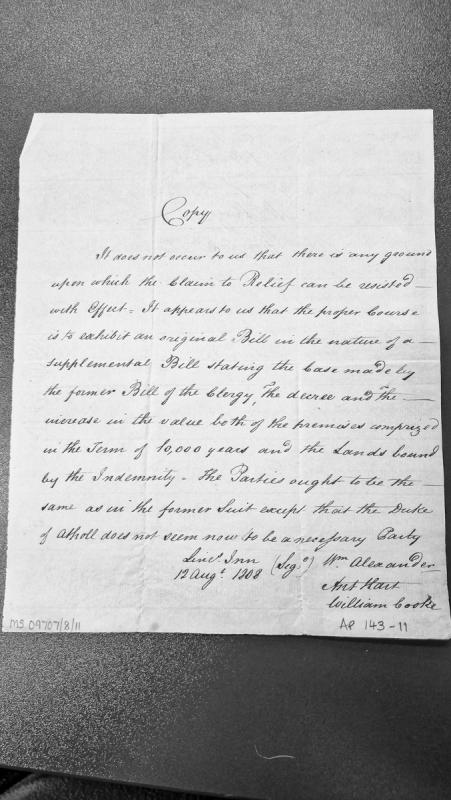
A legal opinion dated 12 August 1808 from Lincoln's Inn regarding a claim for relief. The opinion advises that there is no effective ground to resist the claim and recommends exhibiting an original bill in the nature of a supplemental bill, detailing the case previously made regarding clergy relief, a decree, and increases in value of premises and lands bound by indemnity.