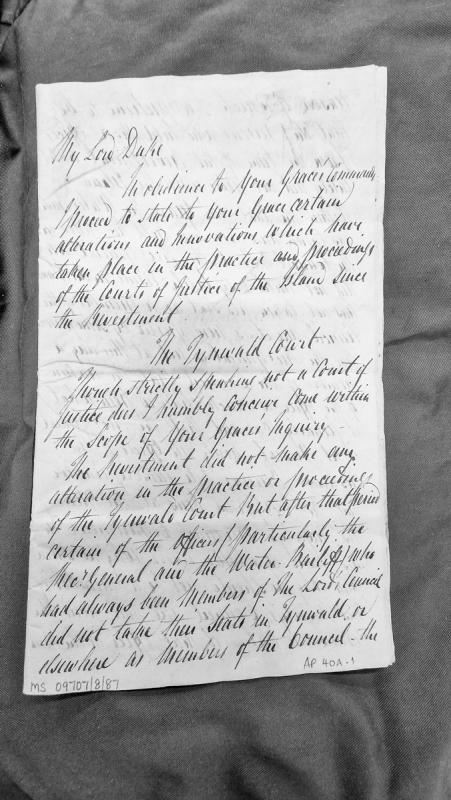
A formal letter addressed to the Duke, reporting on changes and innovations in the practice and proceedings of the courts of justice on the Isle of Man following the Revestment. The writer discusses the Tynwald Court and changes in the participation of certain officers, particularly the Recorder General and Water Bailiff, in the Lords Council.
A letter from George Nicolson (Scottish State Papers) reporting on Angus MacDonnell's petition to the Scottish king for permission to invade the Isle of Man and force it to royal obedience. The king refused the immediate request, instructing MacDonnell instead to preserve peace with English subjects. This document illuminates pre-Revestment assertions of sovereignty over Man and the island's contested status.
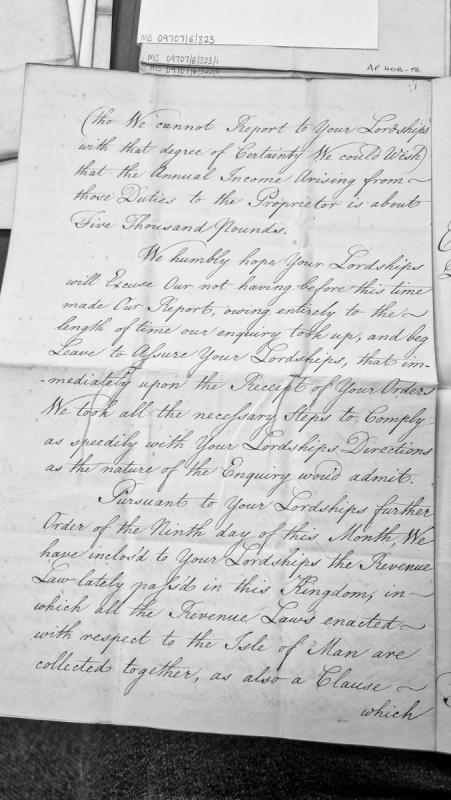
A formal report to Your Lordships regarding duties income in the Isle of Man, estimated at approximately five thousand pounds annually. The document acknowledges delays in reporting due to the length of enquiry and references the transmission of compiled Revenue Laws for the kingdom.
A detailed report from the Excise Office Edinburgh to an unnamed superior (likely Treasury) describing the state of brewing, smuggling operations, and illicit trade in the Isle of Man as of November 1764. The report covers four brewhouses in Douglas, the extensive smuggling of spirits (brandy, rum, gin) and tea, tobacco manufacturing and smuggling, and the scale of re-export operations to Great Britain and Ireland. It provides crucial evidence of the island's role as a smuggling hub and the commercial interests at stake in the 1765 Revestment.
A detailed administrative report from the Excise Office Edinburgh to an unnamed recipient describing the state of brewing, smuggling, and illicit trade in the Isle of Man as of late 1764. The report covers breweries in Douglas, malting operations, export of spirits and tobacco, and the scale of smuggling operations. It provides quantitative data on cask capacity, duty rates, commodity prices, and evidence of organized contraband traffic to England, Ireland, and Scotland.
A brief 16th-century State Paper from the Scottish State Paper Office reporting on Donald Gorme and associates' activities involving ships on the waters of the Clyde, intercepted by the young Laird of Laus near Glasgow. While pre-dating the 1765 Revestment by 170 years, this document provides contextual evidence of early maritime activity and authority structures in Scottish waters adjacent to the Isle of Man.
A brief Scottish State Paper from 1595 reporting on Donald Gorme and associates' attempts to launch boats on the Clyde, intercepted by the young laird of Laus. The document is peripheral to the main Revestment narrative but provides comparative context on early modern maritime activity and governance in the Irish Sea region during the period when the Isle of Man remained under the Earls of Derby.
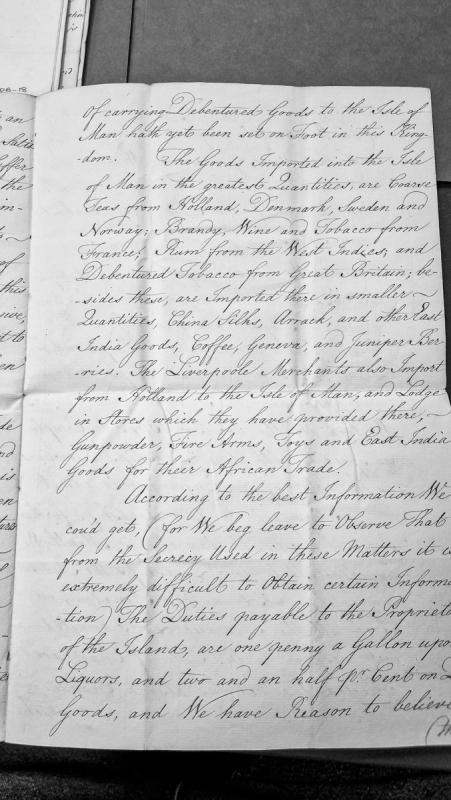
An administrative report detailing the types and quantities of goods imported into the Isle of Man, including coarse teas, spirits, tobacco, and East India goods. The document discusses the duties payable to the Island's Proprietor and notes the difficulty in obtaining reliable information due to the secrecy surrounding these trading matters.
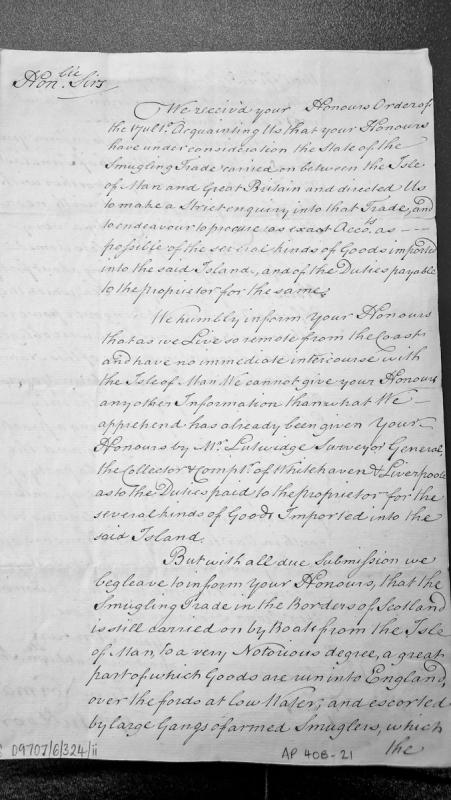
A submission to unidentified recipients informing them of import duties on goods to the Isle of Man and reporting on the smuggling trade conducted by boats from the island into Scotland and England. The authors claim limited direct knowledge and reference information provided by the Surveyor General and collectors from Whitehaven and Liverpool.
Letter from Robert Bowes (English ambassador to Scotland) to an unnamed Lord describing the discovery of a Catholic plot involving a planned attack on the Isle of Man, the apprehension of the 'Laird of Ladilandes', and examination proceedings in Edinburgh. Documents religious and political tensions in late Tudor Scotland with implications for Isle of Man security.
Official report by Charles Lutwidge, Receiver General, to the Treasury Lords on the state, condition, and maintenance of harbours across the Isle of Man (Douglas, Peel, Ramsey, Darby Haven, Castletown) following the 1772 Harbours Act. Includes financial accounts and commissioners' observations on repairs and improvements. Directly post-dates the 1765 Revestment and reflects the establishment of Westminster-administered island infrastructure.
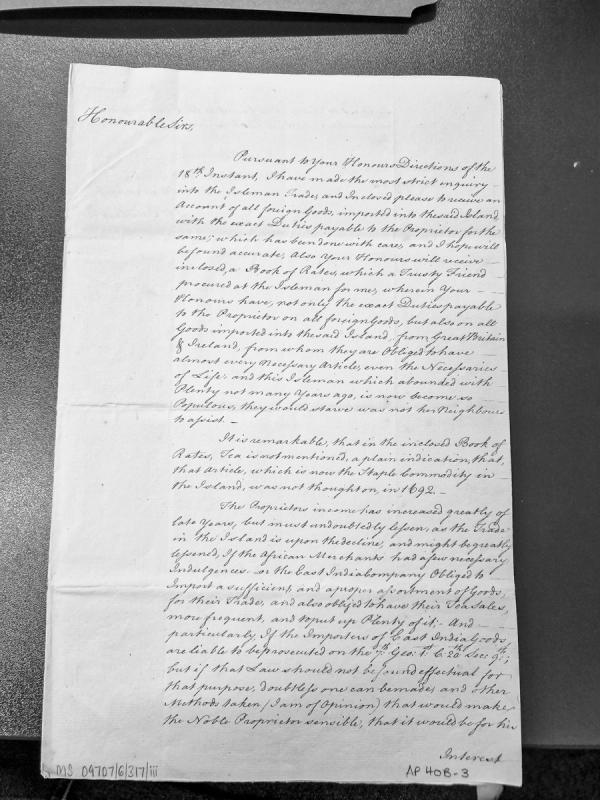
A formal letter responding to directions regarding the Isle of Man trade, including an account of foreign goods imports and duties payable to the Proprietor. The writer provides analysis of the island's economic decline and proposes measures to improve trade, including inducements for African merchants and East India Company reforms.
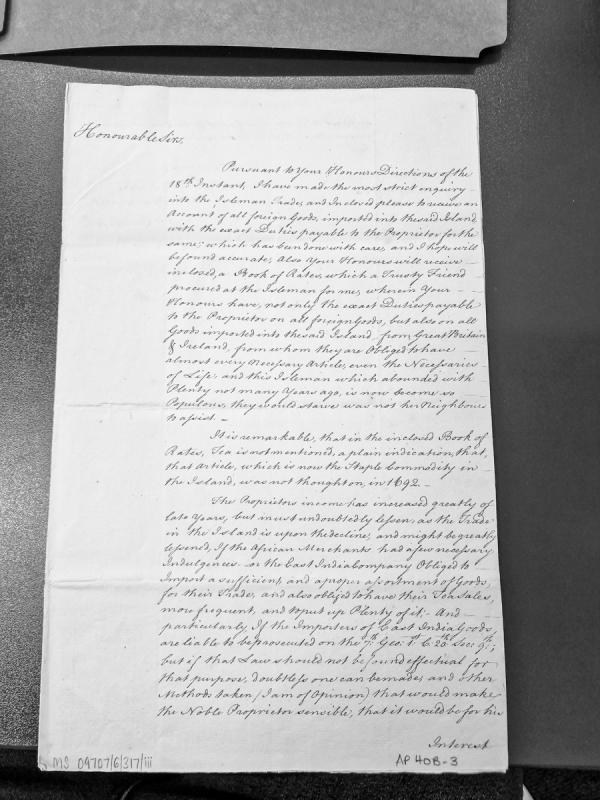
A letter responding to directions dated the 18th instant, providing an account of foreign goods imported to the Isle of Man and duties payable to the Proprietor. The author discusses the Book of Rates from 1692, notes the absence of tea from historical records, analyzes the proprietor's income trends, and proposes measures to improve trade and revenue.
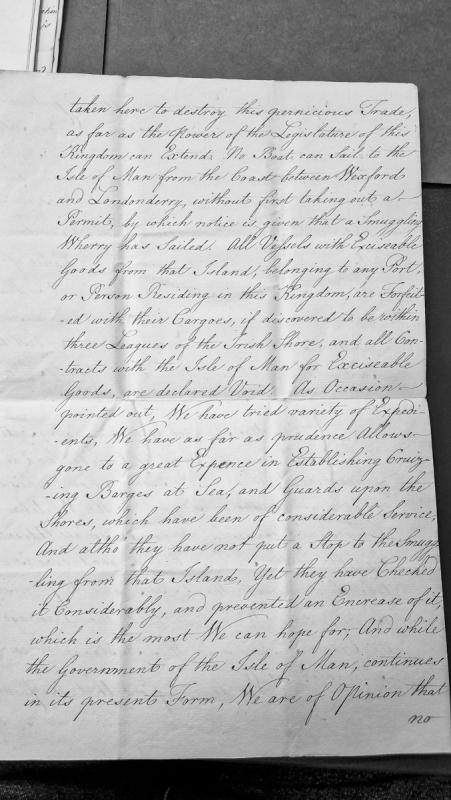
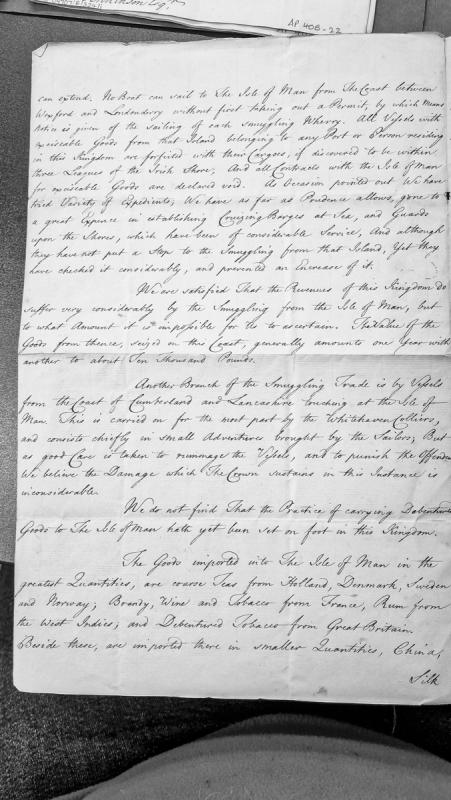
A fragment of administrative correspondence or report detailing legislative and enforcement measures taken by the Kingdom (presumably Ireland or Britain) to combat smuggling from the Isle of Man. The document outlines permit requirements for boats, forfeiture provisions for vessels carrying exciseable goods, and describes efforts to establish cruising barges and shore guards.
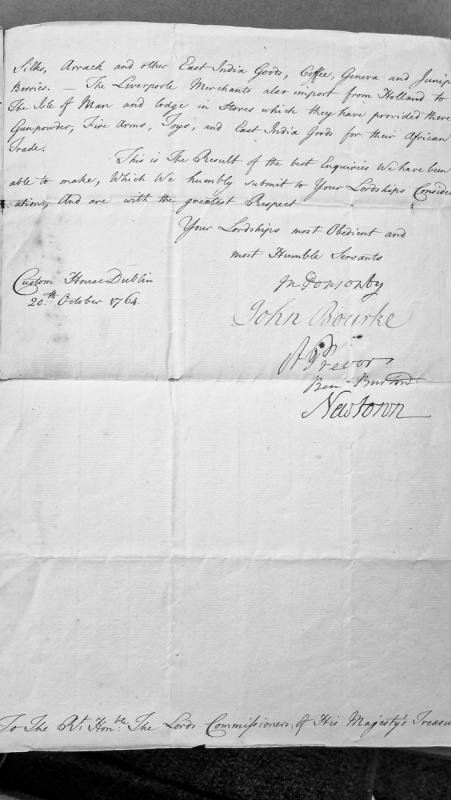
Letter from Custom House Dublin officials reporting on Liverpool merchants' importation of silks, East India goods, gunpowder and firearms via the Isle of Man. The document details goods lodged in stores for African trade, submitted to the Lords Commissioners of the Treasury for consideration.
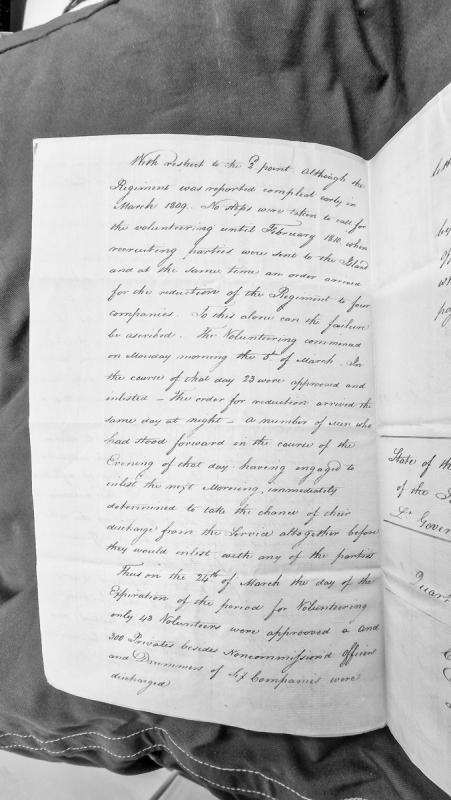
Administrative report addressing a second point regarding the failure of volunteering for a regiment stationed on the Isle of Man. Details the timeline of regimental completion in March 1809, volunteering commencement in March 1810, and the coincidental arrival of reduction orders that discouraged enlistment.
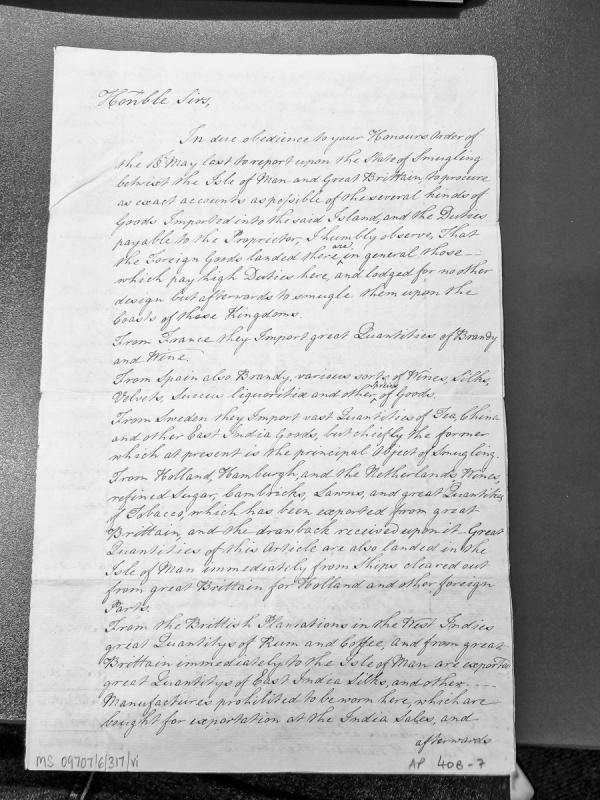
A formal report submitted to superior authorities regarding the state of smuggling operations between the Isle of Man and Great Britain. The document details contraband goods imported from various foreign sources (France, Spain, Sweden, Holland, Hamburg, the Netherlands, and British plantations) and their intended use for smuggling along British coasts, with particular focus on high-duty items such as brandy, wine, tea, tobacco, and East India goods.
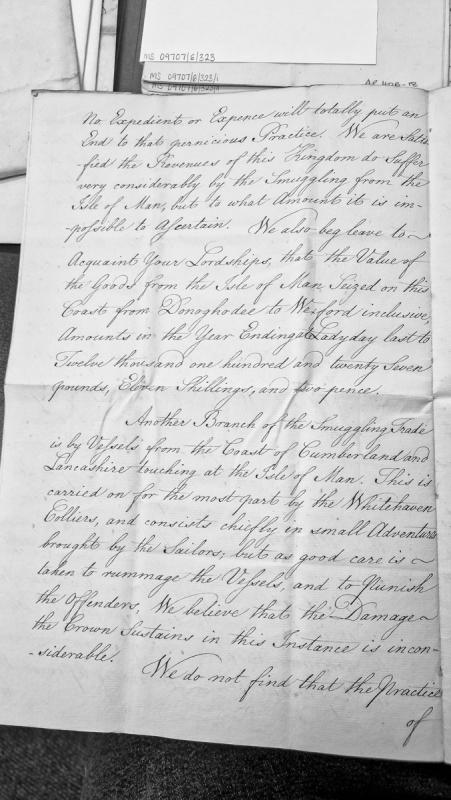
This is an administrative report addressing smuggling activities involving the Isle of Man and their impact on kingdom revenues. It documents seized goods valued at over £12,000 from the Irish coast (Donoghodee to Wexford) and describes smuggling conducted by Whitehaven colliers from Cumberland and Lancashire.
An administrative report detailing smuggling activities from the Isle of Man to Ireland and the British coast, describing enforcement measures including permits, coastal guards, and cruising barges. The report estimates annual seized goods valued at approximately ten thousand pounds and identifies major smuggled commodities including tea, brandy, wine, tobacco, and rum.
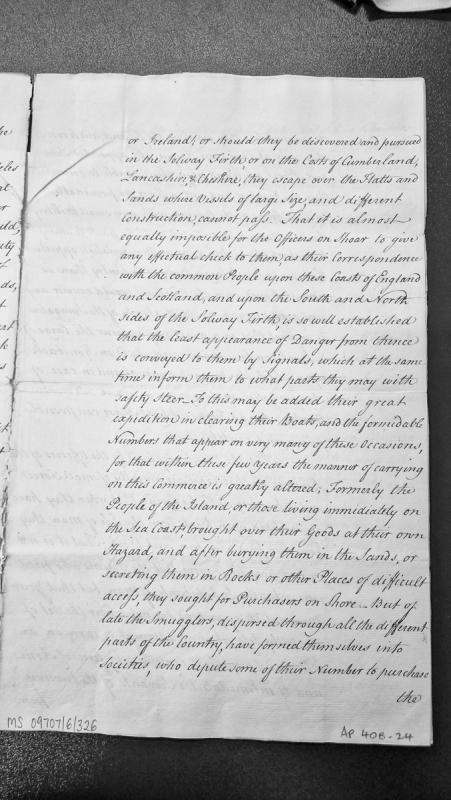
This is an excerpt from a longer administrative document discussing smuggling activities in the Irish Sea and along the coasts of England, Scotland, and the Isle of Man. The text describes the methods used by smugglers, their organized networks, and the challenges faced by shore officers in intercepting contraband operations. It notes the shift from individual smuggling efforts to organized societies operating across the country.
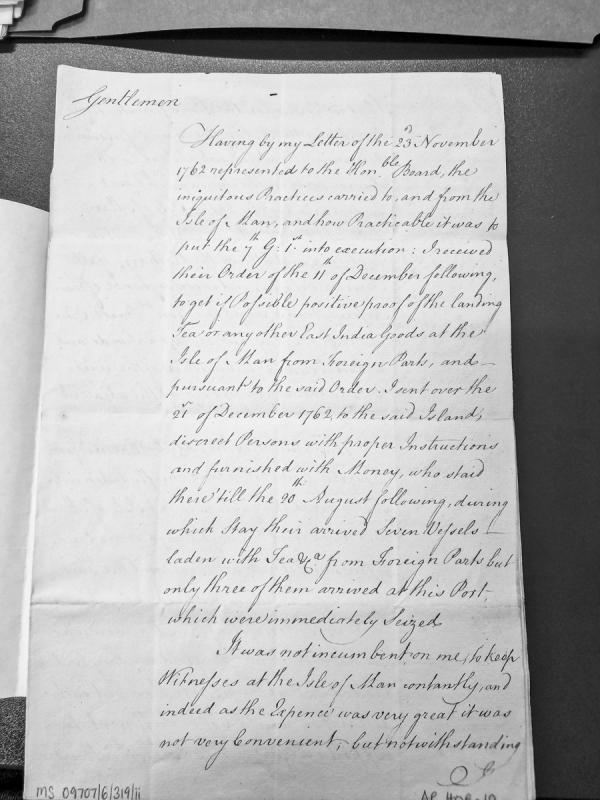
An administrative letter reporting to an honorable board regarding illicit trading practices at the Isle of Man. The author describes having sent investigators to the island in December 1762, who remained there until August 1763, during which time seven vessels laden with tea and other East India goods from foreign parts were observed, three of which were seized at port.
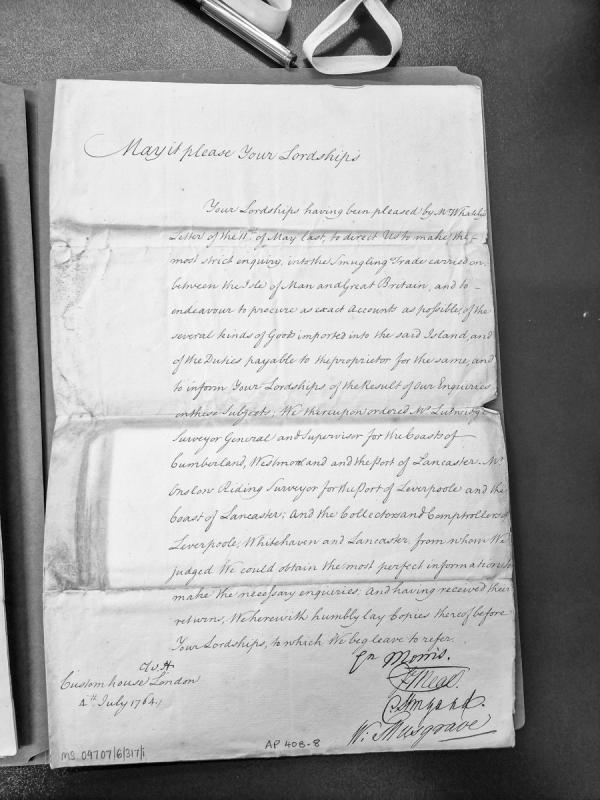
A formal letter to the Lords of the Treasury reporting on an enquiry into smuggling between the Isle of Man and Great Britain, directed by Mr Whately's letter of 11 May. The document transmits returns from customs officials regarding imports and duties payable to the Island proprietor.
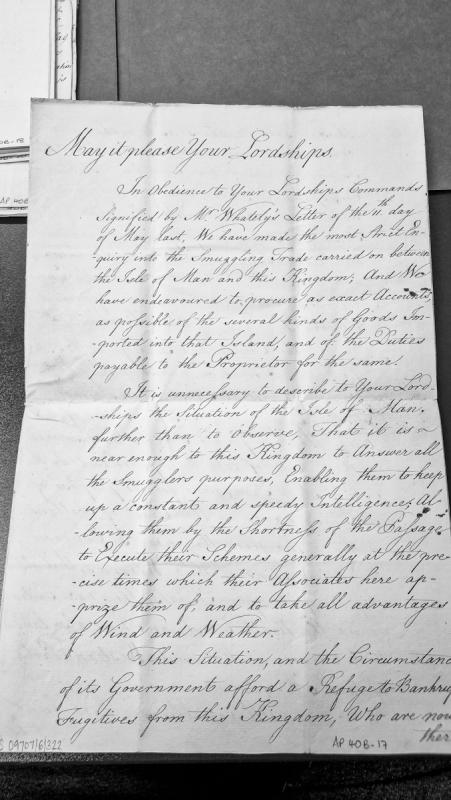
An administrative report to the Lords regarding illicit smuggling operations conducted between the Isle of Man and the Kingdom of Great Britain. The report describes the geographic advantages the Isle of Man provides for smugglers and notes the refuge it affords to bankrupts and fugitives fleeing the Kingdom.
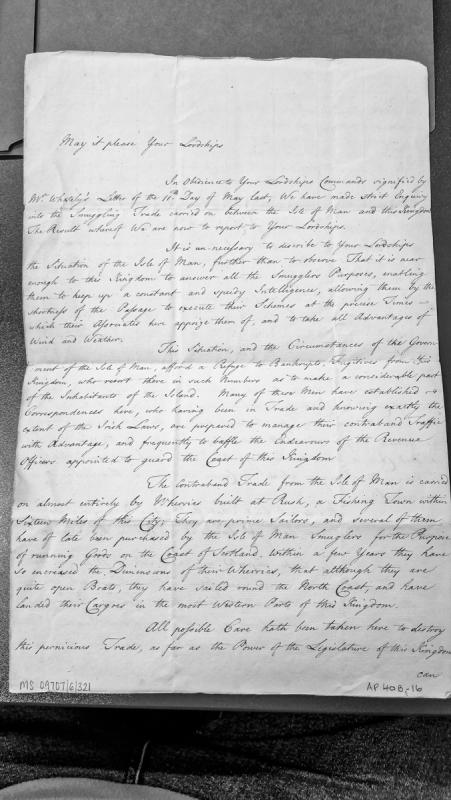
An official report addressed to lordships detailing findings of an enquiry into smuggling operations between the Isle of Man and the Kingdom. The report describes the geographical advantages enabling smuggling, the refuge the island provides to fugitives and bankrupts, and the use of wherries built at Rush for contraband trafficking. It discusses efforts to suppress the illicit trade.
Official report by Charles Lutwidge (Receiver General) to the Treasury Lords on the condition of Manx harbours and ports, including detailed accounts of repairs and maintenance at Douglas, Peel, Ramsey, Darby Haven, and Castletown. Includes financial accounts of harbour fund receipts and disbursements, and commissioners' observations certifying the works undertaken. Demonstrates post-Revestment infrastructure investment and administrative procedures under the 1765 arrangement.