The TT motorcycle race, held on the Isle of Man since 1907. The most famous sporting event on the Island and a defining element of modern Manx identity. Run on public roads over a 37.73-mile mountain course.
The Tower of Refuge was erected in 1832 on Conister Rock. It was the response of Sir William Hillary, founder of the Royal National Lifeboat Institution, to the problem of rescuing people wrecked on this hazard. The unpowered lifeboat could not reach them before they were swept off. They could shelter in the mock castle until they could be reached from the shore. The RNLI flag is still flown from this structure.
A metal mine complex with an extensive set of buildings surviving. The Cornelly, Jones or Townsend's Mine, was worked intermittently for lead in 1845, 1866 to 1874 and 1884. Considerable quantities of ore were extracted, averaging 35ozs of Silver per ton of Lead, but these were insufficient to cover working costs.
Uniquely, its engine house, which has been consolidated, lacked a lintel in order to better accommodate the beam of its original engine. The main structures enclosed by the protective fence also include a chimney, boiler bases, an office block with the pay window downstairs and a heated drawing office upstairs, a winding house and a small ore store. The last probably dates from an early period, as also the long running bundle, with an angled dividing wall, just to the north-east of the enclosure. There are traces of a circular buddle nearby and a substantial adit was exposed when storm water burst forth from the deads (spoil heap).
A simple powder house, fenced shafts and (private) remains of a sub-rectangular dam may be found in the boggy rough ground across the track to the south. The quantity of granite incorporated in the buildings is testimony to the nature of the rock that the workings had penetrated. It is said that there was a belief among the miners that the granite was more productive than the slate which may explain the repeated reopenings of this mine.
Chapter 22 from Train's 1844 History and Account of the Isle of Man, covering the rise and suppression of the contraband trade from circa 1670 to the 1830s. Details the smuggling operations, the role of Manx islanders and adventurers like Commodore Thuròt, revenue losses to Britain, and government attempts at regulation culminating in the 1765 Revestment Act and subsequent fiscal reforms.
The formal transfer of sovereignty from the Duke of Atholl to the Crown. Crown officers took possession of Castle Rushen. The Duke's administration ended. The ceremony marked the moment when the custodianship — held by the Stanleys and then the Atholls for three and a half centuries — passed to a Crown that had no interest in the Island beyond stopping the trade.
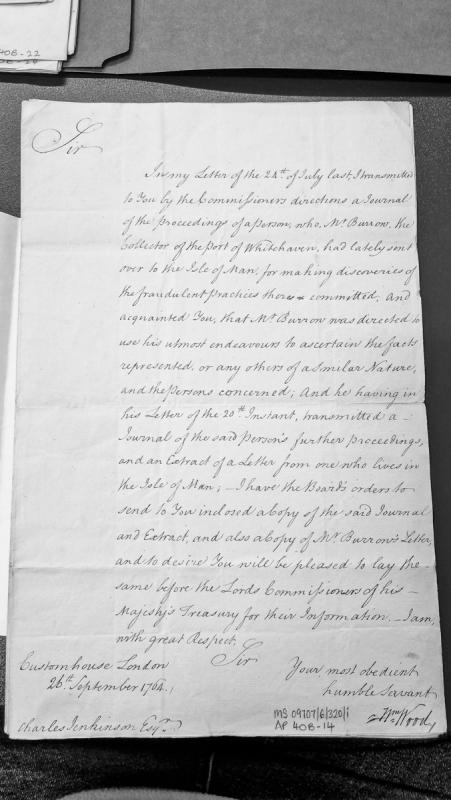
Official letter from William Wood at the Customhouse, London, to Charles Jenkinson Esq., transmitting copies of a journal documenting investigations into fraudulent customs practices on the Isle of Man, along with related correspondence from Mr. Burrow, Collector of the Port of Whitehaven, for submission to the Lords Commissioners of the Treasury.
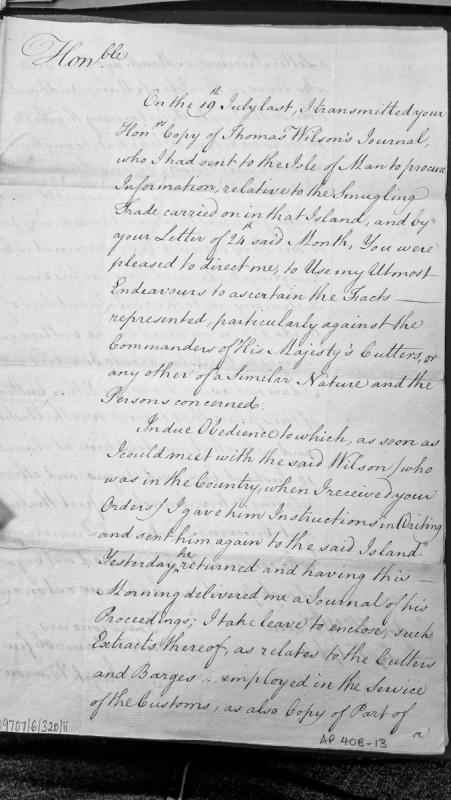
Administrative letter enclosing extracts from Thomas Wilson's investigative journal concerning smuggling activities in the Isle of Man and the conduct of His Majesty's Customs cutters and barges. The sender reports having received instructions on 24th July to investigate facts represented against commanders of royal vessels and persons involved in smuggling operations.
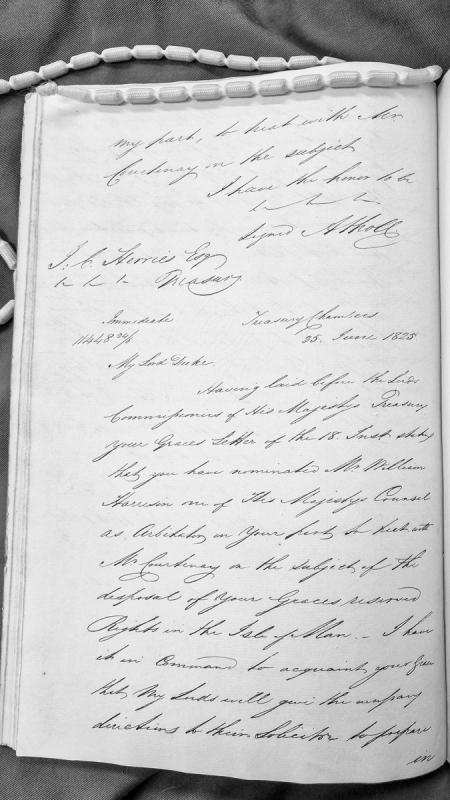
Letter from J. C. Herries at Treasury Chambers to a Duke, acknowledging receipt of his letter dated 18 June 1825 regarding nomination of William Harrison as arbitrator to negotiate disposal of the Duke's reserved rights in the Isle of Man. The Treasury confirms it will instruct its Solicitor to prepare necessary directions.
Letter from Abiah Hume to the Treasury Lords (22 July 1765) evaluating Anthony Bacon's Memorial proposing prices for supplying bread, forage, straw, and coals to military forces newly stationed on the Isle of Man. Discusses consultation with the Duke of Atholl, comparative pricing with Great Britain, and recommends consulting island officials for accurate local rates. Includes Bacon's original proposal (16 July 1765).
A letter from J Freemantle at the Customhouse London to the Lords Commissioners of the Treasury, reporting on investigations into alleged fraudulent smuggling practices in the Isle of Man. The document includes related correspondence from 1764 regarding inquiries conducted by Thomas Wilson, a customs investigator sent to the Island, and reports from Joseph Burrow (Collector of Whitehaven) detailing alleged involvement of government cutters and barges in smuggling operations. The Treasury ultimately deemed the complaints 'frivolous and groundless' based on Surveyor General Lutwidge's assessment.
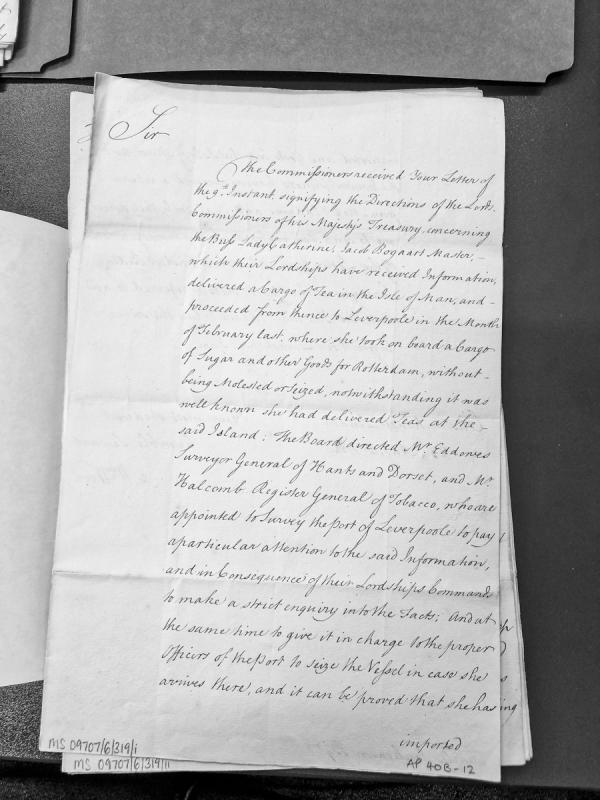
Administrative correspondence from the Commissioners to an official regarding Treasury directions concerning the Brig Lady Catherine, which allegedly delivered smuggled tea to the Isle of Man before proceeding to Liverpool. The letter directs appointed surveyors to investigate the matter and instruct port officers to seize the vessel if it arrives and smuggling can be proved.
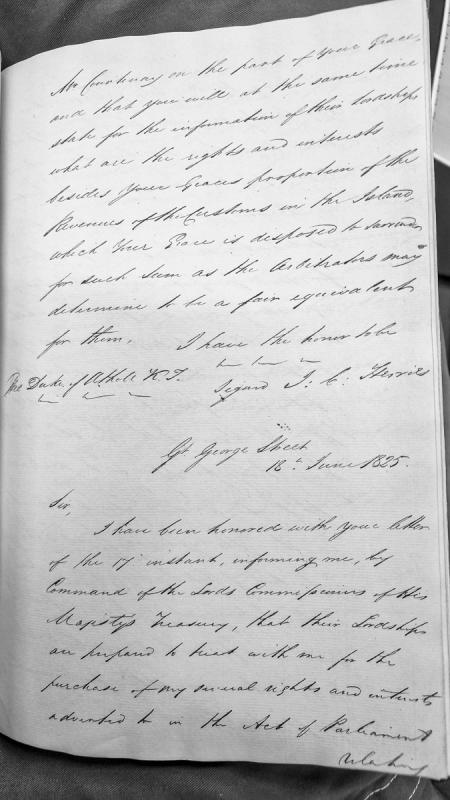
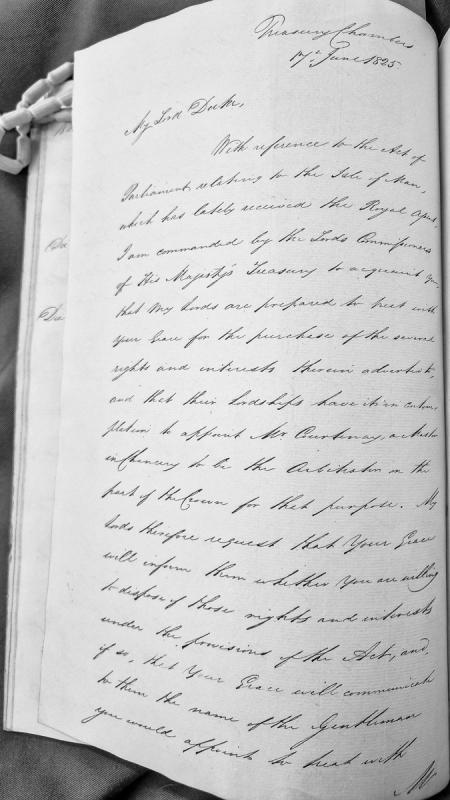
Official correspondence from the Lords Commissioners of His Majesty's Treasury to the Duke of Atholl regarding the purchase of his rights and interests in the Isle of Man, including customs revenues and other property interests. The letter discusses terms for arbitration of a fair equivalent compensation.
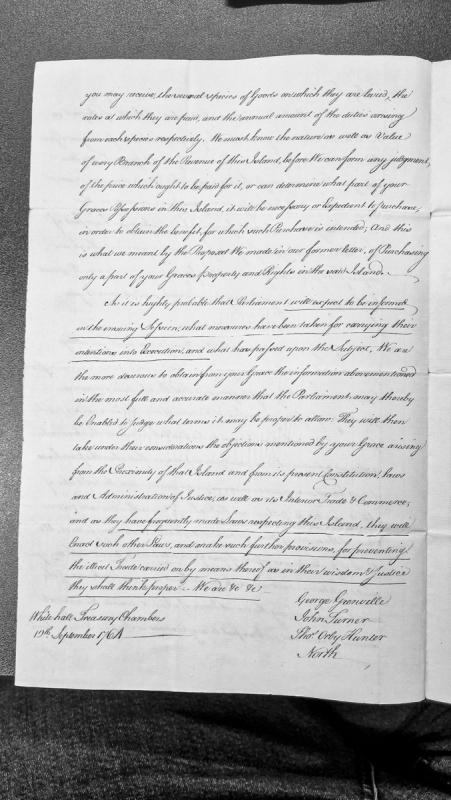
Letter from Treasury officials to an unnamed Grace (likely a nobleman) requesting detailed information about the Isle of Man's revenue, duties, and goods taxation. The correspondence discusses Parliament's expectations regarding measures taken to execute their intentions, and addresses concerns about the island's proximity, constitution, laws, and illicit trade.
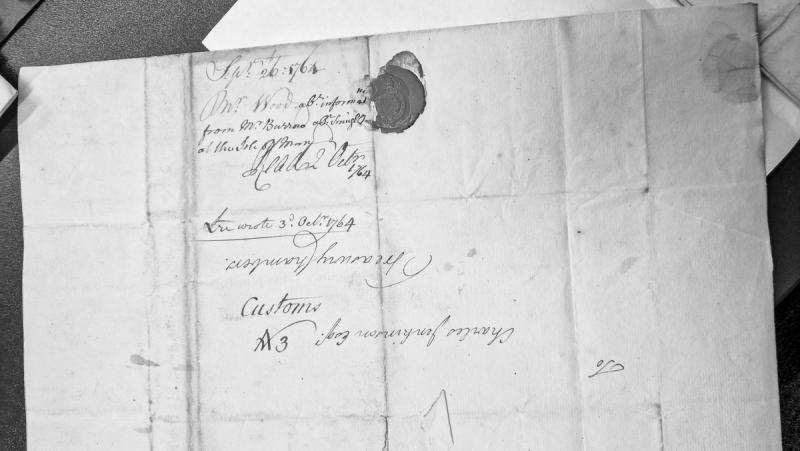
Administrative correspondence dated September 1764 relating to information about smuggling at the Isle of Man, received by the Treasury on October 2nd. A letter was written in response on October 3rd, 1764. The document appears to be a routing or filing note within the Customs department.
A cover letter from Samuel Martin at the Treasury Chambers to the Duke of Atholl, dated 11 July 1758, transmitting a Memorial from the Commissioners of the Customs regarding the smuggling trade operating from the Isle of Man. The letter requests the Duke's assistance in suppressing this 'Enormous fraud upon the publick Revenue'. This document predates the 1765 Revestment by seven years and illustrates the Treasury's awareness of and concern about illicit trade from the island.
A letter from J Freemantle at the Customhouse London (12 Jan 1765) reporting the Treasury Commissioners' dismissal of complaints about fraudulent practices in the Isle of Man, following investigation by Charles Lutwidge (Surveyor General). The document includes related correspondence from September 1764 detailing investigations by Thomas Wilson into smuggling and alleged involvement of customs vessels (the Lurcher, Hornet, Ranger, and other cutters) in contraband trade. It provides evidence of systematic corruption among revenue officers and reveals the scale of smuggling operations.
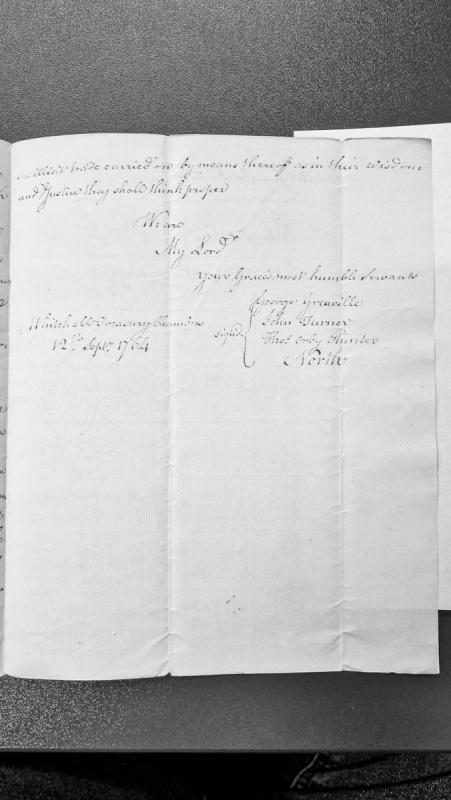
A formal letter from the Treasury addressing measures to combat illicit trade. The document is signed by George Grenville and other Treasury officials from Whitehall Treasury Chambers, dated September 1764.
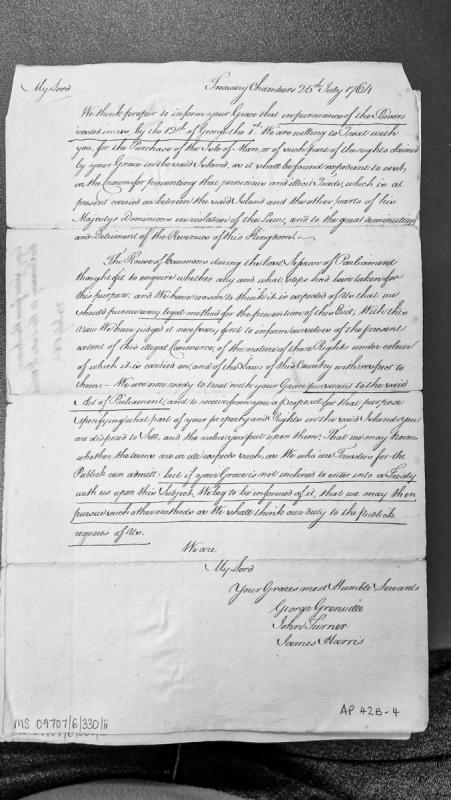
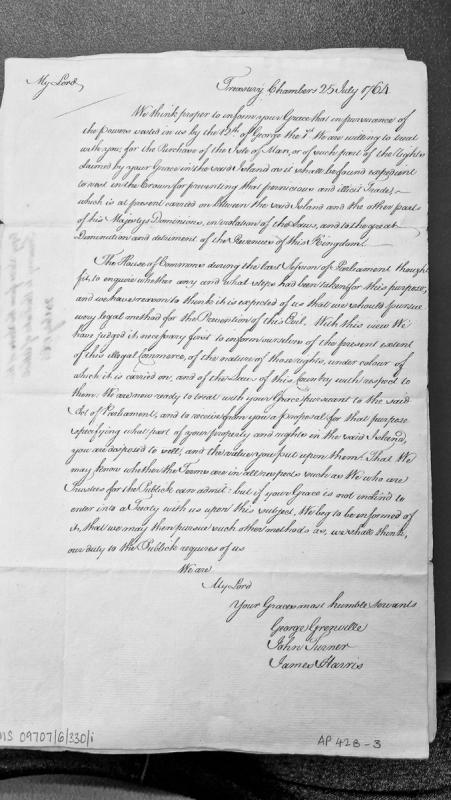
A formal letter from the Treasury to the Duke of Atholl (presumably) dated 25 July 1764, offering to negotiate the purchase of the Isle of Man or the Duke's claimed rights on the island. The letter cites parliamentary powers under the 12th of George I and references illicit trade between the Isle of Man and other British dominions that damages royal revenues. The Treasury requests either a proposal specifying what property and rights the Duke is willing to sell and at what price, or notice of his unwillingness to negotiate.
Official correspondence from the Treasury Chambers to a Duke regarding the potential purchase of rights and interests in the Isle of Man following recent Parliamentary legislation. The letter proposes appointment of arbitrators to negotiate terms and requests the Duke's response regarding his willingness to sell.
Cover letter from Samuel Martin (Treasury) to the Duke of Atholl transmitting a memorial from the Commissioners of Customs regarding the smuggling trade from the Isle of Man. The letter requests the Duke's assistance in suppressing the trade, which is described as an 'enormous fraud upon the publick Revenue.' This document pre-dates the Revestment by seven years and evidences the growing concern about Manx smuggling that would contribute to parliamentary action.
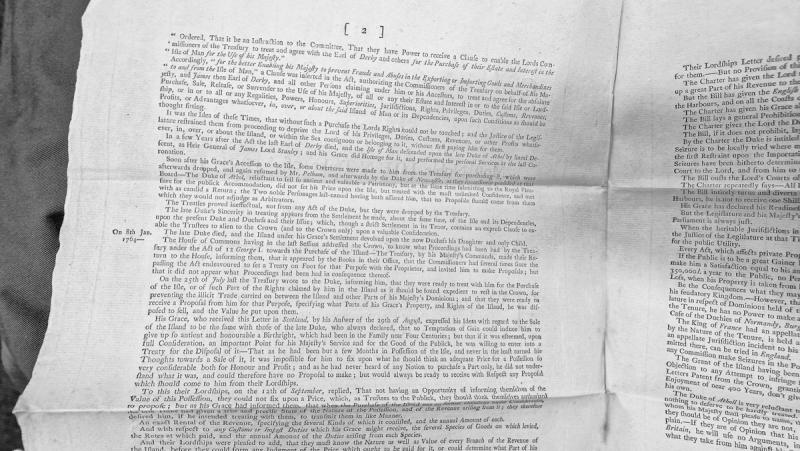
Administrative document detailing correspondence between the British Treasury and the Duke of Athol regarding the potential purchase of the Isle of Man and its revenues. The document traces the history of acquisition attempts since the Act of 12 George I, including letters exchanged between July and September 1764, and discusses the legal and financial complexities of the transaction.
Official letter from the Treasury to the Duke of Atholl (or similar noble with rights in Man) proposing to purchase the Isle of Man or rights therein under powers granted by Act 12 of George I. The letter addresses the problem of illegal commerce between Man and other British dominions, requests a formal proposal with valuation, and threatens alternative action if the Duke refuses to negotiate.
A table of contents page from the Manx Notebook website indexing Treasury Papers covering the critical period 1764-1771, which encompasses the lead-up to and execution of the 1765 Isle of Man Revestment. This is a finding aid and navigation page for a collection of transcribed primary documents.