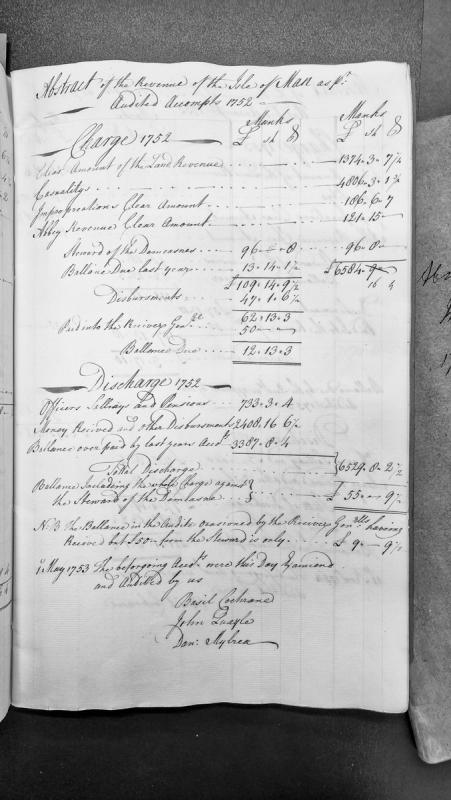
Official revenue abstract for the Isle of Man for the year 1752, detailing charges from various sources including land revenue, casualties, impropriations, and abbey revenue, with corresponding discharge entries for officers' salaries, pensions, and disbursements. The document concludes with audit certification dated 1st May 1753.
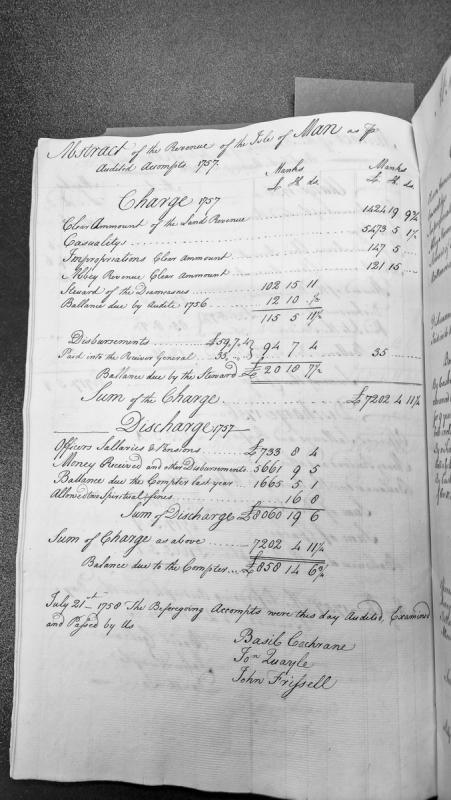
An official revenue abstract for the Isle of Man covering the year 1757, detailing charges and disbursements including land revenue, casualties, impropriations, and abbey revenue. The document shows a balance due to the Comptroller of £858 14s 6¾d and was audited and passed on 21 July 1758 by three auditors.
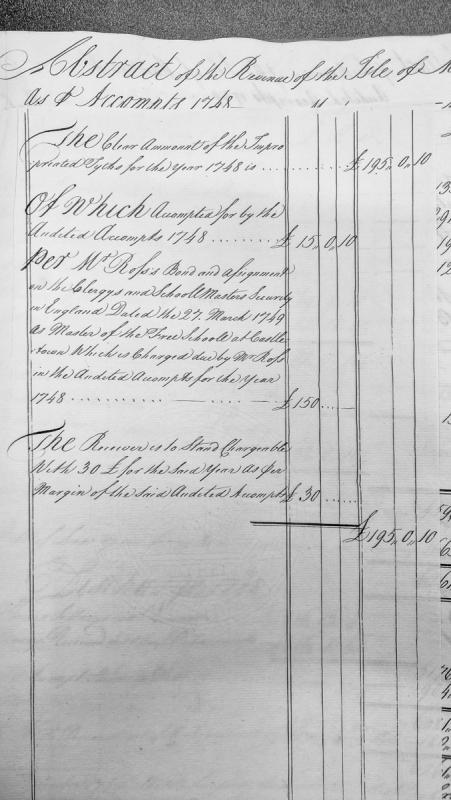
A revenue abstract detailing the clear amount of impropiated tythes for the Isle of Man in 1748, totalling £195.0.10. The document accounts for funds through audited accounts and a bond assigned on clergy and schoolmaster security in England dated 27 March 1749, with Mr Ross serving as Master of the Free School at Castletown.
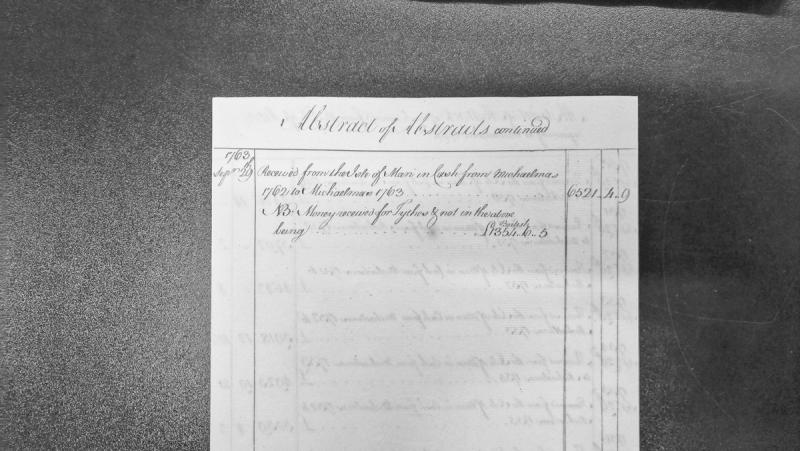
Financial abstract documenting cash receipts from the Isle of Man for the period from Michaelmas 1762 to Michaelmas 1763, totalling £6521.4.9. Additional note records money received for tithes amounting to £1354.6.5 British.
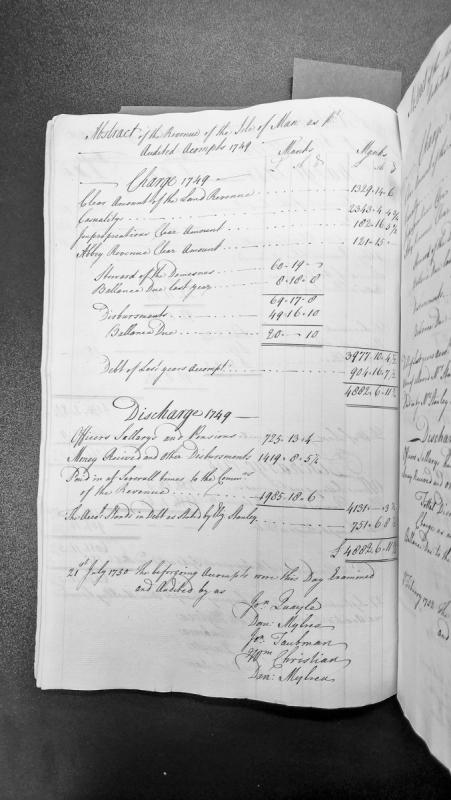
Financial abstract detailing the revenue and expenditure of the Isle of Man for 1749, including land revenue, casualties, impropriations, and abbey revenue. The document shows charges, disbursements, and discharge accounts, with a final accounting debt of £751 6s 8½d. Examined and audited on 21st July 1750.
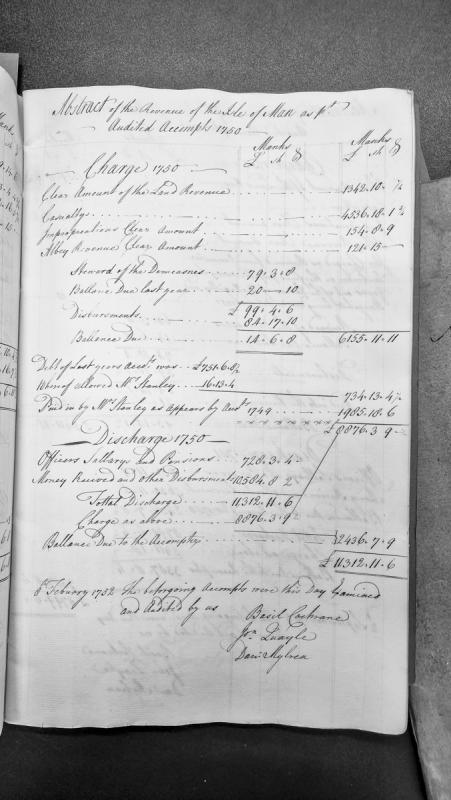
An audited financial account of the Isle of Man's revenue for 1750, detailing charges (land revenue, casualties, impropriations, abbey revenue, demesnes steward, and balance due), disbursements (officers' salaries, pensions, and other payments), and the resulting balance due to the accompter. Certified by three auditors on 6 February 1752.
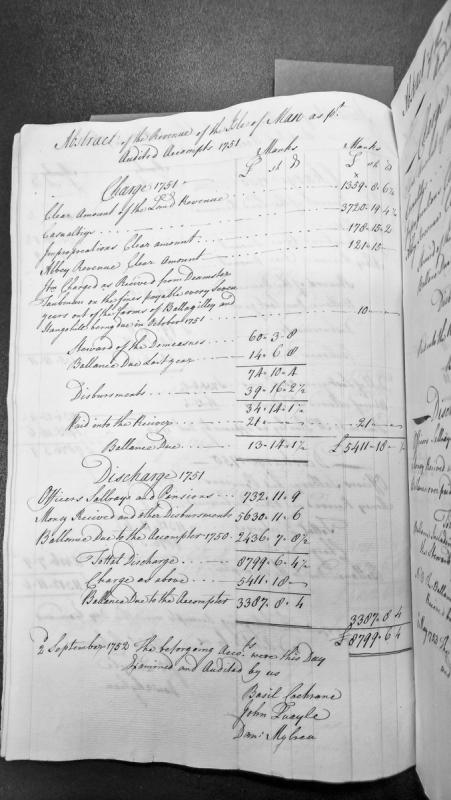
An audited revenue abstract for the Isle of Man covering the year 1751, detailing charges including land revenue, casualty payments, impropriations, and abbey revenue, along with disbursements and discharge accounts. The document provides a comprehensive financial statement with officer salaries, pensions, and various payments, concluding with a balance due to the accompter.
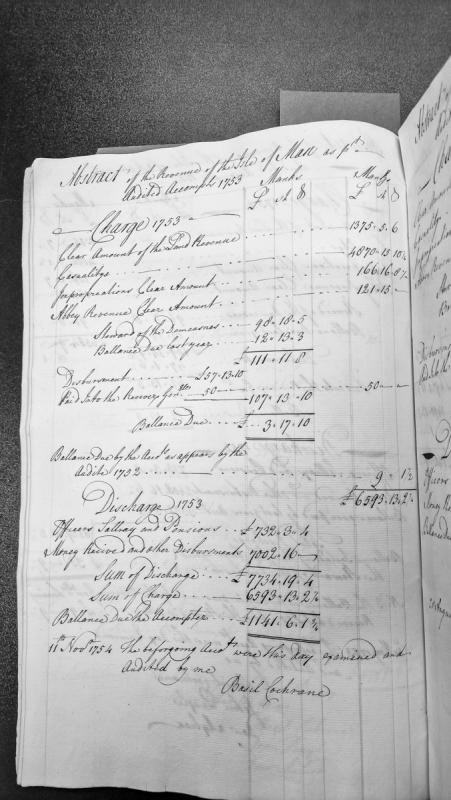
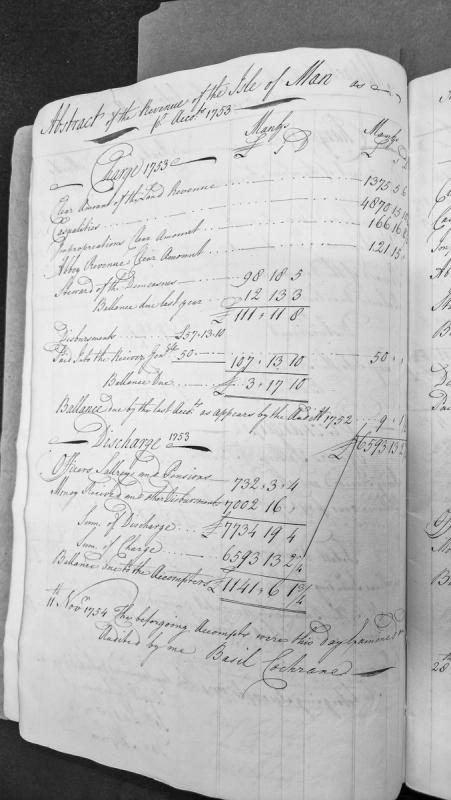
An audited financial abstract of the Isle of Man's revenue for 1753, detailing charges including land revenue, casualties, impropreations, and abbey revenue, with corresponding disbursements and officers' salaries. The document shows a balance due to the accompter of £1141.6.1¾. Audited on 11 November 1754.
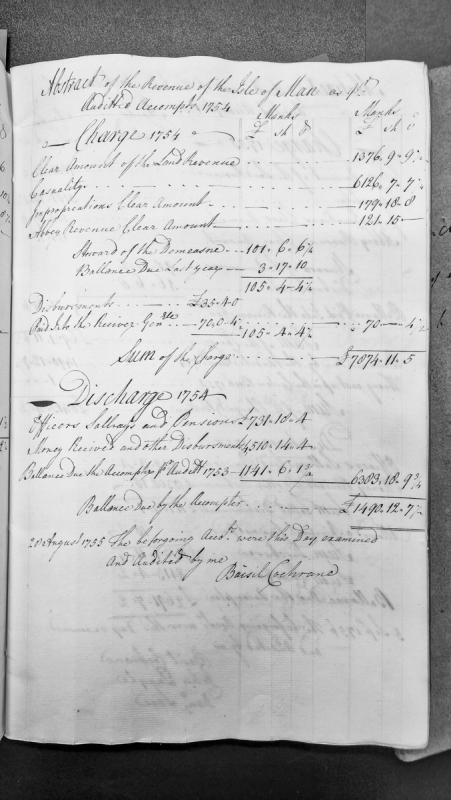
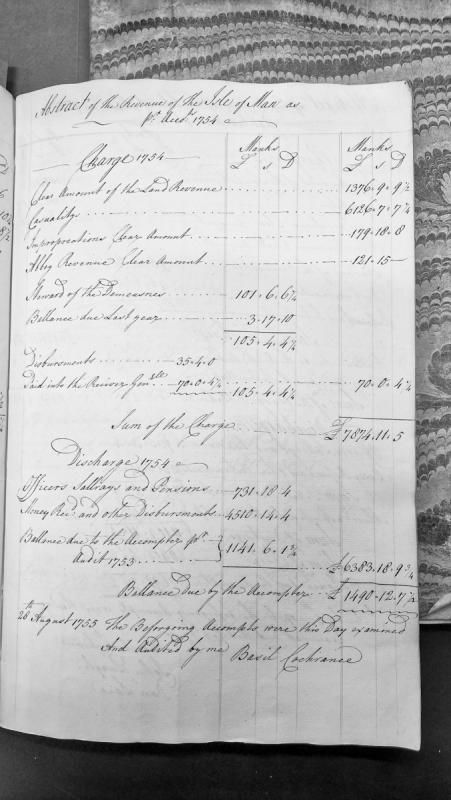
An audited financial abstract for the Isle of Man covering the year 1754, detailing charge and discharge accounts including land revenue, casualties, impropriations, abbey revenue, officer salaries, and disbursements. Audited by Basil Cochrane on 20 August 1755.
An official revenue abstract documenting the financial accounts of the Isle of Man for the year 1754. The document details charges including land revenue, casualties, impropreations, and abbey revenue, along with disbursements and officer salaries, with a final balance due by the accompter.
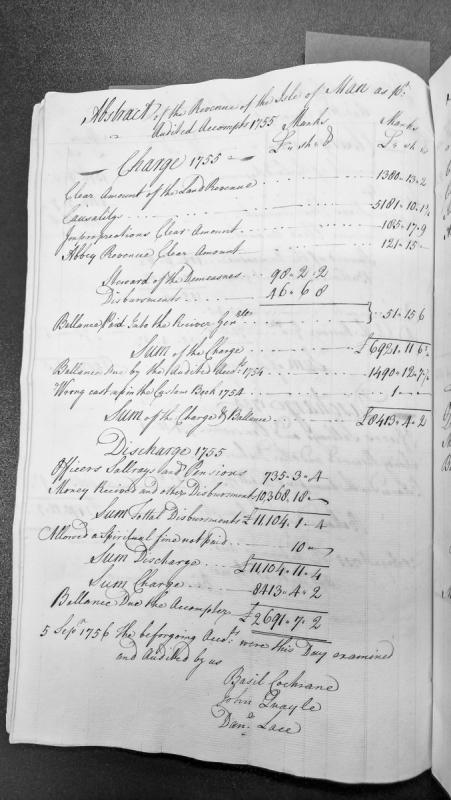
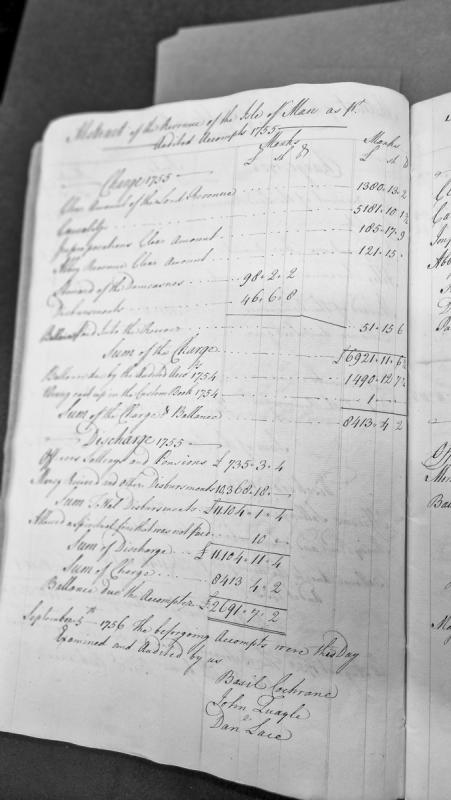
An audited financial abstract documenting the revenue and expenditure of the Isle of Man for the year 1755. The document details charges including land revenue, casualties, impropriations, and abbey revenue, alongside discharge records for officers' salaries, pensions, and disbursements, concluding with a balance due to the accompter.
A detailed financial abstract of the Isle of Man's revenue for 1755, including land revenue, casualties, impropriations, abbey revenue, and steward disbursements. The document provides a comprehensive accounting statement with charges, discharges, and resulting balance, audited and certified on September 5, 1756.
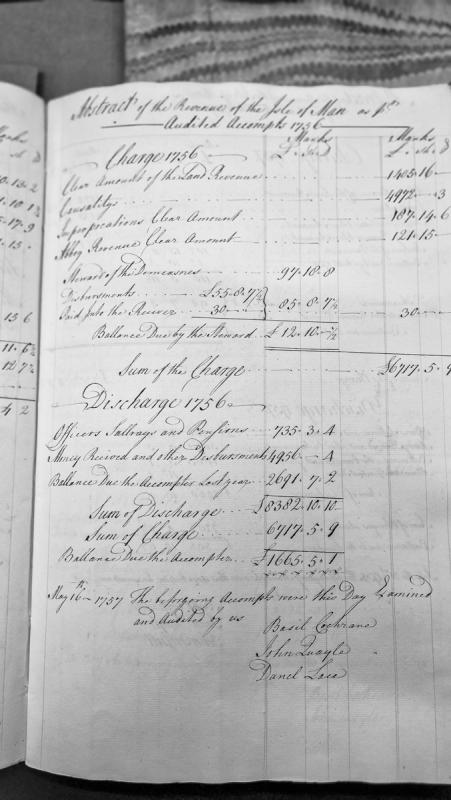
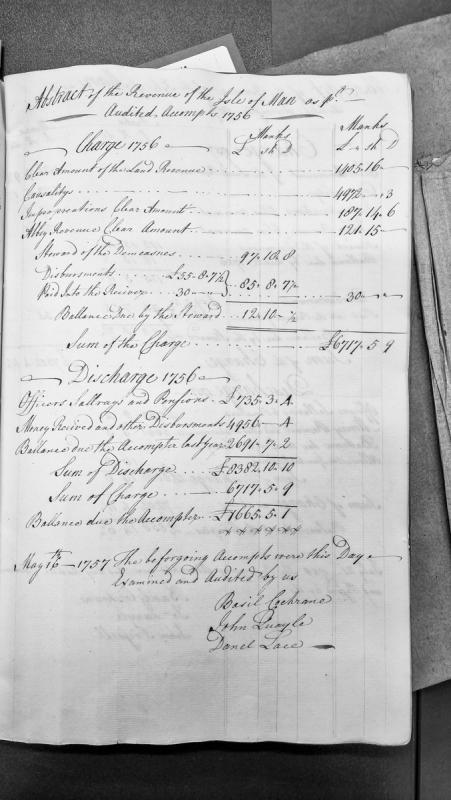
An audited financial abstract documenting the revenue of the Isle of Man for 1756, detailing charges including land revenue, casualties, impropriations, and abbey revenue, with corresponding discharge items including officers' salaries, pensions, and money received. The accounts were examined and audited on 1 May 1757.
This is an audited revenue abstract for the Isle of Man covering the year 1756. It details charges including land revenue, casualties, impropriations, abbey revenue, and disbursements totalling £6,717, set against discharge items including officer salaries, pensions, and other disbursements totalling £8,382, resulting in a balance due to the accountant of £1,665.
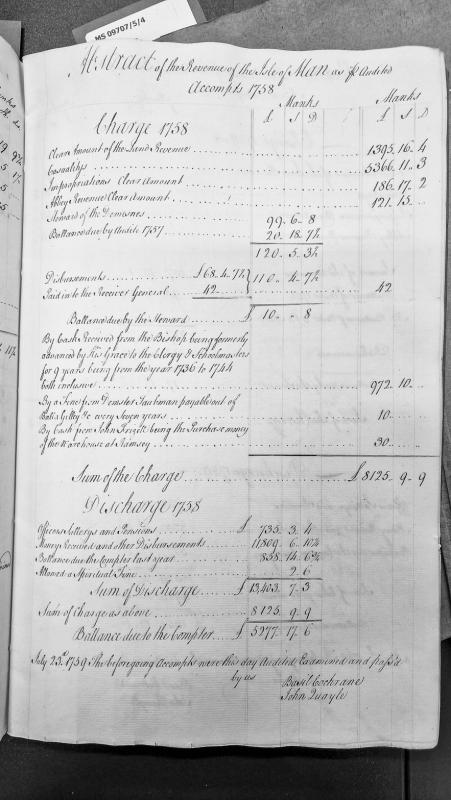
An audited financial abstract of the Isle of Man's revenue for 1758, detailing charges including land revenue, casualties, impropriations, abbey revenue, and steward accounts, as well as disbursements for officers' salaries, pensions, and other expenses. The document records a balance due to the Comptroller of £5,277 17s 6d and was officially audited and passed on July 23rd 1759.
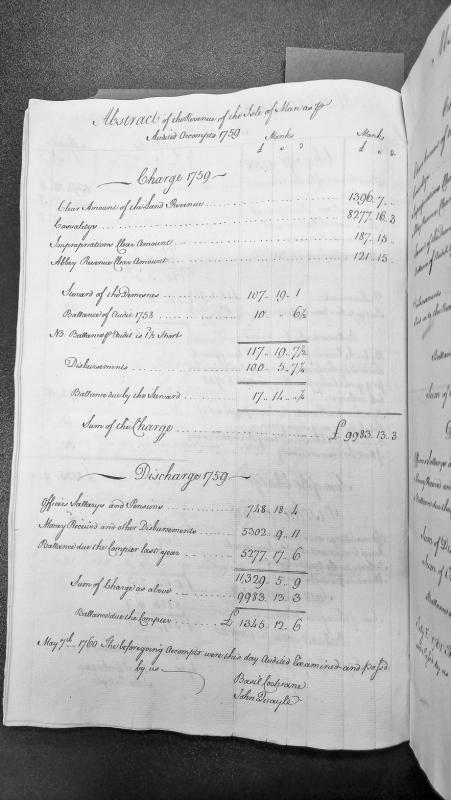
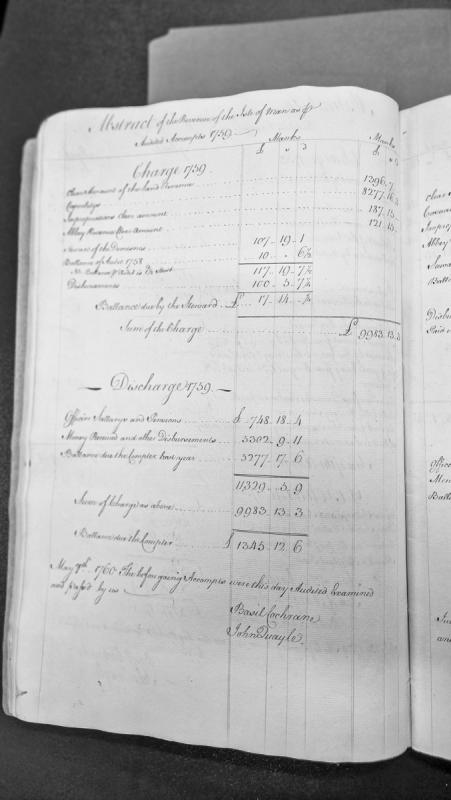
A detailed financial abstract documenting the revenue and disbursements of the Isle of Man for 1759. The document records charges including land revenue, casualties, impropriations, and abbey revenue, balanced against disbursements for officers' salaries, pensions, and other payments, with a final balance due to the Comptroller.
An audited financial abstract detailing the revenue and disbursements of the Isle of Man for the year 1759. The document records charges including land revenue, casualties, impropriations, and abbey revenue, balanced against officer salaries, pensions, and other disbursements, with a final balance due to the Comptroller.
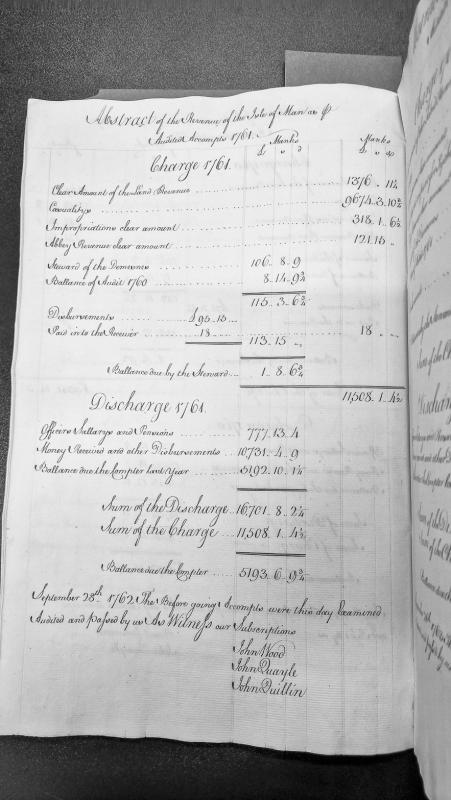
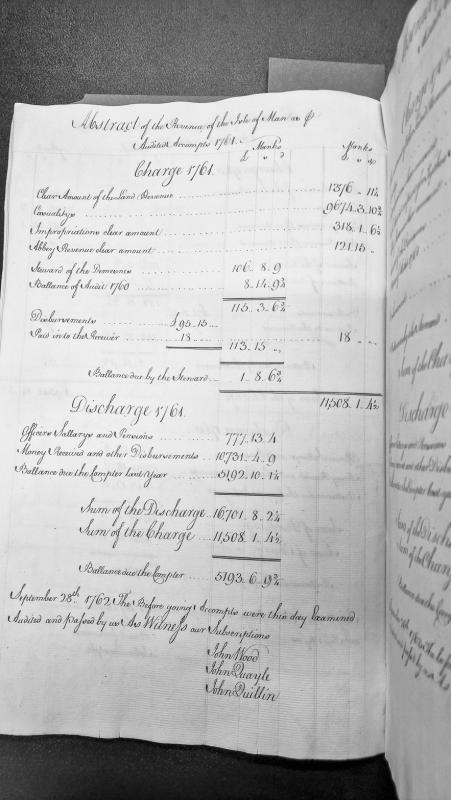
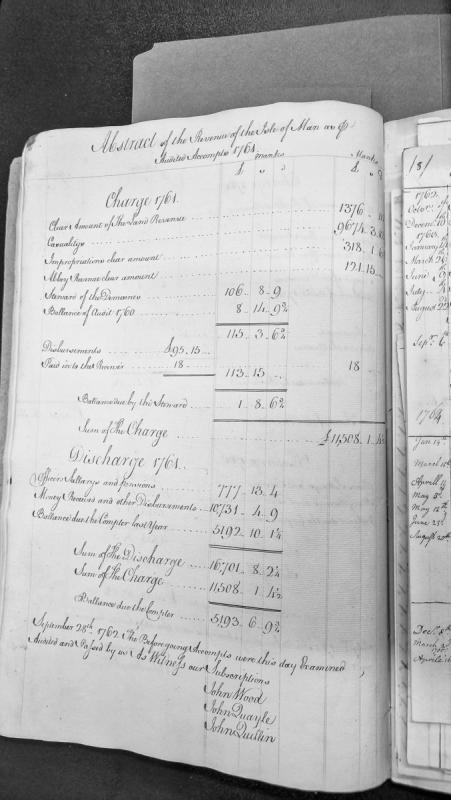
An audited abstract of the Isle of Man's revenue for 1761, detailing charges including land revenue, casualties, impropriations, and abbey revenue, with corresponding disbursements and balances. The document was examined and approved by three auditors on 28 September 1762.
An audited financial statement of Isle of Man revenue for 1761, detailing charges including land revenue, casualties, impropriations, and abbey revenue, alongside disbursements and officer salaries. The accounts were examined and passed by three auditors on 28 September 1762.
An official revenue abstract for the Isle of Man for the year 1761, detailing charges including land revenue, casualties, impropriations, and abbey revenue, set against discharges including officer salaries, pensions, and other disbursements. The document was examined, audited and passed by three auditors on 28 September 1762.
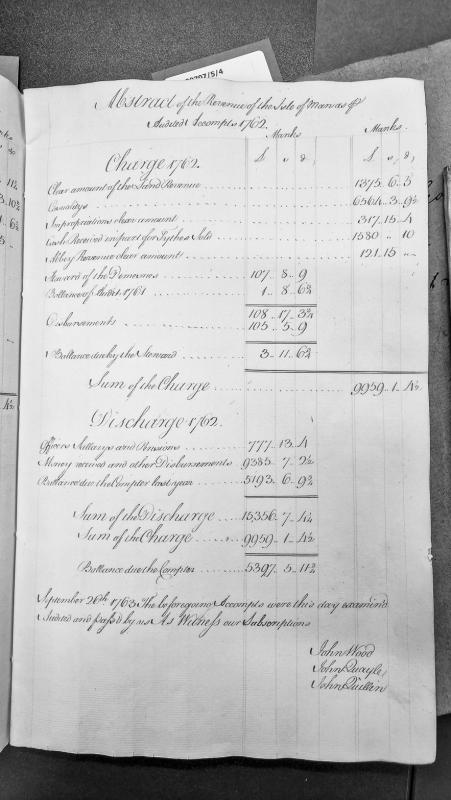
An audited revenue abstract for the Isle of Man covering the year 1762, detailing charges including land revenue, casualities, impropriations, tythes, and abbey revenue, offset against disbursements for officer salaries, pensions, and other expenditures. The document concludes with a balance due to the Comptroller and bears the signatures of three auditors dated September 26, 1763.
Financial abstract detailing the revenue and disbursements of the Isle of Man for the year 1753. The document records charges including land revenue, casualties, impropriations, and abbey revenue, balanced against disbursements and payments to the Receiver General. The accounts were audited on November 11th, 1754.
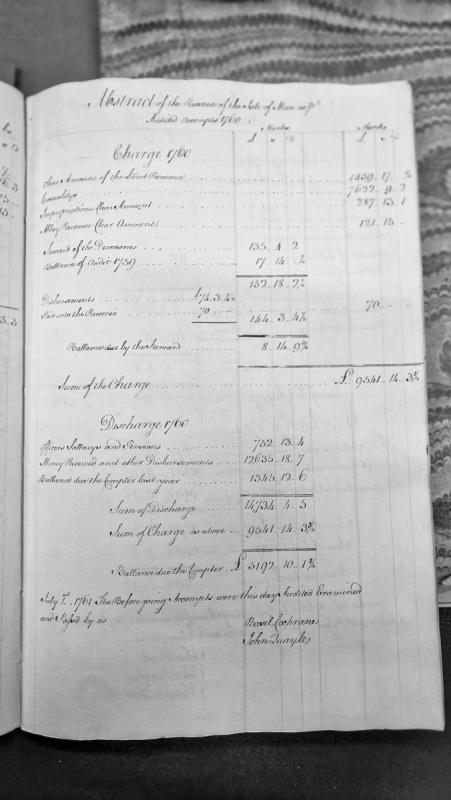
A financial abstract detailing the revenue and expenditure of the Isle of Man for the year 1760, as audited and approved in 1761. The document records charges including land revenue, casualties, impropriations, and abbey revenue, set against disbursements and officers' salaries, concluding with a balance due to the Comptroller.
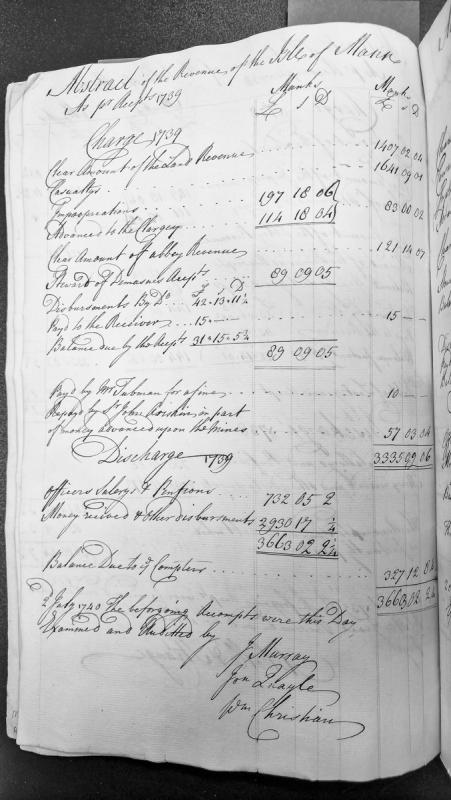
A detailed revenue account for the Isle of Mann covering 1739, including land revenue, casualties, impropriations, abbey revenue, steward accounts, and various disbursements. The document shows charges, discharges, and balances, audited on 2 July 1740. It records financial transactions including officer salaries, pensions, and money received.
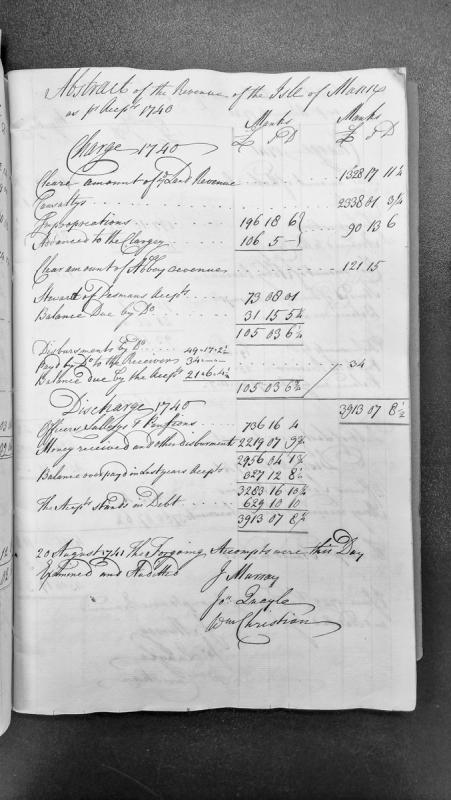
A detailed revenue abstract for the Isle of Mann for the year 1740, itemizing charges including land revenue, casualties, impropriations, abbey revenues, and steward accounts, with corresponding disbursements and officer salaries. The document was examined and audited on 20 August 1741.